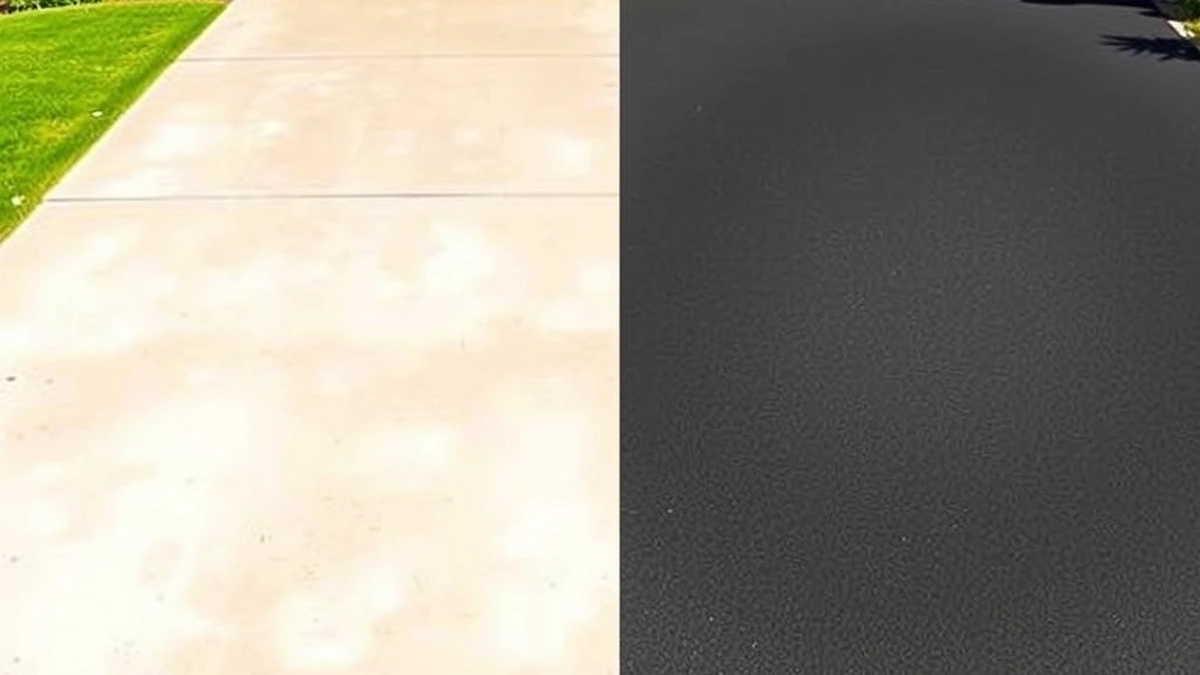
Acrylic sealer vs hot-pour crack fill
Acrylic is a clear surface film at $0.15-$0.30 per sq ft; hot-pour fill repairs cracks at $2-$5 per linear ft. Why clear coatings need crack repair first.
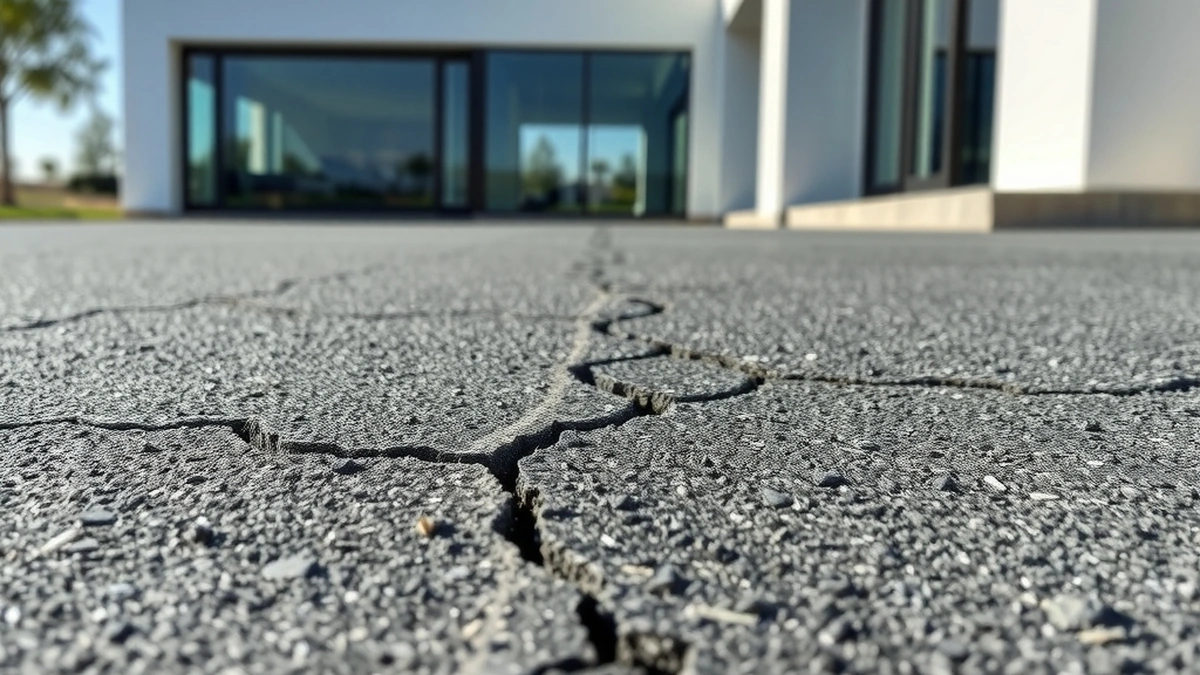
Acrylic sealer is a clear or tinted film at $0.15 to $0.30 per square foot; hot-pour crack fill is a repair at $2 to $5 per linear foot. Acrylic shows every crack and patch, so the filling has to be done first and done well.
- Acrylic
- $0.15-$0.30 per sq ft
- Crack fill
- $2-$5 per linear ft
- Acrylic life
- 1-3 years
- Crack fill life
- 3-5 years
- Order
- Fill, then coat
Some links on this page are affiliate links.If you buy through them we may earn a commission at no extra cost to you. We do not accept payment for rankings. Read the full disclosure.
Acrylic sealer and hot-pour crack fill are used together far more often than they are compared. Acrylic is a clear or tinted film at $0.15 to $0.30 per square foot; hot-pour fill is a repair at $2 to $5 per linear foot. Because acrylic is transparent, every crack and patch shows through it, which makes the filling step unusually important.
What each product is
Acrylic sealer is a water-based polymer coating that cures clear or tinted, protecting a surface without covering its colour.
Hot-pour crack fill is a rubberized asphalt material heated to 350 to 400 F and poured into a crack, where it cools into a flexible plug.
One is a finish, the other a repair. On a decorative or coloured driveway, the finish is the point, which is exactly why the repair has to be tidy.
Head to head
| Attribute | Acrylic sealer | Hot-pour crack fill |
|---|---|---|
| Purpose | Protect and preserve appearance | Seal an opening |
| Unit | Square foot | Linear foot |
| Cost | $0.15-$0.30 per sq ft | $2-$5 per linear ft |
| Application | Cold, roller or sprayer | Hot, melter and wand |
| Life | 1-3 years | 3-5 years |
| Hides defects | No | Not applicable |
| Best surface | Concrete, decorative asphalt | Any asphalt with cracks |
| Order | Second | First |
The transparency problem
A black coating hides a filled crack. A clear coating does not.
Under acrylic, a crack filled flush and blotted neatly reads as a thin dark line. A crack filled proud, or smeared across the surface, reads as a scar. On a coloured driveway the contrast is stronger still.
The practical consequence is that acrylic jobs are priced with more finishing labor than black coatings, even when the square footage is the same. Ask for the crack filling as a separate line, and ask what finish the crew leaves: flushed, blotted, and trimmed, or simply poured and left.
That does not mean acrylic is the wrong choice. It means the filling has to be done by someone who cares about the finish, and the filler has to be trimmed while warm rather than hacked back after it cools.
Cost of both, worked through
A 400 square foot coloured asphalt driveway with 60 linear feet of cracks:
Crack fill at $3.50 per foot: 60 × $3.50 = $210. Acrylic at $0.24 per square foot: 400 × $0.24 = $96. Total: $306, or $0.77 per square foot.
Over ten years, with the cracks refilled once and the coating applied four times at a two-to-three-year interval: crack fill $420, acrylic $384, total $804, or $80 a year.
Compare that with a black emulsion coating on the same driveway: same crack cost, coating at $96 per cycle every three years, about $320 over the decade. Cheaper, and it would hide the repairs rather than display them.
The premium for acrylic is what you pay to keep the colour.
Where acrylic earns the extra cycles
Decorative asphalt. Stamped, coloured, or exposed-aggregate surfaces need a clear film. A black coat erases the pattern that was paid for.
Concrete. Clear acrylic protects concrete and keeps its colour. Emulsion and coal tar are asphalt products and look wrong on concrete.
Visible frontage. Where the driveway is part of the finished appearance of the property, clarity has value a cost table does not capture.
Low odour. Acrylic is easier to apply near open windows, garages, and shared entries.
Outside those, on plain black asphalt, emulsion usually wins on cost per year. That is not a knock on acrylic; it is simply that the product’s main advantage, transparency, has no value on a surface where nothing is being preserved.
Where hot-pour earns its place
Hot-pour is the durable crack repair. It flexes with the pavement, bonds to clean dry walls, and lasts three to five years in a crack that is not moving.
Cold-pour bottle filler lasts one to three seasons for a fraction of the equipment cost. On a handful of isolated cracks, that is a sensible trade. On 60 linear feet, hot-pour wins on cost per year and gives a neater line under a clear coating.
The exception is a moving crack. If the same crack reopens within a season, neither filler holds. Our hot-pour crack fill problems guide covers that diagnosis.
The sequence that works
- Clean the surface and let it dry fully.
- Fill cracks wider than a quarter inch with hot-pour rubber.
- Blot and trim the filler while warm.
- Prime oil spots so the coating can bond.
- Apply acrylic at the label rate.
- Cure 24 to 48 hours before traffic.
Step 3 is the one that matters under a clear coating and is the one most often rushed.
Allow the filler to cool before coating but not to sit for days. Fresh hot-pour rubber can be coated the same day once it is firm; a filler left exposed for a week collects dirt along its edges, and that dirt shows through the acrylic as a grey outline around every repair.
What neither product fixes
Both are surface work. Neither repairs a base, corrects drainage, or holds together alligator cracking.
A driveway with alligator cracking across a quarter of the surface, ponding water, or soft spots needs an overlay at $3 to $7 per square foot or replacement at $8 to $15.
Under a clear coating, that failure is visible rather than hidden, which is at least honest. Our alligator cracking repair guide covers the diagnosis, and driveway sealing repair explains how to tell surface wear from base failure.
For pricing, see acrylic sealer cost and hot-pour crack fill cost. Our acrylic sealer installation guide covers the application in detail.
Frequently asked questions
Can acrylic sealer fill cracks?
No. Acrylic is a thin film and will not bridge an opening. Applied over an open crack, it splits along the line and lifts at the edges within a season.
Will acrylic show crack repairs?
Yes. Clear acrylic shows the surface as it is, including filled cracks and patches. That is the trade-off for preserving colour, and it is why the filling has to be neat.
Should I use hot-pour or cold-pour filler under acrylic?
Hot-pour lasts three to five years and gives a neater finish when blotted and trimmed. Cold-pour is acceptable for isolated cracks on a small DIY job.
Which lasts longer?
Hot-pour crack fill lasts three to five years in a sound crack; acrylic lasts one to three years on a driveway. They measure different things.
Can acrylic go over hot-pour filler?
Yes, once the filler has cooled and firmed. Blot and trim the filler first, because acrylic is thin and follows the surface profile.
Is acrylic suitable for a plain asphalt driveway?
It works, but it costs more per year than emulsion because it lasts one to three years. It is the better choice on decorative or coloured asphalt, where a black coat would erase the finish.
Sources
Some links are affiliate links.If you buy through them we may earn a commission at no extra cost to you. We do not accept payment for rankings. Read the full disclosure.