Hot-pour crack fill problems: why fills fail
Hot-pour crack fill fails four ways: pull-out, tracking, cracking, and debonding. What causes each, and which failures mean the base is moving.
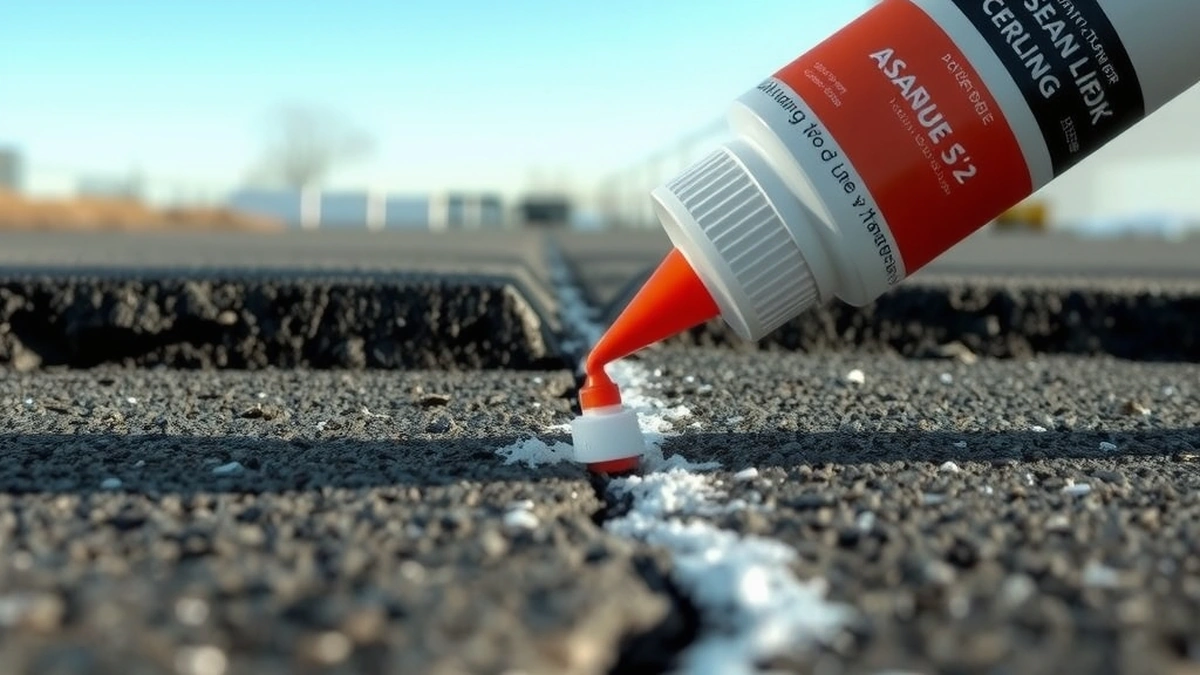
Hot-pour crack fill problems are pull-out, tracking, cracking of the filler, and debonding at the edges. Pull-out and debonding usually come from a wet or dirty crack; tracking comes from overfilling without blotting; repeat cracking in the same line means the base is moving.
- Most common failure
- Pull-out from wet cracks
- Application temp
- 350-400 F
- Expected life
- 3-5 years
- Installed cost
- $2-$5 per linear ft
- Base-movement sign
- Same crack reopens
Some links on this page are affiliate links.If you buy through them we may earn a commission at no extra cost to you. We do not accept payment for rankings. Read the full disclosure.
Hot-pour crack fill problems are mostly installation problems, and the four that matter are pull-out, tracking, filler cracking, and edge debonding. Each looks different and each has a specific cause. The one failure that is not an installation problem — a crack reopening in the same line — is the one worth paying attention to, because it usually means the base is moving.
What a proper fill looks like
Hot-pour crack fill is a rubberized asphalt plug poured into a cleaned crack, sitting slightly above the pavement surface and bonded to both walls.
A correct plug is slightly proud of the surface, matte once blotted, and flexible under a thumbnail. It should not sit below the surface, sit as a raised ridge, or feel soft weeks after installation.
Symptom, cause, and fix
| Symptom | Cause | Fix | Prevention |
|---|---|---|---|
| Plug missing after winter | Water or dirt in crack | Clean out, dry, refill | Blow and dry before pouring |
| Filler stuck to tires | Overfill, no blotting | Dust with sand, trim excess | Blot while warm |
| Filler cracked through | Material too cool or too thin | Remove and refill | Hold 350-400 F |
| Edges lifting | Dirty or damp crack walls | Cut back, clean, refill | Route and clean |
| New crack beside old | Base movement | Assess base, not filler | Diagnose before filling |
| Sinking plug | Underfilled | Top up after cooling | Pour to slight overfill |
The last two rows are the ones that determine whether more filling is worth doing at all.
Pull-out: the moisture and dirt failure
Pull-out is the classic failure. The plug is gone after a winter, or lifted in one piece and sitting in the driveway.
Two causes, often together. Moisture in the crack flashes to steam when 350 F rubber hits it, and the expanding steam pushes material back out. Grit and dust prevent the rubber from bonding to the asphalt at all, so the plug sits loose in the channel.
The fix is to clean out the remains, blow the crack dry, and confirm no moisture is present before refilling. The prevention is the same work done first: route if needed, blow clean, and wait for a dry day.
A plug that comes out cleanly with smooth sides usually bonded to nothing. A plug that comes out with asphalt attached took pavement with it, which points to a weak surface rather than a dirty one.
Tracking: the overfill failure
Tracking shows as black smears on the driveway, footprints on the apron, and filler pulled out of the crack in strings.
The plug was poured too high and not blotted. Hot rubber stays soft where it sits above the pavement, and tires pick it up. Applying in direct sun on hot pavement makes it worse.
The fix is to let the material cool fully, then trim the excess with a knife and dust the area with sand. Prevention is pouring to roughly 1/8 inch overfill and blotting while warm.
Filler cracking: the temperature failure
Cracks in the filler itself look like fine lines running along the plug. They appear when the material was applied too cool, so it bridged the surface without filling the void beneath, or when the plug is too thin for the movement it has to accommodate.
The fix is removal and refill at proper temperature and depth. Prevention is a thermometer on the melter, not a guess at the dial.
Debonding, and the failure that is not the filler
Edge debonding shows as the plug lifting along one side while staying attached to the other.
Common causes: the crack was not routed, so the filler had no vertical wall to key into; the crack was damp; or the old filler was not fully removed and the new material bonded to it instead of the pavement.
The fix is to cut the plug out, clean and route the crack properly, dry it, and refill.
The failure that is not about the filler.
A crack that reopens in the same line, or a new crack appearing immediately beside a filled one, is not an installation failure.
It means the pavement is moving. Causes include a soft base, a tree root, poor drainage, or thermal movement across a joint. Filling again buys months.
Three signals confirm it: a lip at the crack edge where one side has settled, a crack that runs straight across the full width of the driveway, and an alligator pattern developing nearby. Our alligator cracking repair guide covers what to do when the pattern appears.
At that point the spend belongs on an overlay at $3 to $7 per square foot or replacement at $8 to $15, not on another $2 to $5 per linear foot of filler.
Diagnosing before you refill
- Look at the plug that failed: clean sides mean poor bond, torn edges mean weak asphalt.
- Check the crack walls for dirt or moisture before refilling.
- Measure the crack width; if it has widened since the last fill, the pavement is moving.
- Look for a lip at the edge with a straightedge.
- Decide whether the next dollar goes to filler or to a base assessment.
That sequence takes ten minutes and prevents the most common waste in driveway maintenance: refilling the same crack every spring.
Cost of getting it wrong
Filling 200 linear feet at $3.50 per foot costs $700. If the fill fails in one season and is redone, the two-year cost is $1,400 for the same cracks.
An overlay on 600 square feet at $3 to $7 per square foot is $1,800 to $4,200. If the cracks are being pulled apart by a failing base, that overlay is the cheaper path over five years even though it costs more today.
The decision is diagnosis, not product. Our hot-pour crack fill maintenance guide covers what to check each year so a fill gets its full three to five years, and hot-pour crack fill cost covers what a correct job should price at.
Frequently asked questions
Why is my crack filler coming out?
Water or dirt in the crack. Hot rubber applied over moisture flashes to steam and pushes the plug out, and rubber applied over grit bonds to the grit rather than the asphalt.
Why is hot-pour crack filler still sticky?
It was overfilled, applied too hot, or not blotted with sand or release agent. A thick plug holds heat longer and stays tacky where it sits above the surface.
Why did the crack open again next to the filler?
The filler bonded, but the pavement moved. A new crack immediately beside a filled one is a sign of base movement or thermal stress that a surface filler cannot control.
Can hot-pour crack fill be applied over old filler?
Only after removing the old material. New rubber will not bond to failed filler, and the old plug lifts with the new one attached.
Does hot-pour crack fill work in cold weather?
The material can be applied in cool weather, but the pavement and crack must be dry and above freezing. Cold pavement cools the rubber fast and shortens the time available to blot it.
When should I stop refilling a crack?
When it reopens in the same location within a season, when the edges have settled into a lip, or when cracks connect into an alligator pattern. Those point to the base, not the filler.
Sources
Some links are affiliate links.If you buy through them we may earn a commission at no extra cost to you. We do not accept payment for rankings. Read the full disclosure.