Acrylic sealer cost
Acrylic driveway sealer cost per square foot, worked totals from 500 to 2,500 sq ft, the add-ons that change the quote, and cost per year of protection.
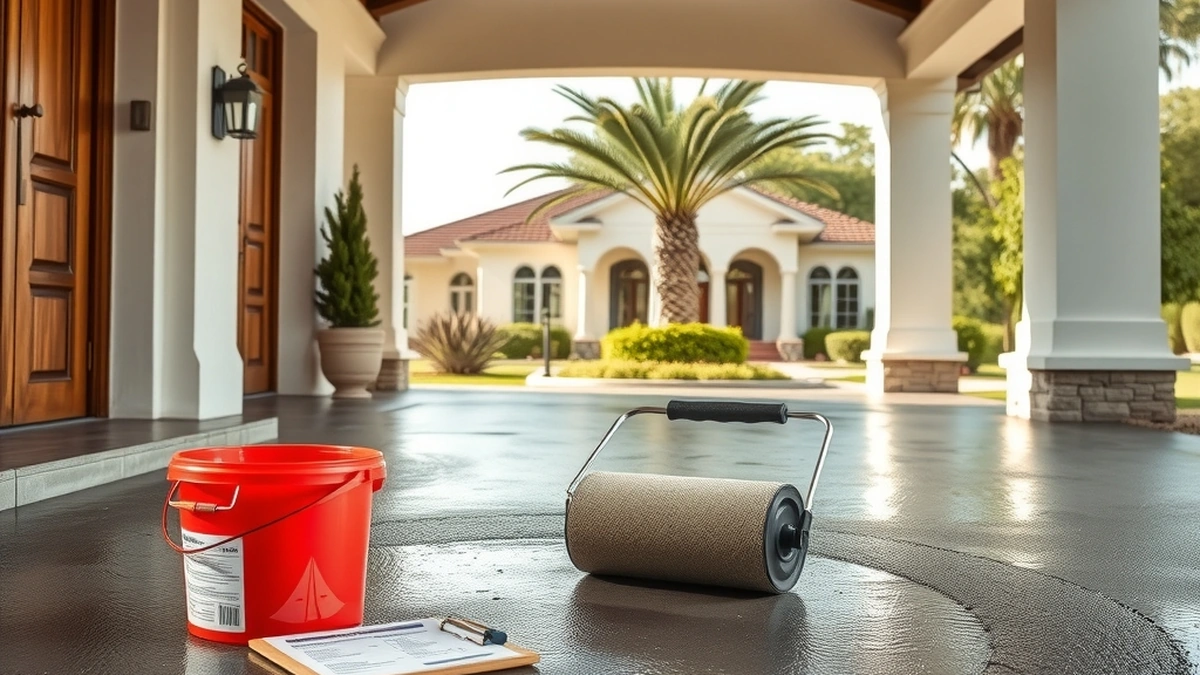
Acrylic sealer costs $0.15 to $0.30 per square foot installed and $0.05 to $0.12 per square foot in DIY material. A 1,000 square foot driveway runs $150 to $300 installed, or $50 to $120 in materials for two coats.
- Installed rate
- $0.15-0.30 per sq ft
- DIY material
- $0.05-0.12 per sq ft
- Service life
- 1-3 years
- Crack filling
- $2-5 per linear ft
Some links on this page are affiliate links.If you buy through them we may earn a commission at no extra cost to you. We do not accept payment for rankings. Read the full disclosure.
Acrylic sealer costs $0.15 to $0.30 per square foot installed and $0.05 to $0.12 per square foot in materials for a DIY job. A 1,000 square foot driveway is therefore $150 to $300 from a contractor or $50 to $120 in pails and rollers. The rate matches coal tar and asphalt emulsion; what differs is how often you pay it.
What the rate covers
Acrylic sealer is a water-based polymer emulsion that cures into a clear-to-black film over asphalt or concrete, blocking ultraviolet light and shedding water.
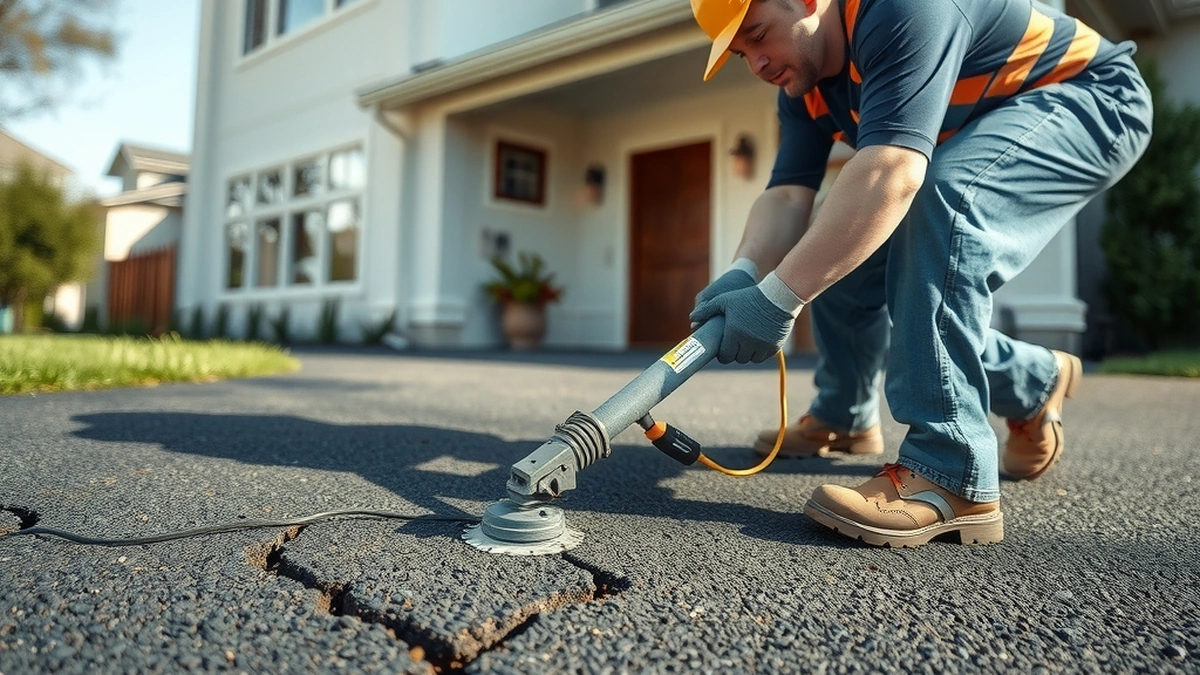
The installed rate covers cleaning, crack filling only where the contractor includes it, two coats, and barricades. On an older driveway the prep line often costs more than the sealer line, which is why the headline rate is a poor predictor of the final invoice.
Cost by driveway size
Square footage multiplied by the rate band, assuming two coats.
| Driveway size | DIY material ($0.05-0.12/sq ft) | Contractor ($0.15-0.30/sq ft) |
|---|---|---|
| 500 sq ft | $25-$60 | $75-$150 |
| 1,000 sq ft | $50-$120 | $150-$300 |
| 2,000 sq ft | $100-$240 | $300-$600 |
| 2,500 sq ft | $125-$300 | $375-$750 |
Worked out: 1,000 × $0.05 = $50 and 1,000 × $0.12 = $120 for DIY material; 1,000 × $0.15 = $150 and 1,000 × $0.30 = $300 installed. At 2,500 square feet, 2,500 × $0.05 = $125 to 2,500 × $0.12 = $300 DIY, and 2,500 × $0.15 = $375 to 2,500 × $0.30 = $750 installed.
Small jobs often price at the top of the band because of minimum charges. Large drives tend to the bottom because setup is spread across more area.
What pushes the rate up or down
Four variables move an acrylic quote more than the product choice does.
- Surface porosity. Weathered asphalt absorbs more material, so a dry, open surface can take noticeably more sealer than a dense one.
- Coat count. Two thin coats are standard. A quote specifying one coat is cheaper and shorter-lived.
- Access and masking. Long narrow drives, gates, and landscaping edges add labour.
- Season. Late-season work in cool weather carries more risk and sometimes a premium.
DIY against installed, with the arithmetic
Material at the DIY band is $0.05 to $0.12 per square foot, so 1,000 square feet is $50 to $120. The contractor band adds labour and prep, at $0.15 to $0.30 per square foot, or $150 to $300 for the same surface.
The gap is $100 to $180 on a 1,000 square foot drive. Whether it is worth paying depends on what the contractor includes. If the quote covers washing, crack filling at $2 to $5 per linear foot, and two coats applied at the label rate, it is usually the better value. If it is two thin coats over a dirty surface, it is not. DIY driveway sealing sets out the full sequence if you intend to do it yourself.
Cost per year, which is the honest comparison
Acrylic typically holds one to three years on a residential driveway. Coal tar holds three to four. Using the middle of the installed band, $300 per application on 1,000 square feet:
- Acrylic at a two-year cycle: $300 ÷ 2 = $150 per year (1,000 × $0.30 = $300; $300 ÷ 2 = $150).
- Coal tar at a three-and-a-half-year cycle: $300 ÷ 3.5 = about $86 per year.
That is an estimate from the rate bands, not a quote. The gap narrows at the low end of the band and widens on a driveway in full sun, where acrylic breaks down fastest. Coal tar sealer vs asphalt emulsion sealer covers the product comparison in more depth.
When acrylic is the right purchase
Acrylic earns its cost in three situations: on concrete driveways, where coal tar is not appropriate; where a clear or tinted finish is wanted rather than a black one; and where local rules restrict coal tar sales. It is also the usual choice for decorative and stamped surfaces.
Where it does not earn its cost is on a driveway that already needs structural work. A film that lasts one to three years is the wrong investment on a base that is failing. Driveway sealing repair covers the transition, and the asphalt overlay cost of $3 to $7 per square foot is $3,000 to $7,000 on 1,000 square feet against $8,000 to $15,000 for replacement at $8 to $15 per square foot.
On concrete the rate band is the same but the preparation differs, because concrete holds moisture longer and needs a longer dry before a coat goes down. Concrete driveway cost covers the surface itself if the slab is the bigger question.
Getting a comparable quote
- Ask for the measured square footage rather than a driveway description.
- Ask how many coats and at what coverage rate per gallon.
- Ask whether crack filling and patching are included, and at what rate per linear foot.
- Confirm the product family and whether the existing coat is compatible.
- Compare three quotes against the same scope, not against the totals alone.
A quote without crack filling is not the same job, and the cheapest total is frequently the shortest coat. How much does driveway sealing cost has the wider market range if you want to test a number before signing.
Frequently asked questions
How much does acrylic sealer cost for 1,000 square feet?
Between $150 and $300 installed, or $50 to $120 in material for a two-coat DIY job. The rate is the same band as coal tar and asphalt emulsion.
Is acrylic sealer cheaper than coal tar?
Not per application. Both sit at $0.15 to $0.30 per square foot installed. Acrylic usually costs more per year because it needs recoating sooner, often within one to three years.
Why does acrylic sealer need recoating so often?
The cured film is thin and breaks down under ultraviolet light and traffic. One to three years is typical on a residential driveway, against three to four for coal tar.
Does acrylic sealer cost more on new asphalt?
The application does not, but new asphalt should cure for several months before sealing. Rushing it traps oils in the pavement and causes the film to lift.
What adds to an acrylic sealing quote?
Crack filling at $2 to $5 per linear foot, pothole patching at $100 to $400 each, oil spot priming, and edge work. These often exceed the sealer line on an older driveway.
Can acrylic sealer go over an existing coal tar coat?
Not reliably. Acrylic bonds poorly to a sound coal tar film, and the usual advice is to remove the old coat or stay with the same product family.
Sources
Some links are affiliate links.If you buy through them we may earn a commission at no extra cost to you. We do not accept payment for rankings. Read the full disclosure.