Alligator cracking: repair options that work
Alligator cracking is base failure or spent binder, not a surface flaw. Compare patching, overlay at $3-$7 per sq ft, and replacement at $8-$15.
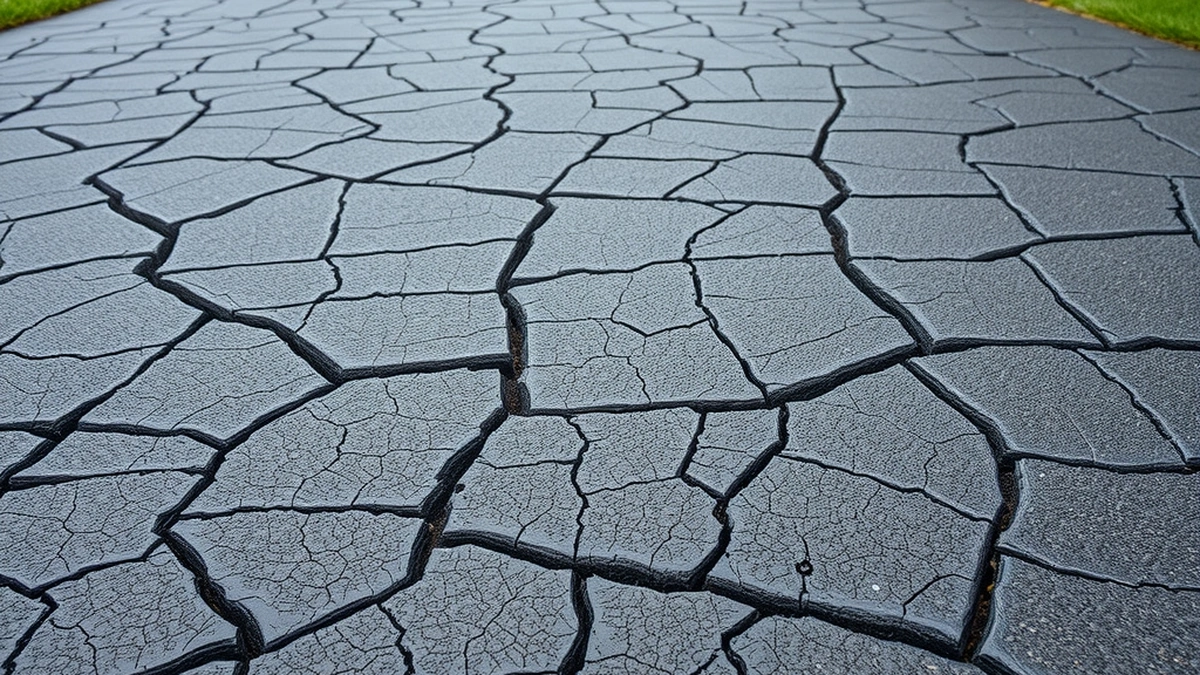
Alligator cracking is repaired by removing and patching the failed area, applying an overlay at $3 to $7 per square foot, or replacing the pavement at $8 to $15 per square foot. Sealer and crack filler do not fix it, because the failure starts in the base or the binder.
- Small patch repair
- $3-$7 per sq ft
- Overlay
- $3-$7 per sq ft
- Full replacement
- $8-$15 per sq ft
- Crack filler alone
- Not a repair
- Sealer alone
- Not a repair
Some links on this page are affiliate links.If you buy through them we may earn a commission at no extra cost to you. We do not accept payment for rankings. Read the full disclosure.
Alligator cracking is repaired by cutting out and patching the failed area, overlaying the surface at $3 to $7 per square foot, or replacing the pavement at $8 to $15 per square foot. Sealer and crack filler are not on that list. The pattern is a structural or binder failure, and surface products cannot reverse either.
What alligator cracking is
Alligator cracking is a network of interconnected cracks that form irregular polygons, resembling alligator skin, across an area of asphalt.
Each polygon is typically 1 to 6 inches across. The cracks connect, which is what separates the pattern from ordinary linear cracking.
The failure starts below the surface. Either the base cannot carry the traffic load, or the asphalt binder has oxidised until it can no longer flex. The surface pattern is the symptom.
What causes it
Two mechanisms, often together.
Base failure. The subgrade is soft, poorly compacted, or saturated. The pavement deflects under load, flexes repeatedly, and fatigues. This is why alligator cracking often appears in wheel paths and near driveway edges.
Binder ageing. Ultraviolet light and oxygen harden the bitumen until it loses elasticity. The surface can no longer accommodate thermal movement, and it cracks in a pattern rather than in lines.
Water accelerates both. It enters through the cracks, softens the base, and the cycle deepens.
Repair options compared
| Option | Scope | Cost | Life | Best when |
|---|---|---|---|---|
| Sealcoat only | Cosmetic | $0.15-$0.30 per sq ft | One season | Never, for this pattern |
| Crack filling | Cracks only | $2-$5 per linear ft | Months | Hairline checking elsewhere |
| Cut and patch | Failed areas | $3-$7 per sq ft | 5-10 years | Pattern under 25% of surface |
| Overlay | Whole driveway | $3-$7 per sq ft | 10-15 years | Pattern over 25%, base fixable |
| Replacement | Whole driveway | $8-$15 per sq ft | 20+ years | Base failed beyond correction |
The first two rows are included because they are what people try first, and they are the reason the problem gets worse while money is spent.
Patching: the right call for localised failure
Cut-and-patch removes the failed asphalt, corrects the base underneath if needed, and replaces the section with new asphalt.
The area must be cut back to sound pavement with square edges, not feathered. A feathered edge lets water in at the perimeter and the patch lifts.
On a 60 square foot failed area at $5 per square foot, the cost is 60 × $5 = $300. That is a reasonable spend when the rest of the driveway is sound.
Patching is not cosmetic. Done properly it restores load capacity in that section, which is the actual problem.
Overlay and replacement
An overlay places a new asphalt layer over the prepared existing surface. At $3 to $7 per square foot it is the middle option between patching and replacement.
Two conditions must be met. The base has to be corrected where it has failed, and the existing surface has to be milled or levelled so the overlay bonds and drains.
On 600 square feet, an overlay is $1,800 to $4,200. That compares with $4,800 to $9,000 for replacement.
An overlay applied over uncorrected base failure is money wasted. It inherits the movement and cracks in the same pattern within a few years. Ask the contractor what base work is included, in writing.
Replacement: when the base is gone.
Full replacement removes the pavement, rebuilds the base, and paves or pours fresh. At $8 to $15 per square foot it is the most expensive option and the only correct one when the base cannot be salvaged.
Signals that point to replacement: alligator cracking across most of the driveway, widespread settlement, edges that crumble no matter how often they are repaired, and standing water that cannot be graded away.
On 600 square feet, replacement is $4,800 to $9,000. Against repeated patching at $300 a section every few years, it can be the cheaper path over 15 years.
How to decide in four steps
- Measure the area covered by the alligator pattern as a share of the total surface.
- Probe the base in a failed area; soft or wet material means base correction is needed.
- Check drainage; if water stands, grading has to be part of any repair.
- Choose: patch under 25 percent, overlay above it, replacement if the base is gone.
A contractor who quotes a sealcoat for an alligator pattern is not diagnosing. A contractor who quotes an overlay without mentioning base correction is quoting half a job.
Why sealer makes it worse
Sealer is a thin film that cures rigid. Applied over a moving surface, it cracks along the same lines as the pavement beneath.
The result is a driveway that looks sealed for a few months and then shows the same pattern, now with failed film in the cracks. Water entry is not reduced; it is concentrated at the crack edges where the film has lifted.
Crack filler has the same problem at a smaller scale. Filling individual cracks in an alligator pattern is treating symptoms on a surface that is failing as a whole.
Cost of delay
Alligator cracking does not stabilise. Water enters, the base softens further, and the pattern spreads.
A 60 square foot patch at $300 today can become a 200 square foot repair at $1,000 to $1,400 in two years, and an overlay at $1,800 to $4,200 if it keeps growing.
That progression is the argument for diagnosing early. Our alligator cracking cost page breaks the numbers down by area, and alligator cracking signs covers what to look for before the pattern is obvious. For prevention, see alligator cracking prevention.
Frequently asked questions
Can alligator cracking be repaired?
Yes, but not with sealer or crack filler. The failed area is cut out and patched, or the surface is overlaid at $3 to $7 per square foot, or the driveway is replaced at $8 to $15.
What causes alligator cracking?
Two causes: a base that cannot carry the load, and asphalt binder that has oxidised and lost flexibility. Water entering the surface accelerates both.
Does sealing stop alligator cracking?
No. Sealer slows surface oxidation but cannot restore a failed base or spent binder. A coat over alligator cracking re-cracks along the same lines within a season.
When should I overlay instead of patch?
When the cracking covers more than about a quarter of the surface but the base can still be corrected. Below that, cutting out and patching the failed areas costs less.
How much does alligator cracking repair cost?
A localised patch is $3 to $7 per square foot, an overlay across the driveway is $3 to $7 per square foot, and full replacement is $8 to $15 per square foot.
Will alligator cracking come back after repair?
It can, if the base or drainage problem is not corrected. A patch or overlay on an uncorrected base usually fails within a few years, which is why diagnosis comes first.
Sources
Some links are affiliate links.If you buy through them we may earn a commission at no extra cost to you. We do not accept payment for rankings. Read the full disclosure.