Hot-pour crack fill cost: per foot and per job
Hot-pour crack fill runs $2 to $5 per linear foot, with a $200 to $400 minimum on small jobs. What routing, cleaning, and melter setup add to the price.
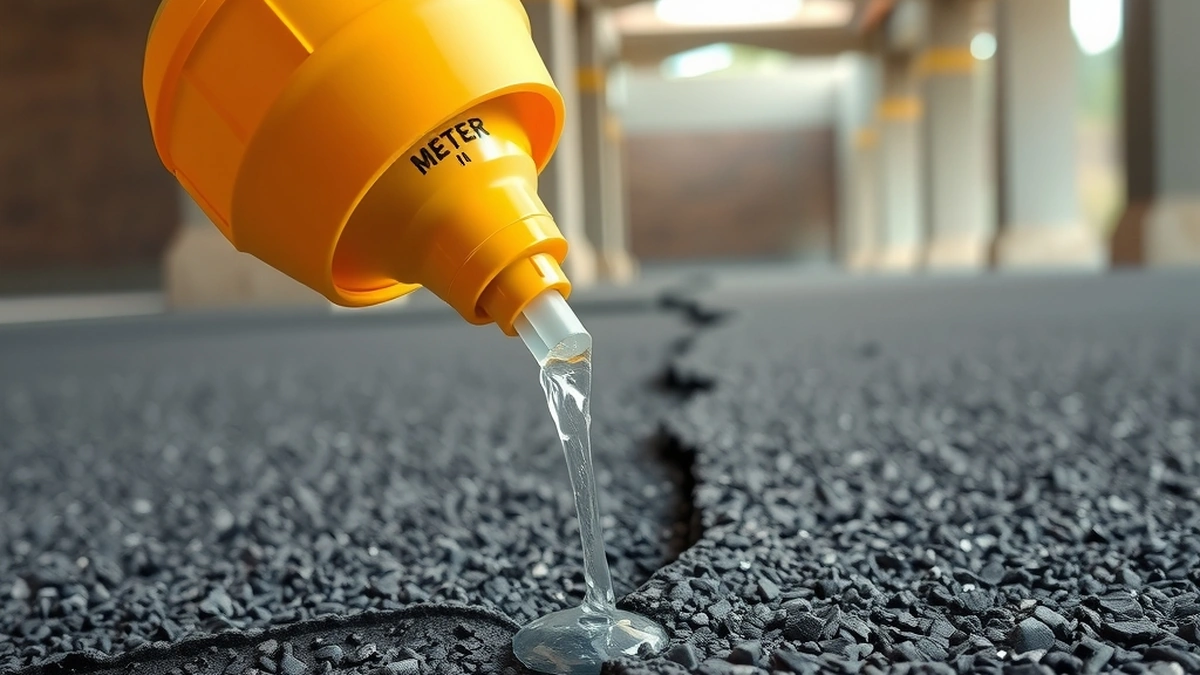
Hot-pour crack fill costs $2 to $5 per linear foot installed. A 200-foot driveway runs $400 to $1,000, and small jobs often carry a $200 to $400 minimum because the melter must be heated and hauled regardless of quantity.
- Rate per linear ft
- $2-$5
- 200 ft of cracks
- $400-$1,000
- Typical minimum
- $200-$400
- Routing, if needed
- Adds to the per-foot rate
- Sealcoat after
- $0.15-$0.30 per sq ft
Some links on this page are affiliate links.If you buy through them we may earn a commission at no extra cost to you. We do not accept payment for rankings. Read the full disclosure.
Hot-pour crack fill costs $2 to $5 per linear foot installed. A driveway with 200 linear feet of cracks runs $400 to $1,000, and small jobs often carry a $200 to $400 minimum because the melter has to be heated and hauled whether the crew fills 30 feet or 300. The rubber is cheap; the equipment and setup are what you are paying for.
What the price includes
Hot-pour crack fill is the installation of a heated rubberized asphalt sealant into cleaned cracks in asphalt pavement.
The per-foot rate covers cleaning the crack, heating the material to application temperature, pouring it to a slight overfill, and trimming or blotting the surface. Routing, where the crack is widened into a uniform channel, may be included at the upper end of the band or priced separately.
What it does not cover is the cause of the cracking. If the pavement is moving because the base is soft, the filler flexes until it tears and the crack returns.
Cost by quantity
| Cracks | At $2 per ft | At $3.50 per ft | At $5 per ft |
|---|---|---|---|
| 50 ft | $100 | $175 | $250 |
| 100 ft | $200 | $350 | $500 |
| 200 ft | $400 | $700 | $1,000 |
| 400 ft | $800 | $1,400 | $2,000 |
| 800 ft | $1,600 | $2,800 | $4,000 |
The arithmetic is linear feet multiplied by the rate. Two hundred feet at $3.50 is 200 × $3.50 = $700.
Small quantities are the exception. At 50 feet, the per-foot math says $100 to $250, but a crew with a melter on site will often quote a $200 to $400 minimum. That works out to $4 to $8 per foot on a tiny job, which is why bundling crack filling with sealcoating is usually the better buy.
What moves the price within the band
Four factors explain the spread from $2 to $5.
Cleaning method. Blowing out dust and debris is the minimum. A crack full of grit will not bond, and the filler sits on top and lifts within a season.
Routing. Widening a narrow crack to a uniform reservoir helps the filler key in and last longer. It adds equipment time and usually pushes the job toward the top of the band.
Crack width and depth. Wide, deep cracks take more material per foot. A half-inch crack consumes several times the rubber of a hairline.
Access and traffic. Cracks along a driveway edge are quick. Cracks across a busy parking aisle need cones, phasing, and waiting for cure, all of which cost labor.
Hot-pour versus cold-pour, on cost
| Product | Cost | Life | Equipment | Best use |
|---|---|---|---|---|
| Hot-pour rubber | $2-$5 per ft installed | 3-5 years | Melter, wand, gloves | Driveways kept long term |
| Cold-pour bottle | A few dollars per ft DIY | 1-3 seasons | None | Isolated cracks, quick fixes |
| Cold-pour bulk | Low material cost | 1-3 seasons | Pour pot | Small DIY jobs |
The installed figures are not comparable to a DIY bottle price, because one includes labor and equipment and the other does not. Compare them on cost per year of coverage instead.
A 200-foot driveway filled with hot-pour at $700 lasts three to five years, which is $140 to $233 per year. The same driveway filled with cold-pour at, say, $250 in material lasts one to three seasons, which is $83 to $250 per year — plus your labor, and plus the likelihood of refilling the same cracks sooner.
On a driveway you intend to keep, hot-pour generally wins. On a rental property or a driveway being replaced within a few years, cold-pour is a reasonable stopgap.
Bundling with sealcoat
Crack filling is normally done immediately before sealcoating, and bundling saves a mobilization charge.
A typical 600 square foot driveway with 80 linear feet of cracks: crack fill at $3.25 per foot is $260, sealcoat at $0.20 per square foot is $120, total $380. Booked separately, the same work often costs $80 to $150 more because the crew makes two trips.
The bundle also protects the repair. A filled crack left unsealed weathers at the edges, and the sealcoat ties the filler into the surrounding surface. Our asphalt repair cost page covers the full repair menu, and driveway crack repair cost covers the decision by crack type.
When hot-pour is the wrong spend
Filling cracks is cosmetic if the pavement underneath is failing.
Three signals say stop: cracks that connect into an alligator pattern across a quarter or more of the surface, sections that have settled into depressions, and cracks that reopen in the same line within a season of being filled.
In those cases the money belongs on an overlay at $3 to $7 per square foot or replacement at $8 to $15. On 600 square feet, an overlay is $1,800 to $4,200 and replacement is $4,800 to $9,000, against $260 to fill the cracks. Filling first is only sensible when the base is sound.
Our alligator cracking repair guide covers how to tell the difference before you book a crew.
Getting a quote that holds up
- Measure the total linear feet of cracks with a tape or a measuring wheel.
- Note how many are wider than a quarter inch, since those take more material.
- Ask whether the price includes cleaning and routing or only pouring.
- Ask about the minimum charge and what quantity it covers.
- Confirm the sealcoat price separately so you can see the bundle discount.
A quote that gives a single lump sum for “crack repair and seal” hides the two rates you need to compare. Ask for the linear feet, the per-foot rate, and the square footage of sealcoat as separate lines.
For the application itself, see hot-pour crack fill installation. For the failures that follow a bad pour, hot-pour crack fill problems covers the symptoms and causes.
Frequently asked questions
How much does hot-pour crack fill cost?
Between $2 and $5 per linear foot installed. A driveway with 200 linear feet of cracks costs $400 to $1,000, and small jobs often hit a $200 to $400 minimum charge.
Why is hot-pour more expensive than cold-pour filler?
It needs a melter, temperature control, and a crew trained to work with material at 350 to 400 F. The equipment and setup dominate the price on small jobs, not the rubber itself.
Does crack routing add cost?
Yes. Routing widens the crack to a uniform channel so the filler keys in, and it adds equipment time. It is usually folded into the upper end of the $2 to $5 per foot band.
How much crack can a crew fill in a day?
A two-person crew with a melter commonly handles several hundred linear feet per day on a residential driveway, depending on routing, cleaning, and traffic control.
Is hot-pour worth it over cold-pour for a driveway?
On a driveway you plan to keep, yes. Hot-pour rubber flexes with the pavement and commonly lasts three to five years, against one to three seasons for cold-pour bottle filler.
Does crack filling include sealcoating?
No. Sealcoat at $0.15 to $0.30 per square foot is a separate line. Crack filling is done first, then the whole surface is sealed.
Sources
Some links are affiliate links.If you buy through them we may earn a commission at no extra cost to you. We do not accept payment for rankings. Read the full disclosure.