Acrylic sealer vs asphalt emulsion sealer
Acrylic and asphalt emulsion cost the same $0.15 to $0.30 per sq ft but last differently. Compare life, appearance, surface compatibility, and cost per decade.
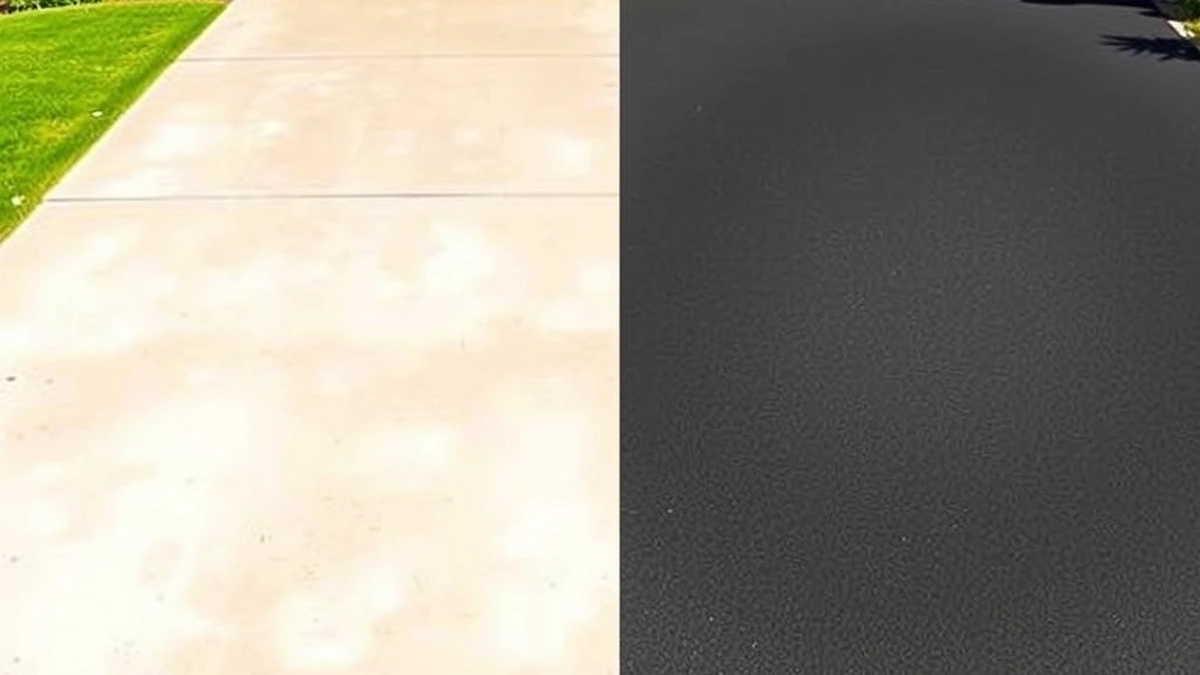
Acrylic sealer is a clear, thin film lasting one to three years; asphalt emulsion is a black, thicker film lasting two to three. Both cost $0.15 to $0.30 per square foot installed, so acrylic wins on appearance and emulsion wins on cost per year.
- Acrylic life
- 1-3 years
- Emulsion life
- 2-3 years
- Installed cost
- $0.15-$0.30 per sq ft
- Acrylic finish
- Clear or tinted
- Emulsion finish
- Black
Some links on this page are affiliate links.If you buy through them we may earn a commission at no extra cost to you. We do not accept payment for rankings. Read the full disclosure.
Acrylic and asphalt emulsion sealer cost the same per square foot and do not do the same job. Acrylic is a clear film that preserves what is underneath and lasts one to three years. Emulsion is an opaque black film that lasts two to three and hides what is underneath. The choice is about appearance first and cost per year second.
The definition that settles most of it
Acrylic sealer is a water-based polymer coating that cures clear or tinted, protecting a surface without changing its colour.
Asphalt emulsion sealer is a water-based suspension of asphalt particles and filler that cures opaque black, restoring a uniform dark surface.
One is a window, the other is paint. That single difference explains the appearance, the surface compatibility, and much of the durability gap.
Head to head
| Attribute | Acrylic sealer | Asphalt emulsion sealer |
|---|---|---|
| Appearance | Clear or tinted, preserves colour | Opaque black |
| Film thickness | Thin | Moderate |
| Service life | 1-3 years | 2-3 years |
| Installed cost | $0.15-$0.30 per sq ft | $0.15-$0.30 per sq ft |
| Material cost | $0.05-$0.12 per sq ft | $0.05-$0.12 per sq ft |
| Best surface | Concrete, decorative asphalt | Plain asphalt |
| UV resistance | High, resists yellowing | Moderate, greys over time |
| Fuel resistance | Low | Moderate |
| Odour | Low | Moderate |
| Recoat over the other | Poor adhesion | Poor adhesion over acrylic |
The recoat row matters more than it looks. Neither product bonds reliably over a sound film of the other, so switching families usually means stripping the old coat first. Decide once and stay with it.
Cost per decade, worked through
Take a 1,000 square foot driveway and use the midpoint of each range.
Acrylic at $0.22 per square foot installed is $220 per coat. At a two-year interval that is five coats in ten years: 5 × $220 = $1,100.
Emulsion at $0.22 per square foot is also $220 per coat. At a three-year interval that is about 3.3 coats: 3.3 × $220 = $726.
The gap is $374 over a decade, roughly 50 percent more for acrylic. In materials at $0.08 per square foot, the same driveway costs $80 per coat: $400 for five acrylic coats against $264 for 3.3 emulsion coats.
Now add the preparation. Each cycle carries cleaning, crack filling at $2 to $5 per linear foot, and priming. The labor is the same per cycle, so more cycles means more labor too. That widens the gap beyond the sealer price alone.
Where acrylic is the right answer
Four cases justify the shorter interval.
Concrete. Emulsion is an asphalt product and looks wrong on concrete. Clear acrylic protects concrete and keeps its colour.
Decorative asphalt. Stamped, coloured, or exposed-aggregate asphalt needs a clear film; a black coat erases the pattern.
Visible frontage. Where the driveway is part of the finished appearance of the house, clarity has value that does not show up in a cost-per-year table.
Low-odour sites. Acrylic is easier to apply near open windows, garages, and shared entries.
In those cases the extra $374 per decade is buying something real. The mistake is paying it on a plain black driveway where nothing is being preserved.
Where emulsion is the right answer
Plain asphalt, which is most driveways, is emulsion territory.
It restores an even black finish, hides patch repairs and colour variation, and lasts longer per coat. It also builds a thicker film, which gives more sacrificial material for traffic to wear through before the pavement is exposed.
The trade-off is appearance: an emulsion coat is uniform and matte, and it greys over two to three years. For most homeowners that is acceptable, and it is the reason emulsion dominates the residential market.
For fuel-heavy driveways, neither is ideal. Coal tar resists oil and gasoline better than both, subject to local restrictions. Our coal tar sealer vs asphalt emulsion sealer comparison covers that option.
Applying the wrong one: what happens
The most expensive mistake in this comparison is switching products without stripping the old coat.
Acrylic over a sound emulsion film typically peels within a season, because the acrylic cannot key into the slick, filled surface. Emulsion over acrylic behaves the same way in reverse.
If you inherit a driveway with an unknown coating, test a small hidden patch before committing to a full job. Apply the new product to a 2 square foot area, cure it, then try to lift an edge with a putty knife. If it releases, the surface needs stripping or the same product family.
Choosing in four steps
- Identify the surface: concrete, plain asphalt, or decorative asphalt.
- Decide whether appearance or cost per year matters more.
- Check what is already on the driveway and test compatibility.
- Price the ten-year cost, not the single coat.
A concrete driveway with a decorative finish should get acrylic. A plain asphalt driveway judged on protection per dollar should get emulsion. A driveway with heavy oil stains should get neither until the base and surface are assessed, because sealer over contamination peels regardless of family.
When neither product is the answer
Both are surface coatings. Neither repairs a base, fills a rut, or holds together alligator cracking.
If more than a quarter of the driveway shows alligator cracking, if water ponds for a day after rain, or if sections feel soft, the surface is failing for reasons no sealer addresses. The options are an overlay at $3 to $7 per square foot or replacement at $8 to $15.
That diagnosis comes before the product choice, not after. Our driveway sealing repair guide covers how to tell surface wear from base failure, and acrylic sealer cost prices the acrylic route in more detail.
Frequently asked questions
Is acrylic sealer better than asphalt emulsion?
Only for appearance. Acrylic is clear or tinted and preserves decorative finishes, while emulsion is opaque black. On a plain asphalt driveway, emulsion lasts longer and costs less per year.
How long does each sealer last?
Acrylic lasts one to three years and asphalt emulsion two to three. Coal tar, for reference, lasts three to four but is restricted in some states.
Can I put acrylic sealer over asphalt emulsion?
Not reliably. Acrylic bonds poorly to a sound emulsion film, and the usual outcome is peeling within a season. Stay with one product family or remove the old coat.
Which is better for a concrete driveway?
Acrylic. Emulsion is formulated for asphalt and will look wrong on concrete. Clear acrylic protects concrete without changing its colour.
Do the two cost the same?
At the rate level, yes: both run $0.15 to $0.30 per square foot installed and $0.05 to $0.12 in materials. Acrylic costs more per year because it needs recoating sooner.
Which handles oil and fuel spills better?
Neither handles them well. Coal tar is the fuel-resistant option. Emulsion softens under repeated spills, and acrylic is thinner and more easily penetrated.
Sources
Some links are affiliate links.If you buy through them we may earn a commission at no extra cost to you. We do not accept payment for rankings. Read the full disclosure.