How long does driveway sealing last?
Two to four years is the normal range for a sealed asphalt driveway. What decides where you land, how to test the surface, and the cost per year of service.
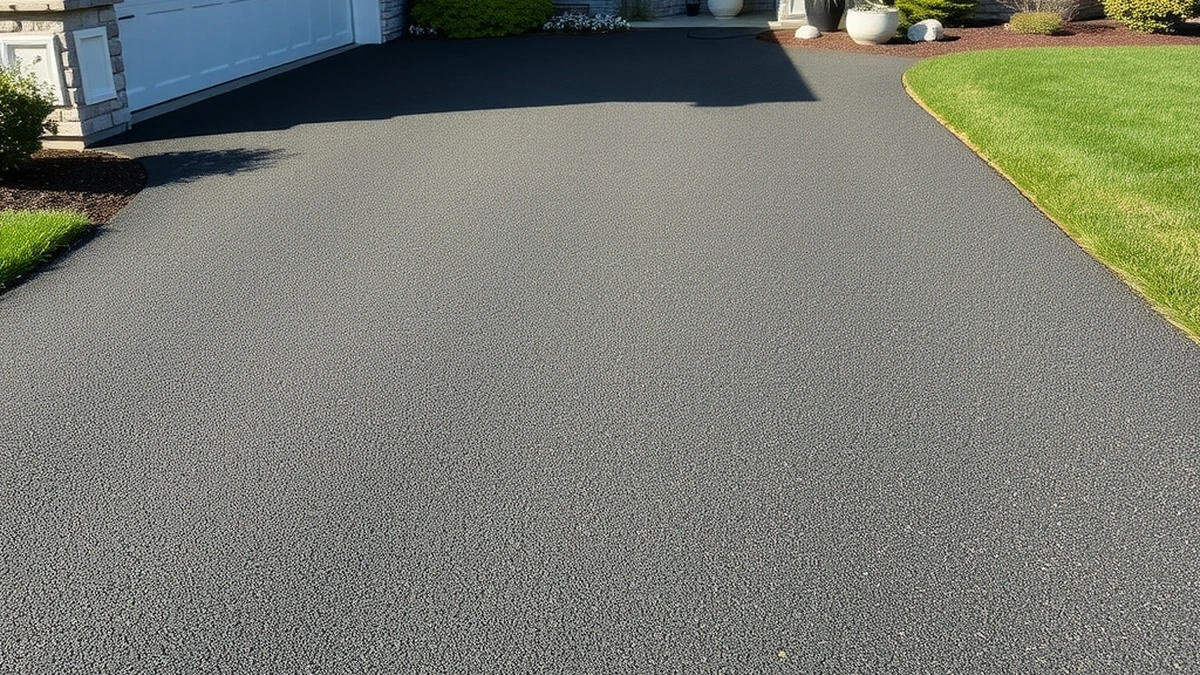
Driveway sealing lasts two to four years on most residential asphalt. Heavy traffic, harsh sun, road salt, and thin application push it toward two; a well-prepped surface with two coats and light use reaches four or more.
- Typical service life
- 2–4 years
- Contractor sealcoat
- $0.15–$0.30 per sq ft
- DIY sealcoat
- $0.05–$0.12 per sq ft
- Crack filling
- $2–$5 per linear ft
Some links on this page are affiliate links.If you buy through them we may earn a commission at no extra cost to you. We do not accept payment for rankings. Read the full disclosure.
Driveway sealing lasts two to four years on most residential asphalt. Where you land in that range depends on traffic, sun exposure, winter salt, and how well the surface was prepared before the coat went down. A driveway that gets sealed every two years is not being over-serviced; a driveway that needs it every year has a problem worth diagnosing.
What “lasting” actually means
Driveway sealing is a sacrificial film. It is designed to wear away so the asphalt underneath does not, which means its service life is measured by how long the film stays intact enough to keep water and ultraviolet light out.
The film fails in two ways. It abrades, thinning first in the tire paths where mechanical wear concentrates. And it oxidizes, going from black to charcoal gray as sunlight breaks down the coating’s binder. Once either process exposes bare asphalt, the surface starts drying out and taking on water, and the clock on the next crack has started.
That is why the question is not really “how many years.” It is “how many years before the film stops doing its job on this driveway.”
Expected service life by condition
Estimates based on typical residential conditions. These are ranges, not guarantees, and local climate shifts them.
| Condition | Expected life | Why |
|---|---|---|
| Light use, shaded, two coats, good prep | 4–5 years | Low abrasion, slower oxidation |
| Typical suburban driveway, two coats | 3–4 years | Normal traffic and sun |
| Full sun, south-facing, one coat | 2–3 years | Faster UV breakdown, thinner film |
| Heavy traffic, multiple vehicles daily | 2–3 years | Abrasion in tire paths |
| Snow climate with road salt and plowing | 2–3 years | Salt and mechanical scraping |
| Poor prep, dirty or damp surface | 1–2 years | Adhesion failure, peeling |
The pattern is consistent: preparation and film thickness set the ceiling, and traffic plus weather determine how fast you approach it.
What shortens the life
Six factors do most of the damage:
Ultraviolet exposure. A driveway in full sun all day oxidizes faster than one under trees. This is the main reason a south-facing driveway in a hot climate rarely reaches four years.
Abrasion. Tire paths wear first, especially where cars turn. Turning tires scrub the surface, and a driveway with a tight turn at the top will show wear lines in eighteen months.
Road salt and de-icing products. Salt draws moisture and accelerates surface breakdown. It also gets tracked onto the driveway from the street all winter.
Snow plows and shovels. A metal blade scraping a sealed surface takes the film off in strips. Plastic shovels and a raised blade reduce the damage.
Standing water. Water that sits in a depression softens the film and the asphalt under it. If a low spot holds water for a day after rain, the sealer there will fail early no matter what product was used.
Application errors. One thick coat that skins over before curing, sealer applied over a damp or dirty surface, or application below about 50°F all shorten life dramatically. Best driveway sealing covers what a correct application looks like.
Material comparison
| Material | Typical service life | Notes |
|---|---|---|
| Coal tar sealant | 3–5 years | Durable and fuel resistant, but restricted in some states |
| Asphalt emulsion | 2–4 years | Residential default, good performance with proper prep |
| Acrylic sealer | 1–3 years | Mostly cosmetic, used on concrete and decorative surfaces |
Coal tar has the longer track record. It is also regulated or banned in a number of jurisdictions because of runoff concerns, so its availability depends on where you live. Asphalt emulsion, applied in two coats on a properly cleaned surface, reliably delivers two to four years, which is the number most homeowners should plan around.
Acrylic products are not an asphalt sealcoat. They belong to concrete and decorative work, and our types of driveway sealing guide explains the split.
How to tell it is time to reseal
Rather than counting years, test the surface.
- Pour a cup of water on the driveway in three spots. If it beads and rolls off, the film is intact. If it soaks in and darkens the asphalt, the film is gone there.
- Look at the tire paths in daylight. Bare, gray, aggregate-exposed strips mean the coat has worn through.
- Check the color. A uniform deep black means the film is still working; patchy charcoal means it is not.
- Run a hand over the surface. Chalky residue on your palm is oxidized binder.
- Look for new hairline cracks. Their return is the clearest signal that the surface is unprotected.
- Test a peeling edge. If sealer lifts in flakes, the bond has failed and a recoat will not fix it without removing the loose material.
Two or more positive results means it is time. How often to seal an asphalt driveway covers the scheduling side in more depth.
Cost per year of service
This is where the numbers get useful. On an 800 sq ft driveway:
Contractor sealing at $0.30 per sq ft: 800 × $0.30 = $240
Spread over a three-year service life: $240 ÷ 3 = $80 per year
Full replacement at $10 per sq ft: 800 × $10 = $8,000
Spread over a twenty-year life: $8,000 ÷ 20 = $400 per year
At the low end, contractor sealing at $0.15 per sq ft: 800 × $0.15 = $120 $120 ÷ 3 = $40 per year
So maintaining the surface costs roughly $40 to $80 per year on that driveway, against $400 per year to eventually replace it. That comparison is the entire argument for sealing, and it holds as long as the base is sound. If the base has failed, sealing stops being maintenance and becomes decoration — driveway sealing repair covers how to tell the difference.
Making the next coat last longer
The variables you control are preparation and timing. Clean thoroughly, fill cracks before coating, apply two thin coats at the labeled coverage rate, and pick a dry window with temperatures above 50°F. Keep the driveway clear of standing water, and shovel with plastic where you can.
Between coats, patch cracks as they appear rather than waiting for the next sealing. A crack left open for two winters lets water into the base, which is a much more expensive problem than a tube of filler. Driveway sealing maintenance has the seasonal checklist, and benefits of sealing a driveway explains what the film is actually protecting against.
If you are deciding whether the whole program is worth it, is driveway sealing worth it works through the payback case with the same arithmetic.
Frequently asked questions
Does driveway sealer last longer if you apply two coats?
Yes, generally. Two thin coats build a thicker cured film than one heavy coat, and the second coat covers the thin spots the first left behind on rough asphalt.
Why is my sealcoat wearing off in the tire paths first?
Abrasion. Tire paths take the most mechanical wear on any driveway, so the film thins there first. That pattern is normal and is not a sign of a bad job.
Can I seal over old sealer?
Yes, if the old coat is sound and bonded. Loose, peeling, or flaking sealer has to be removed first, or the new coat will lift off with it.
Does sealing every year make the driveway last longer?
No. Annual coats build up a brittle layer that cracks and peels. Two to four years is the normal interval, and a driveway that will not hold sealer for two years usually has a drainage or base problem.
How long before I can drive on a freshly sealed driveway?
Typically 24 to 48 hours, depending on product, temperature, and humidity. Cool, damp weather extends the wait, and driving too early leaves permanent tire marks.
Does sealing last longer on concrete?
Concrete uses a different sealer with a different service life. This guide covers asphalt sealcoat, which does not apply to concrete surfaces.
Sources
Some links are affiliate links.If you buy through them we may earn a commission at no extra cost to you. We do not accept payment for rankings. Read the full disclosure.