Is driveway sealing worth it?
Is driveway sealing worth it?: practical numbers, costs, and trade-offs, written independently.
Is driveway sealing worth it?: practical numbers, costs, and trade-offs, written independently. The guide below shows the numbers and the trade-offs.
- Typical range
- Varies by system and site
- First step
- Measure the space and confirm the load
- Professional help
- Recommended for structural or electrical work
Some links on this page are affiliate links.If you buy through them we may earn a commission at no extra cost to you. We do not accept payment for rankings. Read the full disclosure.
Driveway sealing is worth it when the pavement is structurally sound and you plan to stay in the house long enough to see the next two or three seal cycles. It is not worth it when the base has failed, because sealer cannot restore a subbase, fill a depression, or hold a crumbling edge together. The honest answer depends on which of those two driveways you have.
What sealing buys and what it does not
Driveway sealing is the application of an emulsion coating over asphalt to slow oxidation and reduce the water that reaches the binder at the surface. The coating is a thin film, measured in fractions of an inch, and it works by sacrificially weathering instead of the pavement.
What it buys is a slower fade, fewer surface ravels, and better resistance to oil and minor water intrusion. What it does not buy is structure. Sealer does not add strength, bridge a moving crack, or level a low spot. If a contractor offers to “seal and fix” a sunken panel with extra coats, that is not a repair, it is a coating over a problem.
The numbers, per square foot and per driveway
- Professional sealcoating: $0.15 to $0.30 per square foot
- DIY sealer material: $0.05 to $0.12 per square foot
- Crack filling: $2 to $5 per linear foot
- Pothole repair: $100 to $400 per hole
- Asphalt overlay: $3 to $7 per square foot
- Full replacement: $8 to $15 per square foot
For a 400-square-foot driveway, one professional coat is 400 × $0.15 = $60 at the low end and 400 × $0.30 = $120 at the high end. DIY material is 400 × $0.05 = $20 to 400 × $0.12 = $48.
The fifteen-year arithmetic
Sealcoating is not a one-time purchase. A three-year cycle over 15 years means five coats.
At $60 per coat: 5 × $60 = $300. At $120 per coat: 5 × $120 = $600. Add one round of crack filling at 50 linear feet, which is $100 to $250, and the 15-year maintenance total is roughly $400 to $850.
Compare that with the alternatives. An overlay on the same 400 square feet is $1,200 to $2,800. Full replacement is $3,200 to $6,000. Sealing costs a fraction of either, which is the whole case for doing it.
There is no published figure that says sealing adds a specific number of years to a driveway’s life, and any contractor who quotes one is guessing. What the arithmetic does show is that if a seal program delays an overlay by even a couple of seasons, the coats have paid for themselves several times over. If it does not delay anything, you have spent $400 to $850 on appearance and surface protection, which is a fair description of what you bought.
Sealing versus repairing
| Situation | Seal | Repair |
|---|---|---|
| Uniform, tight surface with faded color | Yes | No |
| A few cracks under 1/4 inch | Yes, after filling | Fill first |
| Cracks that reopen every year | No | Investigate the base |
| Puddle in a depression after rain | No | Patch or overlay |
| Alligator cracking across a panel | No | Patch or overlay |
| Crumbling edges | No | Edge repair or replacement |
| Oil staining on sound pavement | Yes, after degreasing | Clean first |
The pattern is simple: sealing is the last step, not the first. Everything that is broken gets fixed before the coating goes down, or the coating fails along with it.
When it is not worth it
Three situations where the money is better spent elsewhere.
The base has failed. A dish that holds water, pavement that flexes underfoot, and a web of cracks across one panel are all base symptoms. Sealing traps moisture against the failing structure and makes the eventual repair more expensive.
You are selling within a year. Sealer improves appearance, but it does not change a buyer’s inspection report, and a fresh coat on a failing driveway can read as a cover-up. Fix what is broken instead.
The driveway is new. Fresh asphalt needs to cure before it is sealed, typically several months, and some contractors advise waiting a full season. Sealing too early traps the oils that the pavement needs to finish curing.
Getting value from a sealcoat
- Check the surface after rain. If water drains off and the pavement is flat, sealing is appropriate.
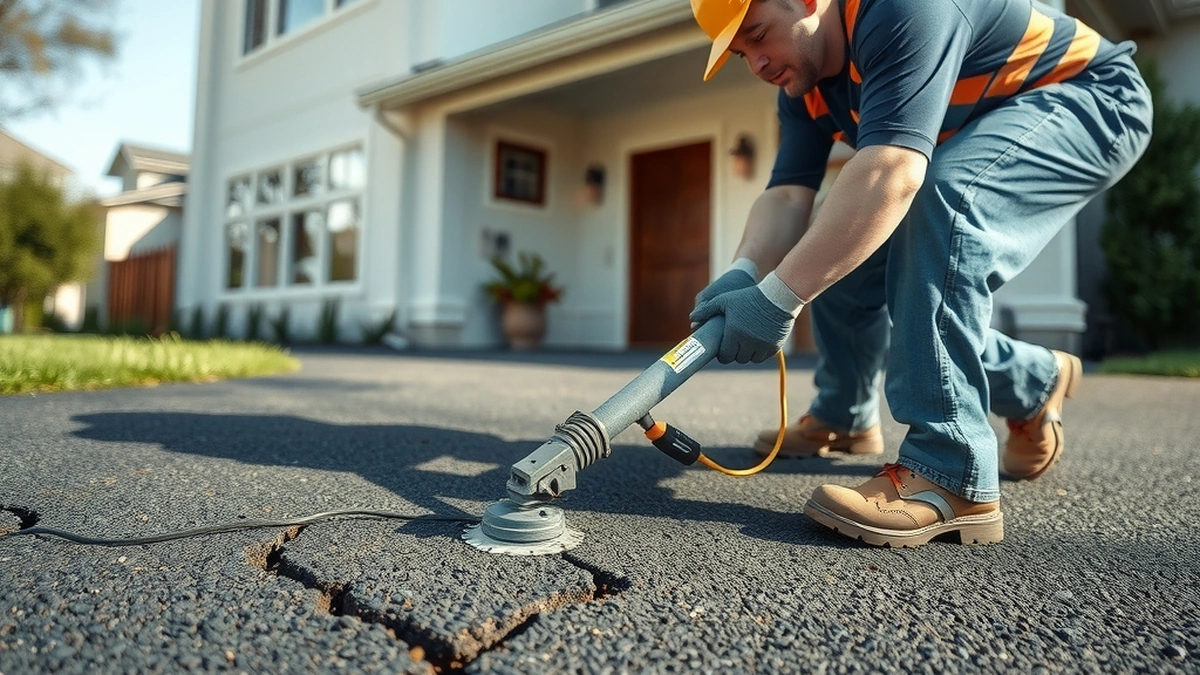
- Fill every crack over an eighth of an inch before the sealer goes down. At $2 to $5 per linear foot, 50 feet costs $100 to $250.
- Patch potholes and any alligatored area. A pothole is $100 to $400 to repair, and it will not be fixed by coating over it.
- Clean the surface thoroughly and let it dry. Sealer will not bond to dirt, oil, or moisture.
- Apply two thin coats rather than one heavy coat, and keep traffic off for the full cure time.
- Reseal on a three-to-five-year cycle, or sooner if the surface starts to gray and ravel.
Ask for the sealer product name and the coverage rate in the quote. A contractor who cannot tell you what is going in the pail, or how many square feet per gallon it covers, is not giving you a number you can compare.
Do it yourself or hire it out
DIY saves the labor but not the risk. The material is $0.05 to $0.12 per square foot against $0.15 to $0.30 for a professional, so on 400 square feet you keep $40 to $72. That is not much against a weekend of work, and a failed DIY coat costs more to strip than it saved.
Hire a contractor when the driveway is large, the prep is heavy, or the surface needs crack filling first. Do it yourself when the driveway is small, the surface is clean and sound, and you can commit to the prep. DIY driveway sealing covers the equipment, and how much driveway sealing costs has the contractor-side detail.
If the inspection turns up structural damage, the decision changes: read driveway repair cost and asphalt overlay cost before you buy sealer. For the surface-only fixes that come first, driveway crack repair is the place to start.
The bottom line
Sealing is worth it on a sound driveway you intend to keep. At $0.15 to $0.30 per square foot, a 400-square-foot coat costs $60 to $120, and a 15-year program runs $400 to $850, against $1,200 to $2,800 for an overlay. It is not worth it on a driveway with base failure, where the same money should go into repair. Decide which driveway you have before you decide whether the sealer is worth buying.
Frequently asked questions
What is the most important measurement?
Start with the ceiling or clearance number; it decides which systems can fit.
What does a typical project cost?
Costs vary by system and site access; the guide shows the line items and a planning range.
Can I install this myself?
Some tasks are DIY-friendly, but structural, electrical, and load-bearing work should be done by a licensed professional.
How long does installation take?
A simple setup is a weekend; a full build with electrical or structural work can take several weeks.
What should I check before buying?
Confirm dimensions, load ratings, and the manufacturer's installation requirements for your exact model.
Where can I find local help?
Ask a licensed contractor or installer who has worked with the same system and can inspect your site.
Sources
Some links are affiliate links.If you buy through them we may earn a commission at no extra cost to you. We do not accept payment for rankings. Read the full disclosure.