Types of driveway sealing
Asphalt emulsion, coal tar, and acrylic sealers do different jobs at different prices. What each type is for, where it is legal, and how to pick one.
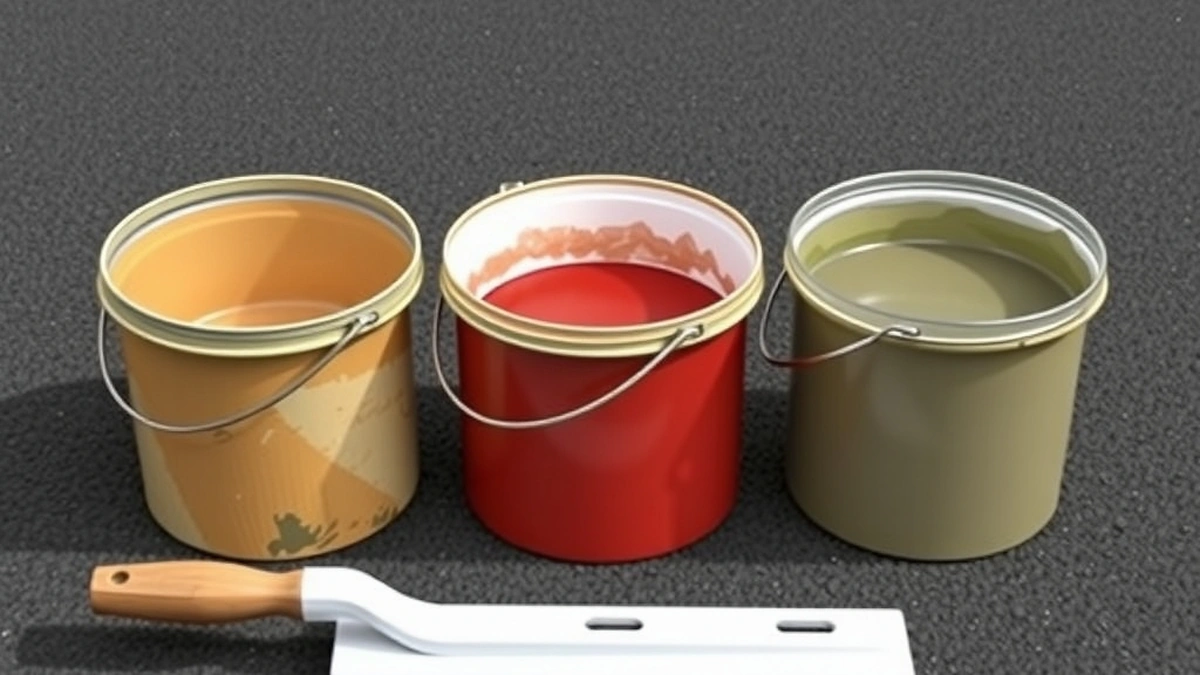
There are three main types of driveway sealing — asphalt emulsion, coal tar, and acrylic. Emulsion is the residential default, coal tar is more fuel resistant but restricted in some states, and acrylic is for concrete and decorative surfaces rather than asphalt.
- Contractor sealcoat
- $0.15–$0.30 per sq ft
- DIY sealcoat
- $0.05–$0.12 per sq ft
- Crack filling
- $2–$5 per linear ft
- Typical service life
- 2–4 years
Some links on this page are affiliate links.If you buy through them we may earn a commission at no extra cost to you. We do not accept payment for rankings. Read the full disclosure.
Driveway sealing comes in three main types: asphalt emulsion, coal tar, and acrylic. Emulsion is what most residential contractors apply, coal tar is the older and tougher product that is now restricted in parts of the country, and acrylic belongs on concrete and decorative surfaces rather than asphalt. Choosing among them is mostly a question of what your driveway is made of and where you live.
Driveway sealing types differ in three ways: the binder that forms the film, the fillers mixed into it, and the surface the product is designed for.
The binder decides durability and chemical resistance. The fillers — usually silica sand or a similar aggregate — decide traction and how well the product fills small surface voids. The intended surface decides whether the product should be on your driveway at all.
Everything else, including color and how thick it looks going down, is mostly marketing.
The three main types compared
| Type | Best for | Service life | Notes |
|---|---|---|---|
| Asphalt emulsion | Residential and commercial asphalt | 2–4 years | Residential default, lower odor, widely available |
| Coal tar | Asphalt with fuel exposure | 3–5 years | Strong fuel resistance, restricted in some states |
| Acrylic | Concrete, decorative, stamped surfaces | 1–3 years | Not an asphalt sealcoat |
A fourth category, penetrating concrete sealer, is often sold as “driveway sealer” in hardware stores and has nothing to do with asphalt. If your driveway is concrete, that is the product family you want.
Asphalt emulsion
Asphalt emulsion is asphalt binder suspended in water with fillers and additives. It cures as the water evaporates, leaving a black film bonded to the surface.
It is the standard residential choice for four reasons: it is available everywhere, it has lower solvent odor than coal tar, it can be applied at lower temperatures, and it performs well when the surface is prepped correctly. Two thin coats on a clean driveway typically deliver two to four years.
Its weakness is fuel resistance. Gasoline and oil soften emulsion faster than they soften coal tar, which matters if vehicles park in the same spot and drip. Priming oil spots before coating mitigates this.
Coal tar
Coal tar sealant uses refined coal tar as its binder. It resists gasoline, oil, and de-icing chemicals better than emulsion, and it has a long record of use on parking lots and driveways.
The catch is environmental regulation. Coal tar contains polycyclic aromatic hydrocarbons, and runoff from sealed surfaces has been a water-quality concern. A number of states and municipalities restrict or ban its sale and use, and the list changes over time. Before buying or accepting a coal tar quote, confirm it is legal where you live.
Where it is permitted and where fuel exposure is real, coal tar can be the better product. Where it is restricted, emulsion is the substitute, and the difference in service life is measured in months rather than years.
Acrylic and specialty sealers
Acrylic sealers are water-based coatings that form a clear or tinted film. They are used on concrete, exposed aggregate, and decorative or stamped pavement where the goal is appearance and surface protection rather than heavy wear resistance.
On asphalt, acrylic is the wrong tool. It does not have the filler load or the wear resistance a driveway needs, and it will not hold up to tire traffic the way an emulsion sealcoat does. Our acrylic sealer installation guide covers where that product belongs.
There is also a category of specialty products: polymer-modified emulsions, fiber-reinforced sealers, and rapid-cure formulations. These are variations on emulsion rather than separate families, and they mostly affect cure time and crack bridging rather than delivering a different class of durability.
Matching the type to the surface
| Surface | Correct product | Wrong product |
|---|---|---|
| Asphalt driveway | Asphalt emulsion, or coal tar where legal | Acrylic, concrete sealer |
| Concrete driveway | Concrete sealer or resurfacer | Any asphalt sealcoat |
| Stamped or decorative concrete | Acrylic or decorative concrete sealer | Coal tar |
| Gravel or crushed stone | None — stabilization is a different job | All sealcoats |
That table resolves most of the confusion in this category. The product name on the pail should match the material under it.
Costs by type
Material cost differences between emulsion and coal tar are modest. The bigger variable is labor and preparation, which is why per-square-foot pricing lands in the same band regardless of product.
Contractor-applied sealcoat:
800 sq ft × $0.15 = $120 800 sq ft × $0.30 = $240
DIY material:
800 sq ft × $0.05 = $40 800 sq ft × $0.12 = $96
Crack filling, which is needed regardless of sealer type:
60 lf × $2 = $120 60 lf × $5 = $300
So on an 800 sq ft driveway with typical cracking, the estimated all-in total is $240 to $540. Choosing coal tar over emulsion moves that number by tens of dollars, not hundreds. Choosing to skip crack filling moves it down and shortens the job’s life by years.
How to choose in practice
- Confirm what your driveway is made of. Asphalt and concrete take different products entirely.
- Check local rules if you are considering coal tar, since restrictions vary by state and city.
- Decide whether fuel resistance matters — parking in the same spot with a leaking vehicle is the case for coal tar.
- Ask whether sand or aggregate is added, and say yes if the driveway is steep or the asphalt is porous.
- Confirm the coverage rate and number of coats rather than the brand.
- Buy or specify crack filler separately, because no sealer type replaces it.
What the type does not change
No sealer type fixes a failed base, and none of them is structural. If the driveway has alligator cracking, sections that move under a vehicle, or potholes that return after patching, the problem is underneath the surface and the product choice is irrelevant. Driveway sealing repair covers how to make that call.
What the type does change is how well the film handles fuel, sun, and cold — real but second-order effects compared with preparation. For application details by product, see driveway sealcoating and best driveway sealer. For what the right product costs at contractor rates, best driveway sealing walks through how quotes should be structured.
The short version: match the product to the surface first, then to the climate and fuel exposure, then stop worrying about the label.
Frequently asked questions
What is the most common type of driveway sealer?
Asphalt emulsion. It is the default residential product because it is widely available, lower odor, and performs well on a properly prepared driveway when applied in two coats.
Is coal tar sealer better than asphalt emulsion?
It resists fuel spills better and has a long service history, but it is restricted or banned in a number of states and municipalities because of runoff concerns, so availability depends on where you live.
Can I use acrylic sealer on an asphalt driveway?
It is not the right product for asphalt. Acrylic sealers are formulated for concrete and decorative surfaces, and they do not deliver the wear resistance an asphalt driveway needs.
What is filler in driveway sealer?
Silica sand or similar aggregate added to the sealer to improve traction and fill small surface voids. It is common on steep driveways and porous asphalt, and optional on smooth, dense surfaces.
Are there different types of sealer for concrete driveways?
Yes, and they are a separate category — film-forming or penetrating concrete sealers. Asphalt sealcoat should never be applied to concrete.
Do all driveway sealers need two coats?
Most manufacturers specify two coats for a new application on porous asphalt. A recoat over sound sealer may take one, but two thin coats generally outperform one thick one.
Sources
Some links are affiliate links.If you buy through them we may earn a commission at no extra cost to you. We do not accept payment for rankings. Read the full disclosure.