Driveway sealcoating
What sealcoating does, when asphalt is ready for it, what it costs per square foot, and the step-by-step process that decides whether it lasts two years or.
Driveway sealcoating is the application of a protective asphalt coating in one or two thin coats to slow oxidation and block water. It costs $0.15–$0.30 per sq ft professionally and $0.05–$0.12 per sq ft in DIY materials, and lasts two to four years.
- Contractor sealcoat
- $0.15–$0.30 per sq ft
- DIY materials
- $0.05–$0.12 per sq ft
- Crack filling
- $2–$5 per linear ft
- Cure before traffic
- 24–48 hours
- New asphalt wait
- about 90 days
Some links on this page are affiliate links.If you buy through them we may earn a commission at no extra cost to you. We do not accept payment for rankings. Read the full disclosure.
Driveway sealcoating is the process of coating an asphalt surface with a protective sealcoat to slow oxidation and keep water out. It costs $0.15 to $0.30 per square foot with a contractor, lasts two to four years, and only works when the surface underneath is clean, repaired, and structurally sound.
What sealcoating does and does not do
Sealcoating applies a thin film — typically a few hundredths of an inch once cured — over the asphalt surface. That film takes the wear that sunlight, water, and vehicle fluids would otherwise put on the binder in the pavement.
What it does: slows ultraviolet oxidation, reduces water absorption, makes oil and fuel spills easier to clean, improves appearance, and makes small surface defects easier to spot.
What it does not do: add load capacity, bridge moving cracks, fix a failed base, or correct drainage. Sealcoat is a wear layer, not a structural one. A driveway with alligator cracking or sections that move under a car needs driveway sealing repair, which is a different conversation.
What sealcoating costs
Estimated 2026 US pricing:
| Item | Estimated cost | Unit |
|---|---|---|
| Contractor sealcoat | $0.15–$0.30 | per sq ft |
| DIY sealcoat material | $0.05–$0.12 | per sq ft |
| Crack filling | $2–$5 | per linear ft |
| Pothole repair | $100–$400 | each |
| Asphalt overlay | $3–$7 | per sq ft |
On an 800 sq ft driveway — 20 feet wide by 40 feet long:
Contractor: 800 sq ft × $0.15 = $120 800 sq ft × $0.30 = $240
DIY material: 800 sq ft × $0.05 = $40 800 sq ft × $0.12 = $96
Add 60 linear feet of crack filling: 60 lf × $2 = $120 60 lf × $5 = $300
Estimated all-in contractor total: $240 to $540.
Most companies apply a $150–$300 minimum, so small driveways are usually billed at the minimum rather than the measured rate. For a size-by-size breakdown, see driveway sealing cost per square foot.
Is the driveway ready?
Three conditions gate the job.
Age. New asphalt should cure for roughly 90 days before sealcoating. Fresh pavement still contains volatile oils that need to evaporate, and sealing over them traps the oils and prevents adhesion.
Condition. Cracks wider than about a quarter inch need filling first. Potholes need patching. Oil and grease need degreasing and priming. Sealing over any of these is how a coat fails in its first winter.
Weather. Air and surface temperatures above roughly 50°F and rising, with no rain forecast for 24 to 48 hours. Cool, damp conditions slow curing and leave a tacky surface that tracks into the garage.
If all three check out, the driveway is ready. If any one fails, wait.
The sealcoating process
- Clear the driveway of vehicles, debris, and anything along the edges, then pull weeds from cracks and expansion joints.
- Degrease oil and fuel spots and let them dry completely, because sealer will not bond over petroleum residue.
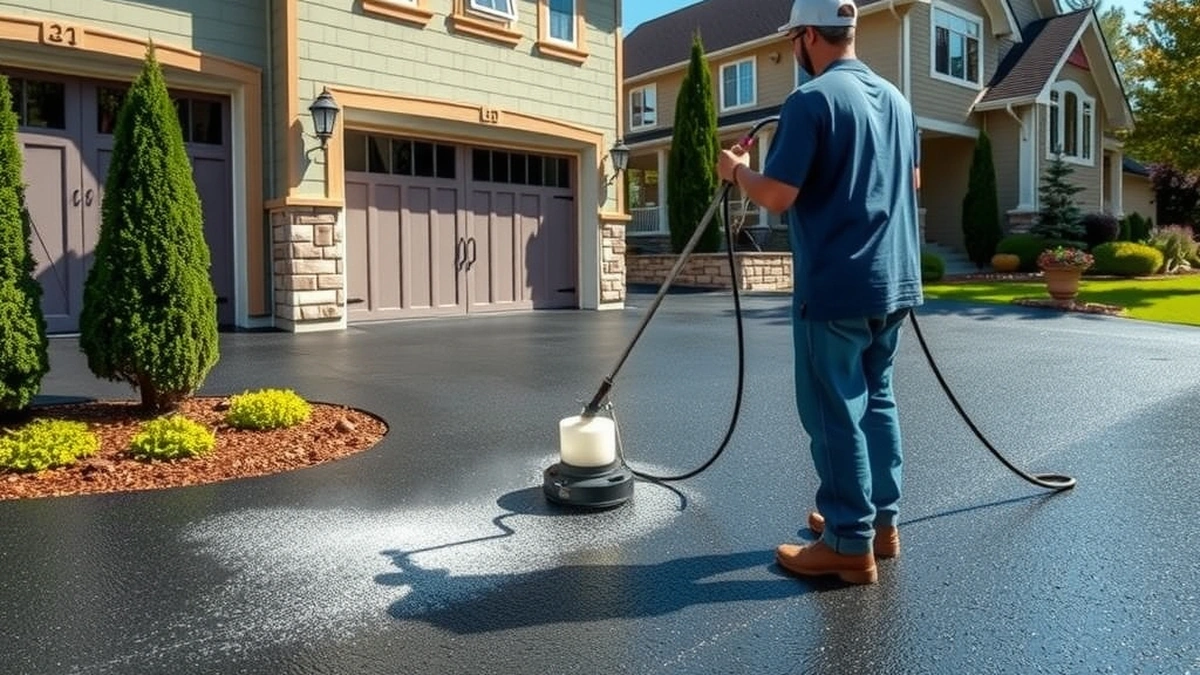
- Pressure wash or blow off the full surface and allow it to dry — a full day in cool weather.
- Fill cracks with crack filler, tamped flush, and patch potholes with asphalt patch material, squared and compacted.
- Tape and paper the garage apron, foundation, and any concrete or landscaping you do not want coated.
- Apply the first coat thin and even at the manufacturer’s coverage rate, working from the garage outward.
- Apply the second coat once the first is dry to the touch, crossing the direction of the first pass.
- Barricade the driveway for 24 to 48 hours before allowing traffic.
Two thin coats outperform one thick coat. A heavy single pass skins over on top, cures slowly underneath, and tends to peel at the edges and in the tire paths.
Application methods
Three methods show up on residential jobs, and they are not interchangeable in speed.
| Method | Best for | Tradeoff |
|---|---|---|
| Spray | Large areas, fast coverage, commercial lots | Needs masking and wind control; overspray risk |
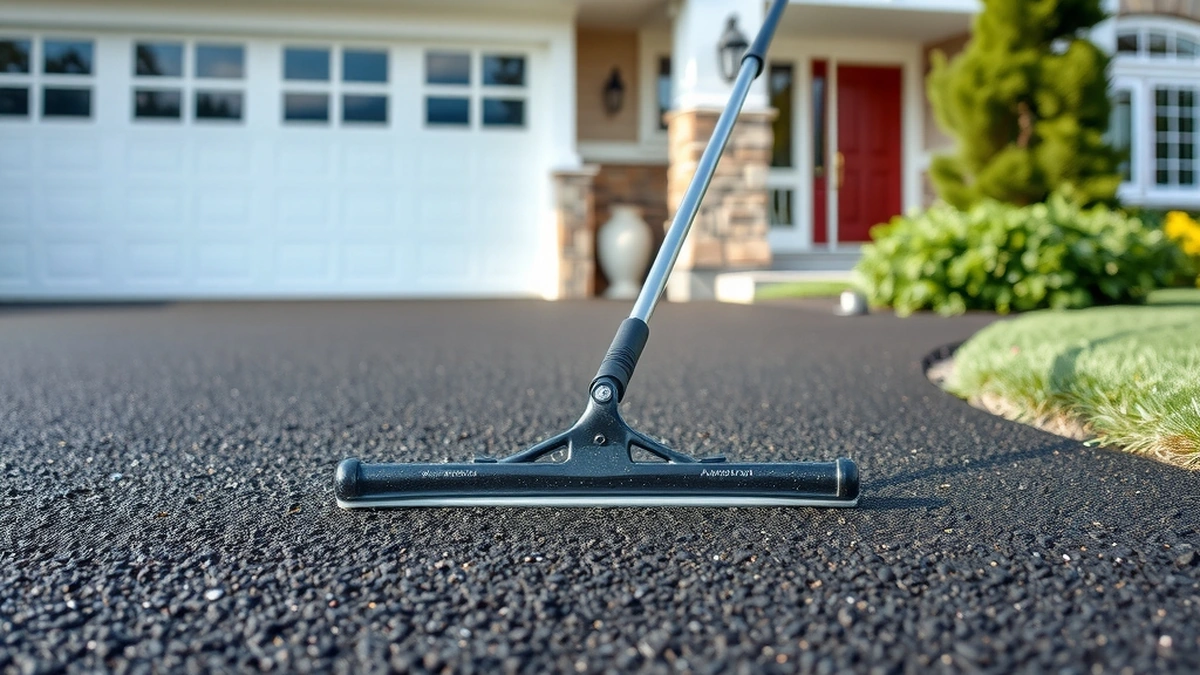
| Squeegee | Rough or porous asphalt, pushing material into voids | Slower, more labor per square foot |
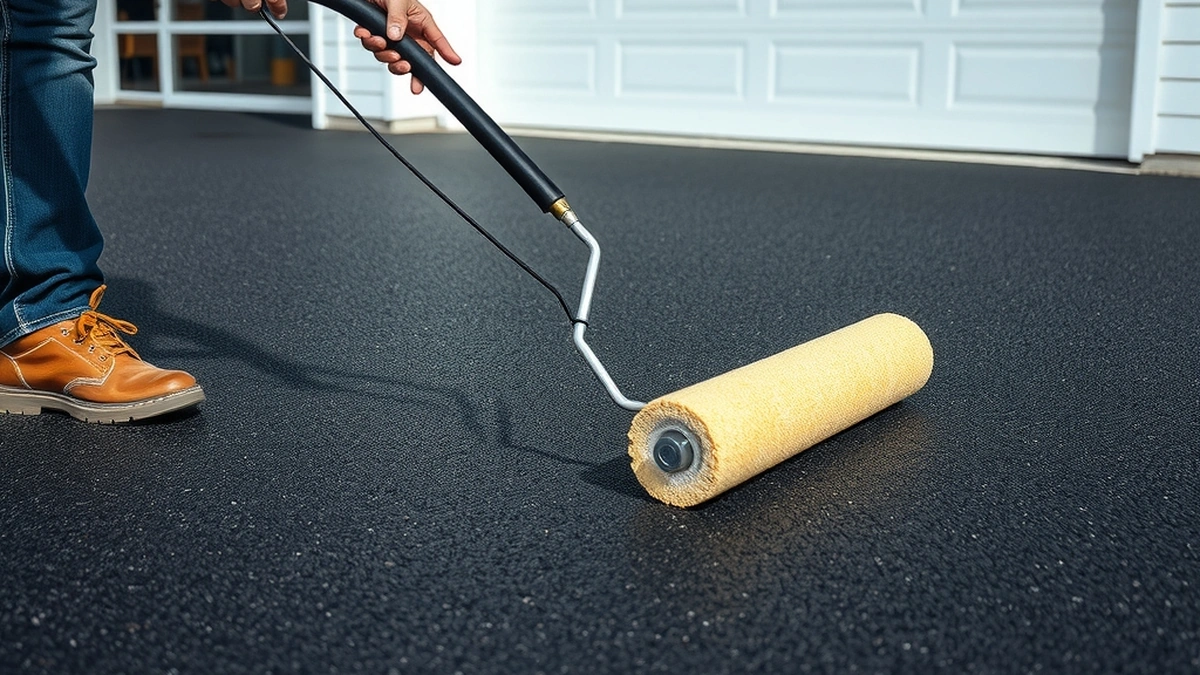
| Roller | Small and mid-size driveways, even film | Slow on large areas, thinner on rough surfaces |
Many crews squeegee the first coat into the surface and spray or roll the second for an even finish. Spray sealing a driveway covers the equipment side in detail.
Why sealcoats fail early
Most failures are preparation failures, not product failures. The recurring causes:
- Sealing a dirty surface, so the film bonds to dust instead of asphalt.
- Sealing over moisture from a recent wash or overnight dew.
- Applying one thick coat that skins before curing.
- Skipping crack filling, so the coat cracks along the same lines within a season.
- Sealing too early in spring or too late in fall, when temperatures drop overnight.
- Sealing new asphalt before the 90-day cure.
None of these is exotic. Each one is a step that got shortened under schedule pressure, which is why the cheapest quote and the shortest job are often the same thing.
Sealcoating vs resurfacing
These get confused constantly. Sealcoating is a film measured in hundredths of an inch. Resurfacing, or an overlay, adds a new asphalt layer roughly 1.5 to 2 inches thick on top of the old surface.
Overlay cost on 800 sq ft: 800 sq ft × $3 = $2,400 800 sq ft × $7 = $5,600
Full replacement: 800 sq ft × $8 = $6,400 800 sq ft × $15 = $12,000
Sealcoating at the same size is $120 to $240. That is roughly a twentieth of an overlay, and it is the reason sealing is the default maintenance move. It is also why sealing is the wrong answer when the pavement has structurally failed — a $200 coat over a failing base is $200 spent on nothing. Driveway sealing vs asphalt sealcoating covers the terminology, and asphalt overlay cost has the structural options.
Keeping the coat alive
After curing, keep the surface clear of standing water and debris, fill new cracks as they appear, and clean oil spills promptly. Plan the next coat for two to four years out, or sooner if the tire paths go gray before then. How long does driveway sealing last explains how to test for that, and driveway sealing maintenance has the seasonal checklist.
For the full application walkthrough from a contractor’s perspective, see driveway sealing installation.
Frequently asked questions
What does sealcoating a driveway do?
It applies a protective film that slows oxidation from sunlight and blocks water from entering the asphalt. It extends surface life; it does not add structural strength.
How much does driveway sealcoating cost?
Contractor application runs $0.15–$0.30 per sq ft, so an 800 sq ft driveway costs about $120–$240 before crack filling at $2–$5 per linear ft.
How long after installation can asphalt be sealcoated?
Roughly 90 days. New asphalt needs time for its oils to evaporate, and sealing too early can trap them and prevent the coat from bonding.
Can sealcoating be done in cold weather?
Not reliably. Most products need air and surface temperatures above about 50°F and rising, plus 24 to 48 hours without rain, or the film will not cure properly.
Does sealcoating fill cracks and holes?
Only hairline surface cracks. Open cracks need crack filler and potholes need patching before the coat, otherwise the sealer bridges the gap and fails along the same line.
How long should I stay off a freshly sealcoated driveway?
Plan on 24 to 48 hours for foot traffic and vehicle traffic, longer in cool or humid weather. Barricades or cones help prevent the tire marks that set permanently.
Sources
Some links are affiliate links.If you buy through them we may earn a commission at no extra cost to you. We do not accept payment for rankings. Read the full disclosure.