Coal tar sealer vs hot-pour crack fill
Coal tar coats at $0.15-$0.30 per sq ft; hot-pour fill repairs cracks at $2-$5 per linear ft. Which driveways need both, and in what order.
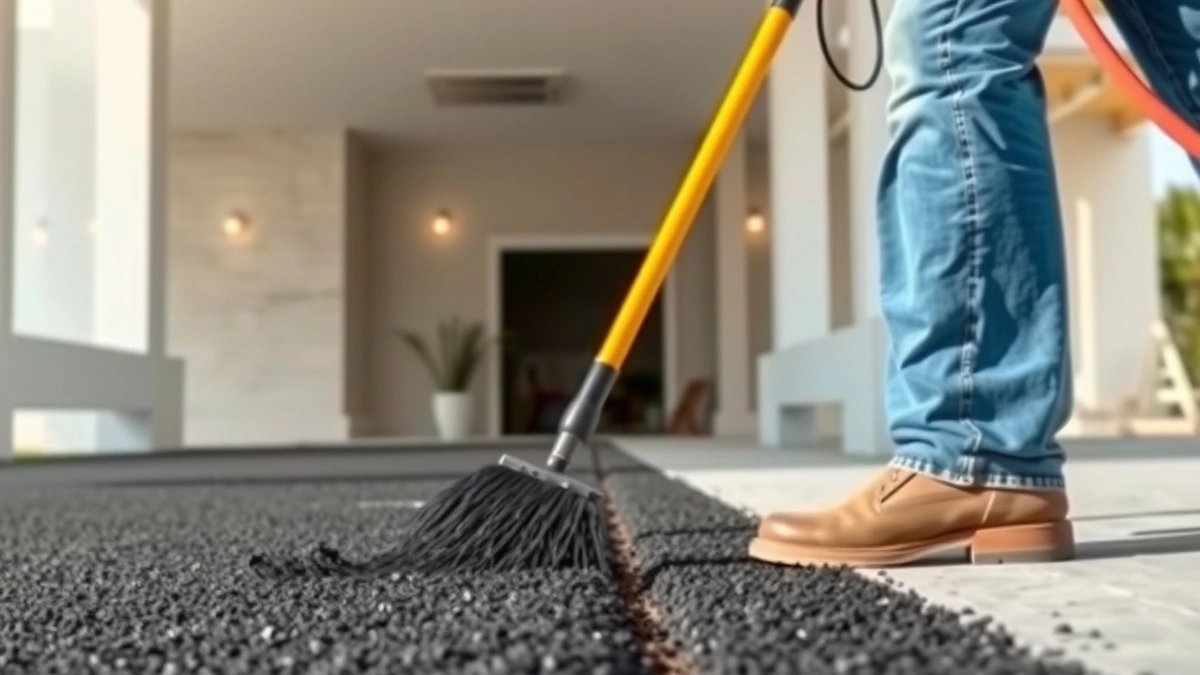
Coal tar sealer protects a surface at $0.15 to $0.30 per square foot and resists fuel; hot-pour crack fill repairs an opening at $2 to $5 per linear foot. Coal tar will not fill a crack, so patch and fill first, then coat, especially on a driveway with oil exposure.
- Coal tar
- $0.15-$0.30 per sq ft
- Crack fill
- $2-$5 per linear ft
- Coal tar life
- 3-4 years
- Crack fill life
- 3-5 years
- Order
- Fill, then coat
Some links on this page are affiliate links.If you buy through them we may earn a commission at no extra cost to you. We do not accept payment for rankings. Read the full disclosure.
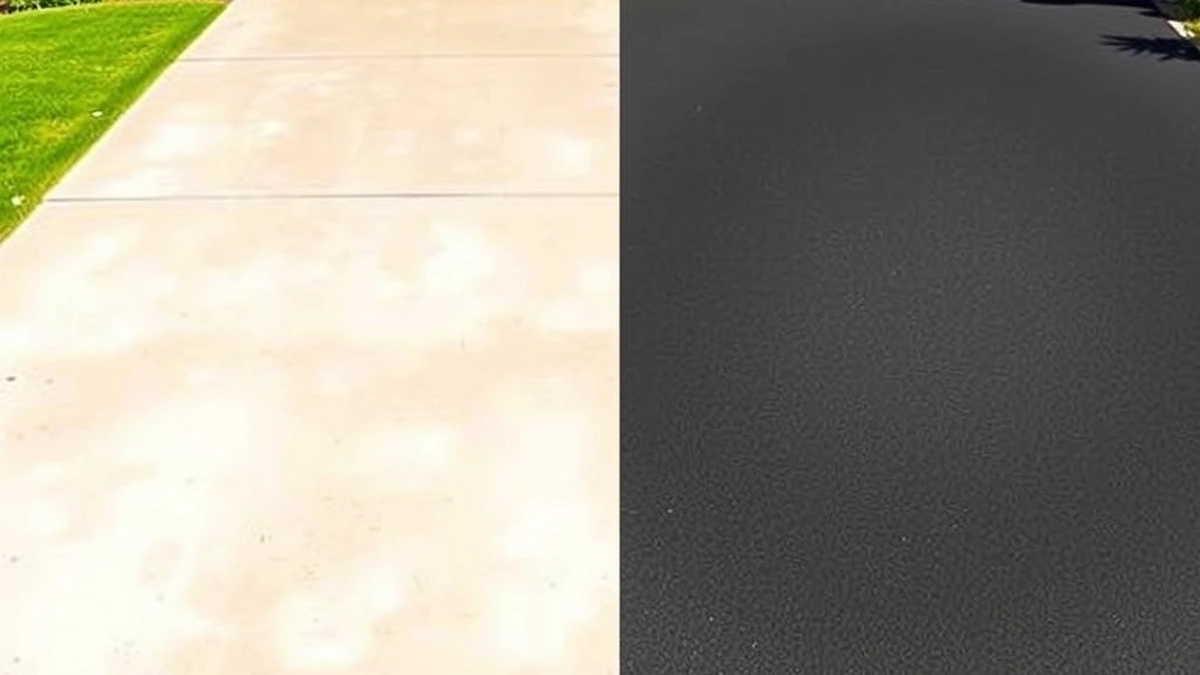
Coal tar sealer and hot-pour crack fill are used on the same driveways and never for the same purpose. Coal tar coats a surface at $0.15 to $0.30 per square foot and resists fuel. Hot-pour fill repairs an opening at $2 to $5 per linear foot. On a driveway with cracks and oil stains, both are needed, and the fill goes first.
What each one does
Coal tar sealer is a water-based emulsion of refined coal tar and filler that cures into a dense, dark, fuel-resistant film.
Hot-pour crack fill is a rubberized asphalt material heated to 350 to 400 F and poured into a crack, where it cools into a flexible plug.
One protects an area, the other seals a line. Neither repairs a base, and neither substitutes for the other.
Head to head
| Attribute | Coal tar sealer | Hot-pour crack fill |
|---|---|---|
| Purpose | Protect the surface | Seal an opening |
| Unit | Square foot | Linear foot |
| Cost | $0.15-$0.30 per sq ft | $2-$5 per linear ft |
| Application | Cold, squeegee or sprayer | Hot, melter and wand |
| Life | 3-4 years | 3-5 years |
| Fuel resistance | High | Not applicable |
| Covers | Whole pavement | Cracks only |
| Order | Second | First |
Why coal tar cannot do the crack job
A coal tar film is thin. It is designed to sit on the surface and take ultraviolet and traffic, not to fill a void.
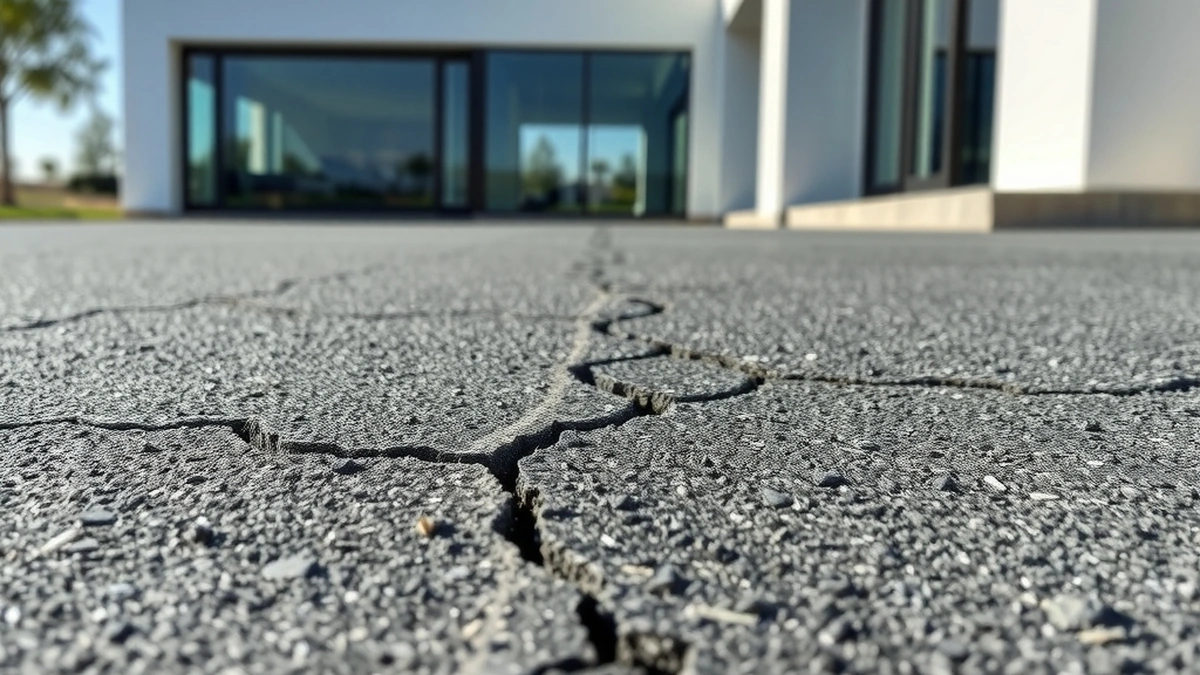
Applied over an open crack, it cures across the gap, splits along the crack line, and lifts at the split. The result is a driveway with a failed line down every crack and water entering at the lifted edges.
This is the most common wasted coat in driveway maintenance, and it is entirely avoidable: fill first.
Cost of both, worked through
A 600 square foot driveway with 100 linear feet of cracks:
Crack fill at $3.50 per foot: 100 × $3.50 = $350. Coal tar at $0.24 per square foot: 600 × $0.24 = $144. Total: $494, or $0.82 per square foot.
Over a decade, with the cracks refilled once and the coating applied three times: crack fill $700, coal tar $432, total $1,132. That is $113 a year for a driveway that stays sealed and fuelled-resistant.
Compare a single overlay at $3 to $7 per square foot on 600 square feet: $1,800 to $4,200. Ten years of maintenance is a quarter of the low end.
Where each product earns its place
Fuel exposure is the main case. A driveway used by a diesel truck, a tractor, or a vehicle that marks its spot with oil will hold up far better under coal tar than under emulsion or acrylic.
Appearance is the second. Coal tar’s deep black holds longer than any other product in the category, which matters on a visible front driveway.
Interval is the third. Three to four years between coats, against two to three for emulsion, is one fewer recoat per decade.
Where coal tar is restricted — several states and municipalities limit it because of polycyclic aromatic hydrocarbon runoff — the coating choice falls to emulsion or acrylic and the logic above changes accordingly. The crack work does not change, which is worth remembering when a contractor quotes a single “seal and repair” price.
Where hot-pour earns its place.
Hot-pour is the durable crack repair. It flexes with the pavement, bonds to clean dry walls, and lasts three to five years in a crack that is not being pulled apart.
Cold-pour bottle filler lasts one to three seasons for a fraction of the equipment cost. On a few isolated cracks, that is a sensible trade. On 100 linear feet, hot-pour wins on cost per year.
The exception is a moving crack. If the same crack reopens within a season, neither filler holds, and the money belongs on a base assessment. Our hot-pour crack fill problems guide covers that diagnosis.
The sequence that works
- Clean the driveway and let it dry.
- Fill every crack wider than a quarter inch with hot-pour rubber.
- Blot the filler, let it cool, and trim any overfill.
- Prime oil spots so the coating can bond.
- Apply coal tar at the label rate.
- Cure 24 to 48 hours before traffic.
Steps 1 to 3 are the crack job; steps 4 to 6 are the coating. On a driveway with no significant cracking, start at step 4.
What neither product fixes
Both are maintenance. Neither repairs a base, corrects drainage, or holds together alligator cracking.
A driveway with alligator cracking across a quarter of the surface, ponding water, or soft spots needs an overlay at $3 to $7 per square foot or replacement at $8 to $15. A coat over that damage looks uniform for a season and re-cracks along the same lines.
Our alligator cracking repair guide covers the diagnosis, and driveway sealing repair explains how to separate surface wear from base failure.
Getting the quote right
Ask for the crack work and the coating as separate lines: linear feet at a per-foot rate, and square footage at a per-square-foot rate.
A single lump sum for “crack repair and seal” hides both, which makes it impossible to compare quotes or to tell whether the crack filling was priced at $2 or $5 per foot.
Ask too whether the coal tar is legal to sell locally and whether the contractor carries it regularly. A product that has to be special-ordered often arrives with a price at the top of the band.
Our coal tar sealer cost page covers the coating side, and hot-pour crack fill cost covers the crack side.
Frequently asked questions
Can coal tar sealer fill cracks?
No. Coal tar is a surface coating a few thousandths of an inch thick. It will not bridge an open crack, and applied over one it splits along the same line within a season.
Should I fill cracks before applying coal tar?
Yes. Fill every crack wider than a quarter inch with hot-pour rubber, let it cool, then apply the coal tar over the whole surface.
Does coal tar resist oil better than crack filler?
They do different jobs. Coal tar resists fuel at the surface; hot-pour rubber keeps water out of an opening. Neither replaces the other on a driveway with both cracks and oil.
How long does each last?
Coal tar lasts three to four years on a residential driveway. Hot-pour crack fill lasts three to five years in a crack that is not moving.
Can I put coal tar over hot-pour filler?
Yes, once the filler has cooled and firmed up. Blot any excess first so the filler does not track under the coating.
Is coal tar legal everywhere?
No. Several states and municipalities restrict or ban it because of polycyclic aromatic hydrocarbon runoff. Check local rules before buying or hiring.
Sources
Some links are affiliate links.If you buy through them we may earn a commission at no extra cost to you. We do not accept payment for rankings. Read the full disclosure.