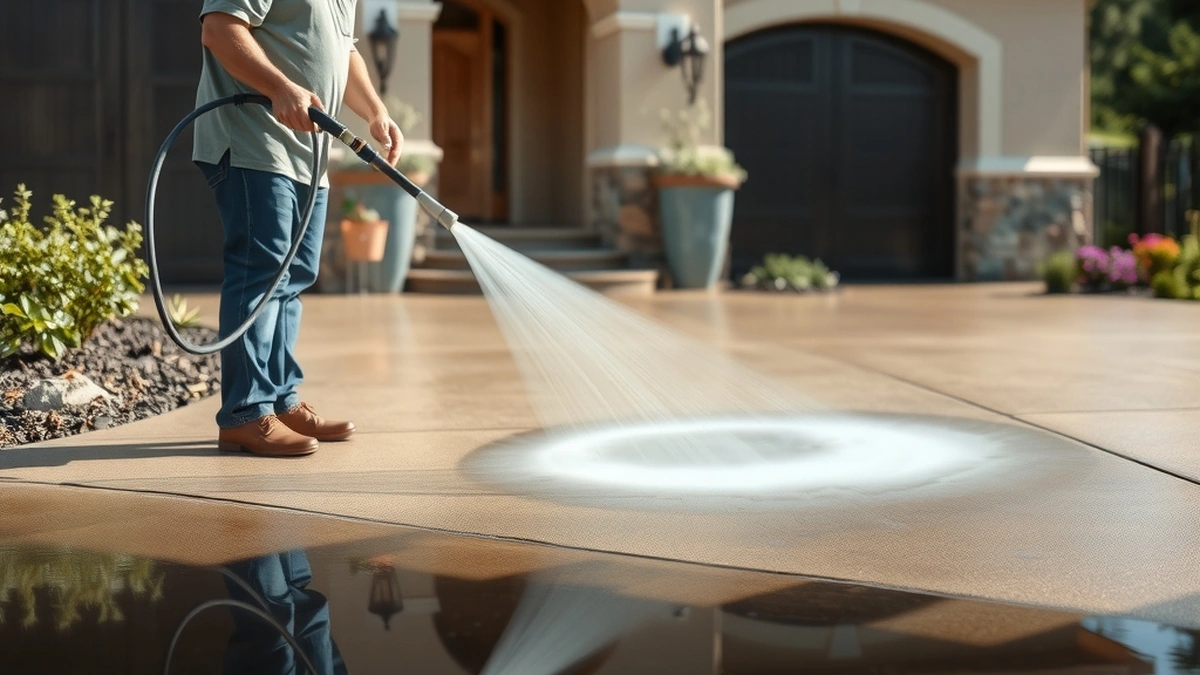
Coal tar sealer problems
The common coal tar sealer problems, what causes each one, what a fix costs, and how to tell a coating fault from a pavement failure underneath.
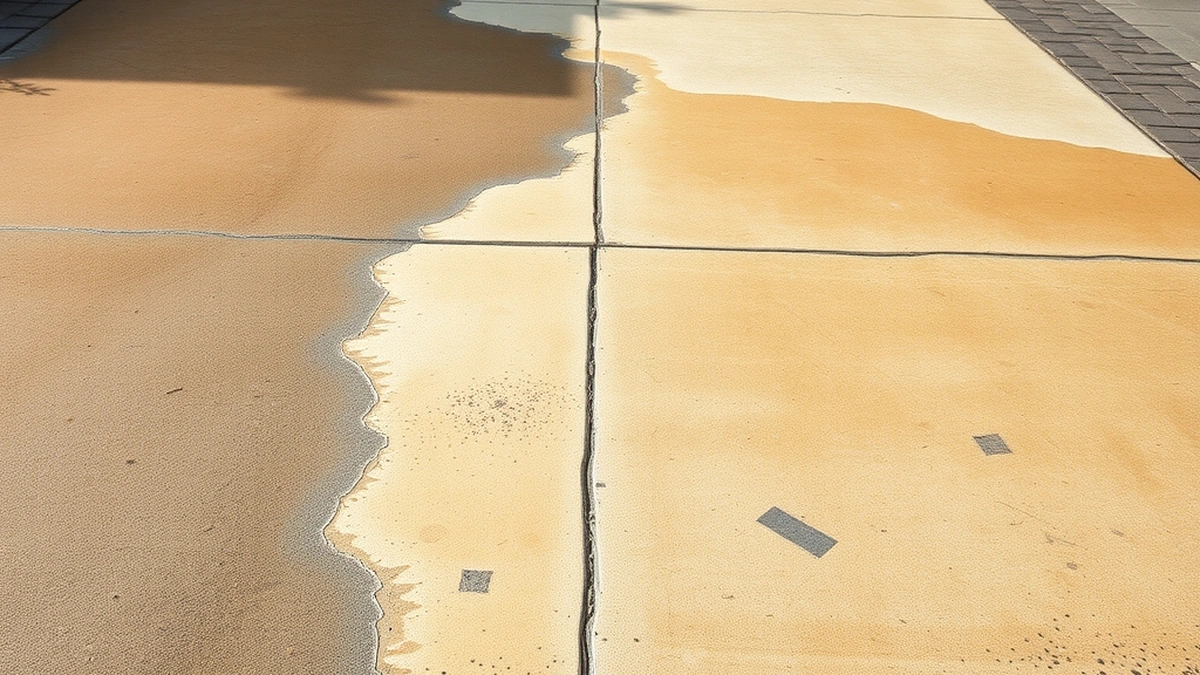
Most coal tar sealer problems are blushing, peeling, tyre tracking, and fading, and most trace back to moisture, thin coats, or cool weather during curing. A smaller set reflects base failure that no coating can fix.
- Expected life
- 3-4 years
- Recoat cost
- $0.15-0.30 per sq ft
- Crack filling
- $2-5 per linear ft
- Overlay cost
- $3-7 per sq ft
Some links on this page are affiliate links.If you buy through them we may earn a commission at no extra cost to you. We do not accept payment for rankings. Read the full disclosure.
Coal tar sealer problems fall into two groups, and they need different responses. Blushing, peeling, tracking, and fading are film problems, fixed by better prep, better timing, or another coat. Alligator cracking, depressions, and edge crumbling are pavement problems, and no sealer at any price will hold them together.
What the product is meant to do
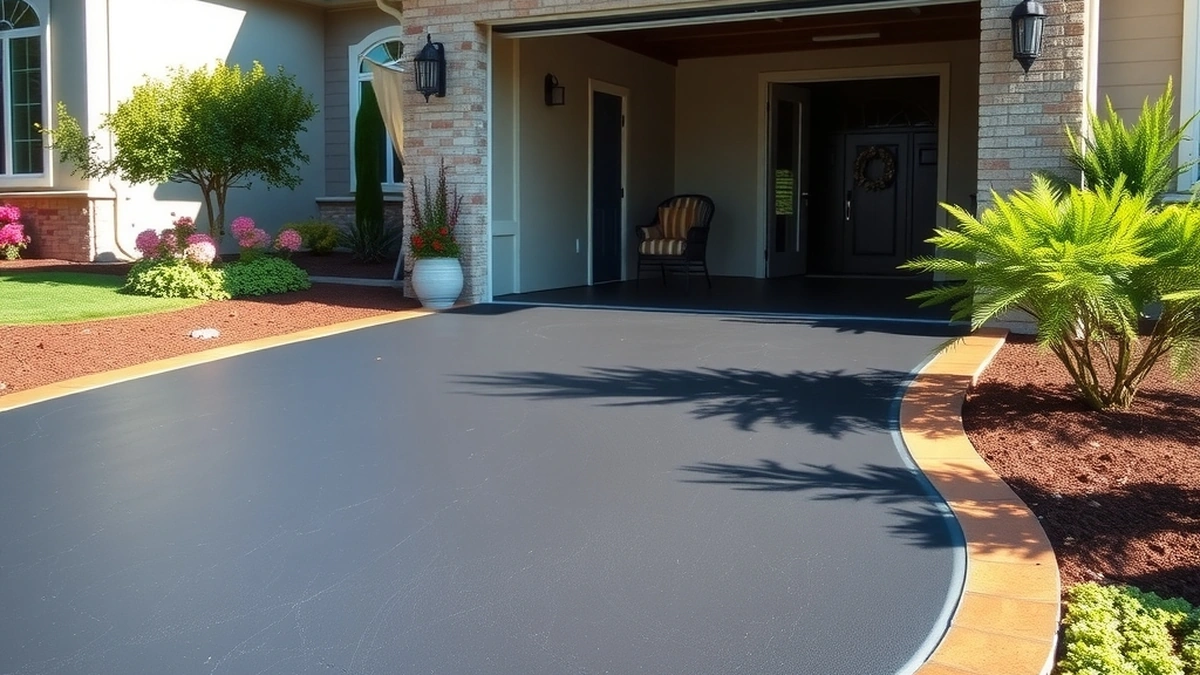
Coal tar sealer is a water-based emulsion of refined coal tar, filler, and additives that cures into a dark protective film over asphalt.
That film resists fuel spills better than most alternatives, which is why it held the market for decades. Its weaknesses are equally well documented: it is brittle in cold, soft in heat, and sensitive to moisture during curing. Nearly every complaint on a review page maps to one of those three properties.
The symptom table
| Symptom | Usual cause | What to do |
|---|---|---|
| White or milky bloom | Moisture trapped under film, or cool humid cure | Let it weather; strip and redo if it flakes |
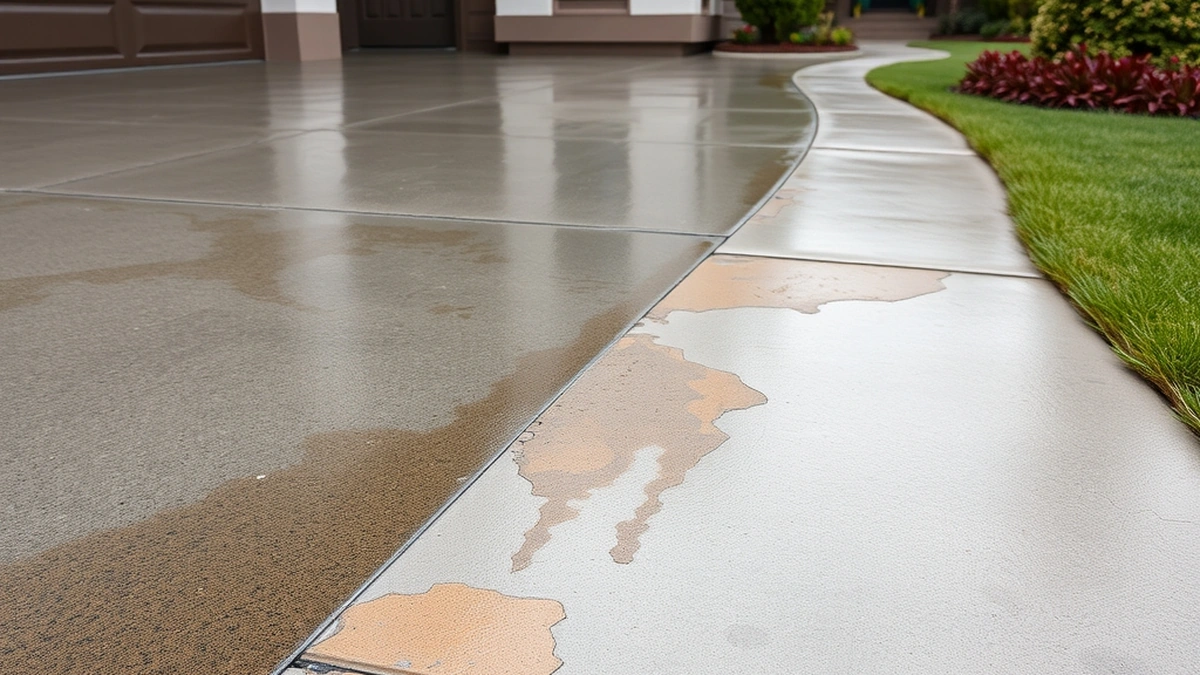
| Peeling in sheets | Dirty or damp surface, loose old coat | Remove loose film, clean, recoat |
| Tyre marks and tracking | Film soft in heat, turning tyres | Wait longer, avoid full-lock turns when hot |
| Grey, dull surface | Normal wear and oxidation | Recoat at the standard rate |
| Cracks reappearing each year | Base movement, not film failure | Fill and investigate the base |
| Sticky surface after days | Coat too thick, or applied too cool | Extend cure; strip if it never sets |
| Bald patches after one season | Thin coverage on porous asphalt | Prime and recoat those areas |
Blushing, the white haze
Blushing is the most common cosmetic complaint. The film cures with a milky or chalky surface instead of a uniform black, usually because moisture was present when it cured — either the pavement was still damp, the humidity was high, or rain arrived inside the cure window.
It is harmless while the film stays bonded. If the bloom starts to flake or rub off on a hand, the bond has failed and the affected area needs stripping before another coat. Sealing over a blushed coat traps the problem and produces a second bloom on top of the first.
Peeling and flaking
Peeling is a bond failure, and the cause is nearly always underneath the coat. Three failures produce it consistently: a surface that was not cleaned, a surface that was still wet, and an old loose coat that was sealed over instead of removed.
The fix costs more than the original job. Stripping and recoating a 1,000 square foot drive runs $150 to $300 at the standard installed rate of $0.15 to $0.30 per square foot (1,000 × $0.15 = $150; 1,000 × $0.30 = $300), before any removal work. Doing it once properly is cheaper than doing it twice badly.
Tracking, fading, and heat
Coal tar films soften in sustained heat. Tyres that turn while the car is stationary cut crescents into the surface, and those marks hold dirt and look worse every year.
Mitigations are behavioural rather than chemical: keep vehicles off the drive for the full 48 to 72 hour cure, avoid full-lock turns when the surface is hot, and park in the same track rather than shuffling positions. On a drive that faces full afternoon sun, an emulsion film softens less but wears faster, which is the trade-off set out in coal tar sealer vs asphalt emulsion sealer.
A coal tar surface also goes grey in three to four years as the film wears thin and oxidises. That is normal service life, not a defect, and the response is a recoat at the label rate rather than a repair.
Recoating early does not extend life; it builds film thickness that eventually cracks and peels from its own weight. Coal tar sealer maintenance sets out the inspection routine that tells you when the coat is actually due.
Environmental and legal problems
Coal tar carries high levels of polycyclic aromatic hydrocarbons, and runoff from sealed surfaces is a documented water-quality concern. Several states and municipalities restrict or ban sales, and some regulate application near storm drains.
That is a purchasing constraint, not a performance one. If your area restricts coal tar, the practical substitute is asphalt emulsion, which sits in the same $0.15 to $0.30 per square foot installed band and needs recoating slightly more often. Types of driveway sealing compares the options.
Diagnosing before you spend
- Check whether the damage is surface or structural. Cracked film over sound pavement is repairable; alligator cracking is not.
- Test the bond by pressing a fingernail into the film at three or four points. Film that lifts in flakes has failed.
- Look at the pattern. Blushing is uniform; peeling follows edges and low spots where water sat.
- Price the fix against the alternative. A recoat at $0.15 to $0.30 per square foot on 1,000 square feet is $150 to $300. An overlay at $3 to $7 is $3,000 to $7,000.
- Fill cracks first at $2 to $5 per linear foot, or the next coat fails the same way.
What a coat cannot fix
Potholes at $100 to $400 each, depressions, and edge crumbling are base problems. Patching them is maintenance; ignoring them and sealing over the top is a waste of a coat. If the pattern covers a large share of the drive, driveway sealing repair is the honest read, and driveway replacement cost at $8 to $15 per square foot is the ceiling you are trying to delay.
Frequently asked questions
Why did my coal tar sealer turn white?
That is blushing, and it usually means moisture was trapped under the film or the coat was applied in cool humid weather. It is cosmetic until the film starts to flake.
Why does coal tar sealer peel in sheets?
Peeling means the bond failed, almost always from a dirty or damp surface, an old loose coat left in place, or a coat applied too thick to cure through.
Why do tyres leave marks on a coal tar driveway?
The film softens in high heat, and tyres turning while parked cut into it. Waiting longer before parking and avoiding full-lock turns on hot days reduces the damage.
Does coal tar sealer fade to grey?
Yes, over three to four years as the film wears and oxidises. Fading is normal wear, not a defect, and the answer is a recoat rather than a repair.
Is coal tar sealer still legal?
Not everywhere. Several states and municipalities restrict or ban sales because of polycyclic aromatic hydrocarbon runoff, so check local rules before buying a pail.
When is a problem caused by the pavement rather than the sealer?
Alligator cracking, depressions, rutting, and cracks that reopen every season come from the base. Sealing over them hides the symptom for one season and wastes the coat.
Sources
Some links are affiliate links.If you buy through them we may earn a commission at no extra cost to you. We do not accept payment for rankings. Read the full disclosure.