Acrylic sealer problems
The common acrylic sealer problems on driveways: yellowing, clouding, peeling on new asphalt, slipperiness, and short life, with causes and fixes.
Acrylic sealer problems are mostly yellowing, clouding, peeling, and short service life, and most come from moisture, application on uncured asphalt, or coating too thin. The film is less forgiving than coal tar on both counts.
- Service life
- 1-3 years
- Recoat cost
- $0.15-0.30 per sq ft
- Crack filling
- $2-5 per linear ft
- Pothole patch
- $100-400 each
Some links on this page are affiliate links.If you buy through them we may earn a commission at no extra cost to you. We do not accept payment for rankings. Read the full disclosure.
Acrylic sealer problems are almost always film problems rather than pavement problems, and most of them trace to three causes: moisture under the coat, application on asphalt that has not finished curing, and coats applied too thin to survive a winter. The product is easier to handle than coal tar, but it is less forgiving of a rushed job.
What the film is and what it is not
Acrylic sealer is a water-based polymer emulsion that cures into a thin, flexible film over asphalt or concrete, blocking ultraviolet light and shedding water.
That film is the whole product. It has no structural role, it does not fill depressions, and it does not stop a crack from moving. Every problem below is a failure of the film, an incompatibility under it, or a pavement failure that the film was never going to solve.
The symptom table
| Symptom | Usual cause | Response |
|---|---|---|
| Yellow or amber tint | UV breakdown, moisture in the film | Recoat at the standard rate |
| Milky clouding | Moisture trapped during cure | Let it weather; strip if it flakes |
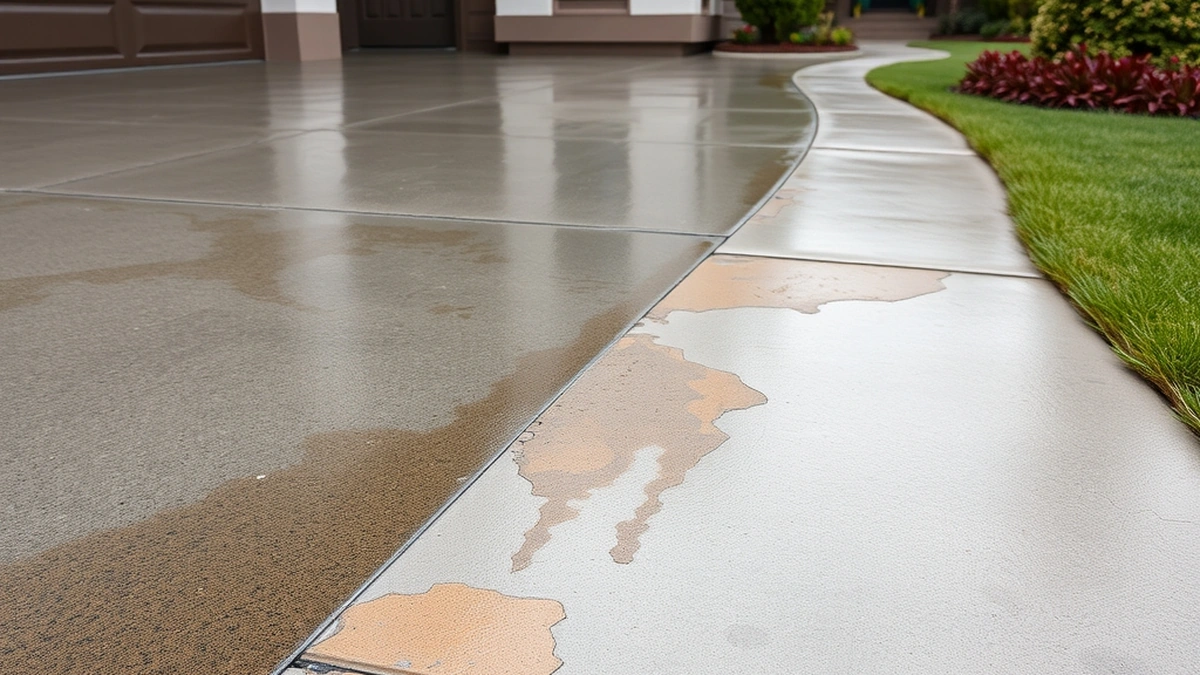
| Peeling in patches | Dust, damp surface, incompatible old coat | Remove loose film, clean, recoat |
| Blistering on new asphalt | Sealed before the pavement cured | Strip and wait out the cure period |
| Slick surface in rain | Smooth film, algae, or silt | Clean; consider a textured product |
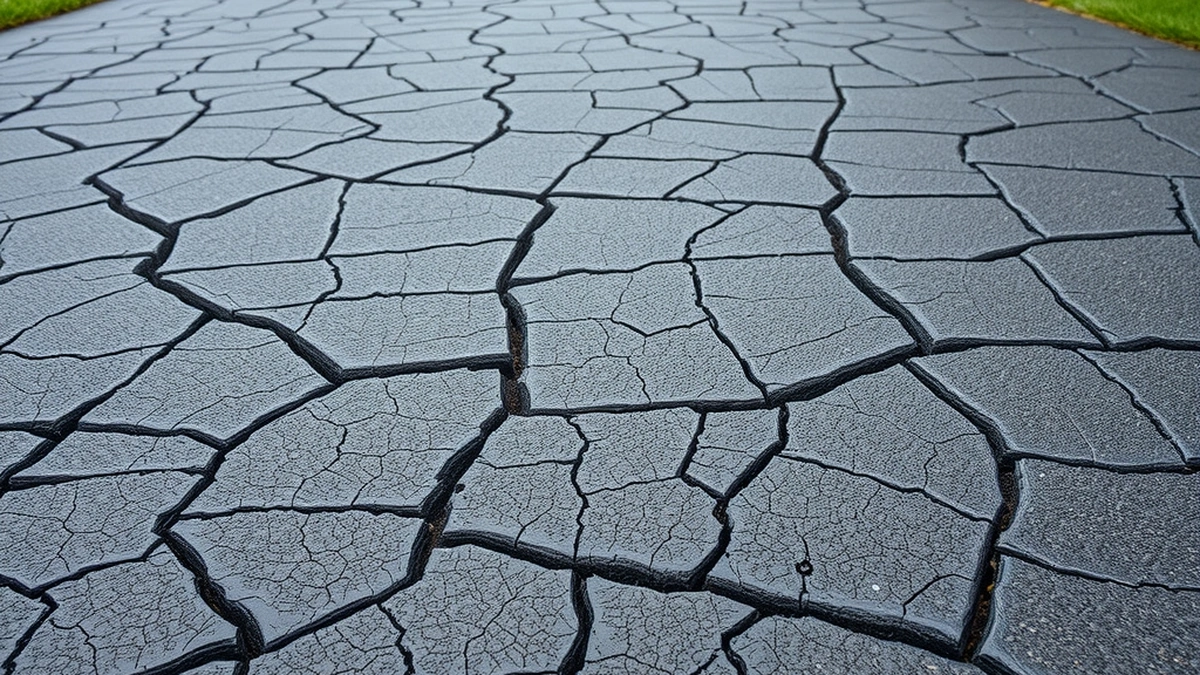
| Crazing and fine cracks | Coats too thin, or too many coats | Strip and rebuild with two proper coats |
| Grey within a year | Thin coverage on porous asphalt | Prime and recoat |
Yellowing and clouding
Yellowing is the most visible acrylic complaint on light-coloured or clear finishes. Ultraviolet light degrades the polymer, and moisture trapped under the film accelerates it. On black-pigmented driveway products the effect is masked; on a clear sealer over exposed aggregate it is obvious.
Clouding is a separate problem with a similar cause. A milky film means moisture was present when the coat cured, either from a damp surface, high humidity, or rain inside the window. If the film is still bonded, it usually clears as it weathers. If it flakes under a fingernail, the bond has failed and that area needs stripping.
Peeling, and the new-asphalt trap
Peeling in patches usually means the bond failed at the interface. Dust, oil, and damp all produce it, and so does an existing coal tar coat that was never removed. Acrylic does not adhere reliably to a sound coal tar film, which is why repainting a driveway with a different product family is a decision to make deliberately.
The more expensive version of the same failure is sealing new asphalt too early. Fresh pavement releases oils for months, and a film applied over that process lifts or blisters. Waiting out the cure period costs nothing; stripping a blistered coat costs $0.15 to $0.30 per square foot to redo, or $150 to $300 on 1,000 square feet.
Slipperiness, algae, and drainage
A smooth acrylic film is slick when wet. On a level drive that is a minor annoyance; on a slope it is a safety issue, particularly where shade keeps the surface damp and algae establishes.
Filled or textured acrylic products reduce the effect, and routine cleaning does as much as the product choice. Silt, leaf litter, and algae all hold water against the film and turn a mild slip risk into a genuine one. Check that water runs off rather than pooling at the low corner.
Short service life and what it costs
One to three years is the realistic range for acrylic on a residential driveway, with full sun and heavy traffic at the short end. That interval is the main cost difference against coal tar, which holds three to four years.
On 1,000 square feet at the installed band, a recoat is $150 to $300 (1,000 × $0.15 = $150; 1,000 × $0.30 = $300). At a two-year cycle that is $75 to $150 per year of protection. Acrylic sealer maintenance covers the routine that pushes the interval toward the long end, and driveway sealing cost per square foot puts the rate against other surface work.
Acrylic vs coal tar on failure modes: acrylic fades and clouds; coal tar blushes and tracks in heat. Acrylic fails by wearing thin; coal tar fails by softening. Neither fails often when applied to a clean, dry, sound surface in the right weather.
Diagnosing before you spend
- Test the bond with a fingernail at three or four points. Film that lifts in flakes has failed.
- Check the pattern. Uniform clouding is a cure problem; patchy peeling follows prep failures and low spots.
- Look for structural signals — alligator cracking, depressions, crumbling edges — and stop if you find them.
- Fill cracks over 1/8 inch at $2 to $5 per linear foot, or the next coat fails the same way.
- Price the fix against the alternative. A recoat is $150 to $300 on 1,000 square feet; an overlay at $3 to $7 per square foot is $3,000 to $7,000.
What acrylic cannot fix
Potholes at $100 to $400 each, rutting, and base movement are outside the film’s reach. Neither can it rescue a driveway that has already failed structurally: replacement at $8 to $15 per square foot is $8,000 to $15,000 on 1,000 square feet. If the damage is widespread, driveway sealing repair is the honest next step, and a recoat is money spent one layer too high.
Frequently asked questions
Why is my acrylic sealer turning yellow?
Ultraviolet exposure and moisture under the film break down the polymer. Yellowing is more visible on light-coloured surfaces and on clear acrylic than on black-pigmented products.
Can I seal new asphalt with acrylic right away?
No. New asphalt needs several months to cure and release its oils. Sealing too early traps them and causes the film to lift or blister.
Why is acrylic sealer peeling in patches?
Usually moisture, dust, or an incompatible existing coat underneath. Acrylic bonds poorly to a sound coal tar film, so lifting at the interface is common.
Is acrylic sealer slippery when wet?
Smooth acrylic films can be slick in rain, particularly on a slope. Filled or textured products reduce that, and so does keeping the surface free of algae and silt.
How long does acrylic sealer actually last?
One to three years on a residential driveway, with full sun and heavy traffic at the short end. That is shorter than coal tar, which is the main cost trade-off.
Can acrylic sealer be applied over an old acrylic coat?
Yes, if the old film is clean, sound, and fully cured. Strip any flaking areas first, because a new coat bonds to loose film rather than to the pavement.
Sources
Some links are affiliate links.If you buy through them we may earn a commission at no extra cost to you. We do not accept payment for rankings. Read the full disclosure.