Coal tar sealer maintenance
What a coal tar sealcoat needs between applications: inspection signals, cleaning, spill care, crack filling, and the three to four year recoat cycle.
Coal tar sealer maintenance is inspection, cleaning, and crack control across a three to four year cycle. Recoat only when the film has worn thin, and fix spills and cracks before they reach the asphalt underneath.
- Recoat interval
- 3-4 years
- Inspections per year
- 2
- Recoat cost
- $0.15-0.30 per sq ft
- Crack filling
- $2-5 per linear ft
Some links on this page are affiliate links.If you buy through them we may earn a commission at no extra cost to you. We do not accept payment for rankings. Read the full disclosure.
Coal tar sealer maintenance is a lighter routine than most homeowners expect, because the film is durable while it lasts. The work is two inspections a year, cleaning when the surface needs it, and filling cracks as they appear. The recoat itself comes every three to four years, and doing it early is the most common maintenance mistake.
What maintenance covers on a coal tar film
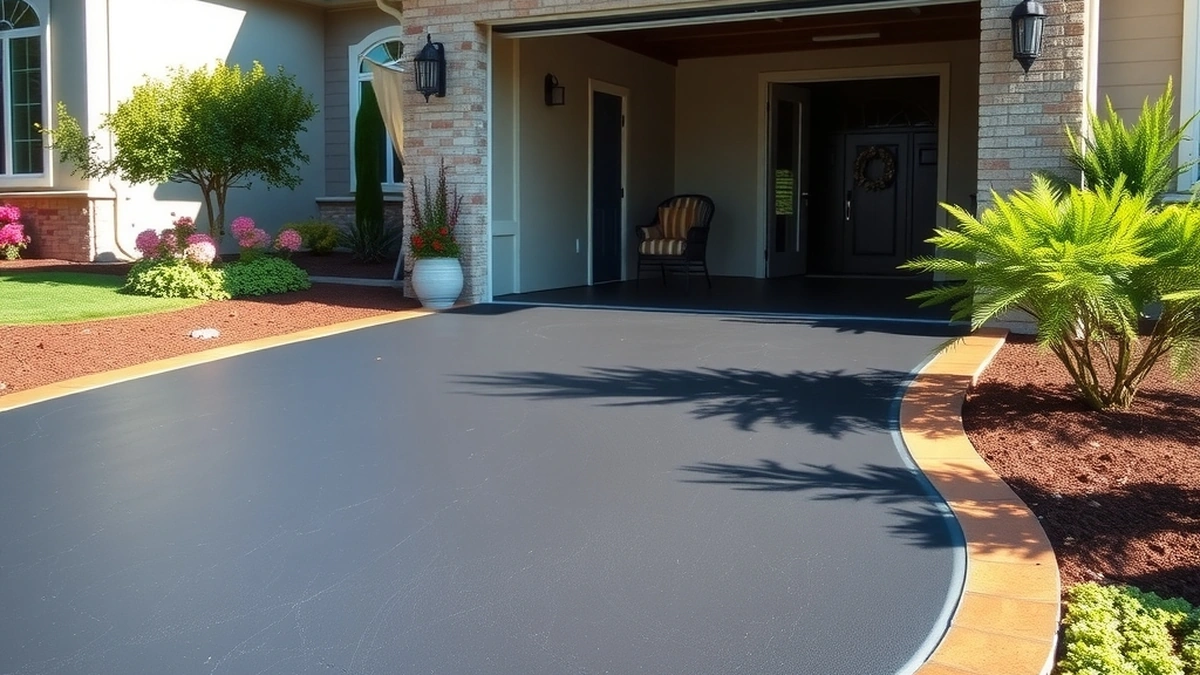
Coal tar sealer is a water-based emulsion of refined coal tar, filler, and additives that cures into a dark, fuel-resistant film on asphalt.
Maintaining that film means protecting its two useful properties: it keeps water off the asphalt, and it resists oil and gasoline long enough to wipe a spill up. Everything in the routine below exists to keep one of those intact.
The inspection pass
Walk the drive in spring and again in autumn. Both passes are visual and take about fifteen minutes.
| What you see | What it means | Response |
|---|---|---|
| Water beads and holds | Film intact | Clean only |
| Water soaks in slowly | Film thinning | Recoat this season or next |
| Uniform black, slight sheen | Healthy film | No action |
| Grey, dusty surface | Oxidation and wear | Plan a recoat |
| White bloom, film still bonded | Blushing | Let it weather; do not recoat over it |
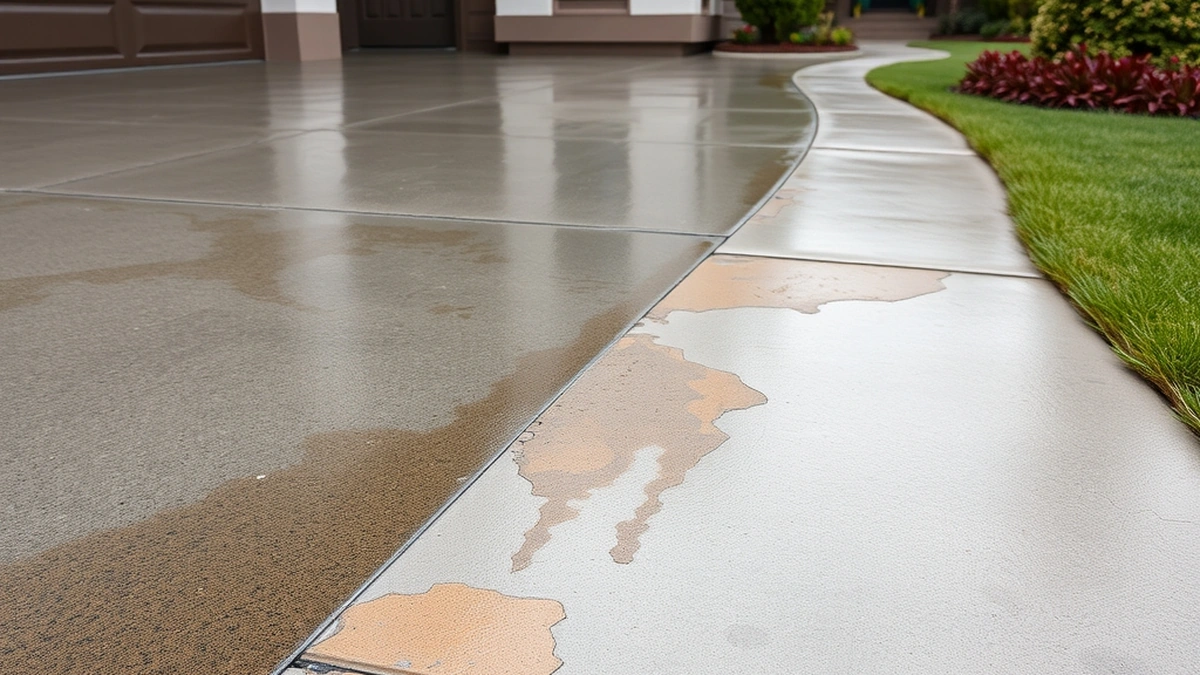
| White bloom with flaking | Bond failure | Strip the affected area |
| New cracks over 1/8 inch | Normal movement | Fill before winter |
The seasonal schedule
| Season | Task | Why it matters |
|---|---|---|
| Spring | Wash, inspect, fill winter cracks | Freeze-thaw opens cracks; catch them before rain |
| Summer | Recoat if the film is worn | Warm dry weather is the only reliable cure window |
| Autumn | Clear leaves, fill cracks, check drainage | Debris holds moisture against the film |
| Winter | Keep ice melt off the film where possible | Ice in unfilled cracks widens them |
The annual routine
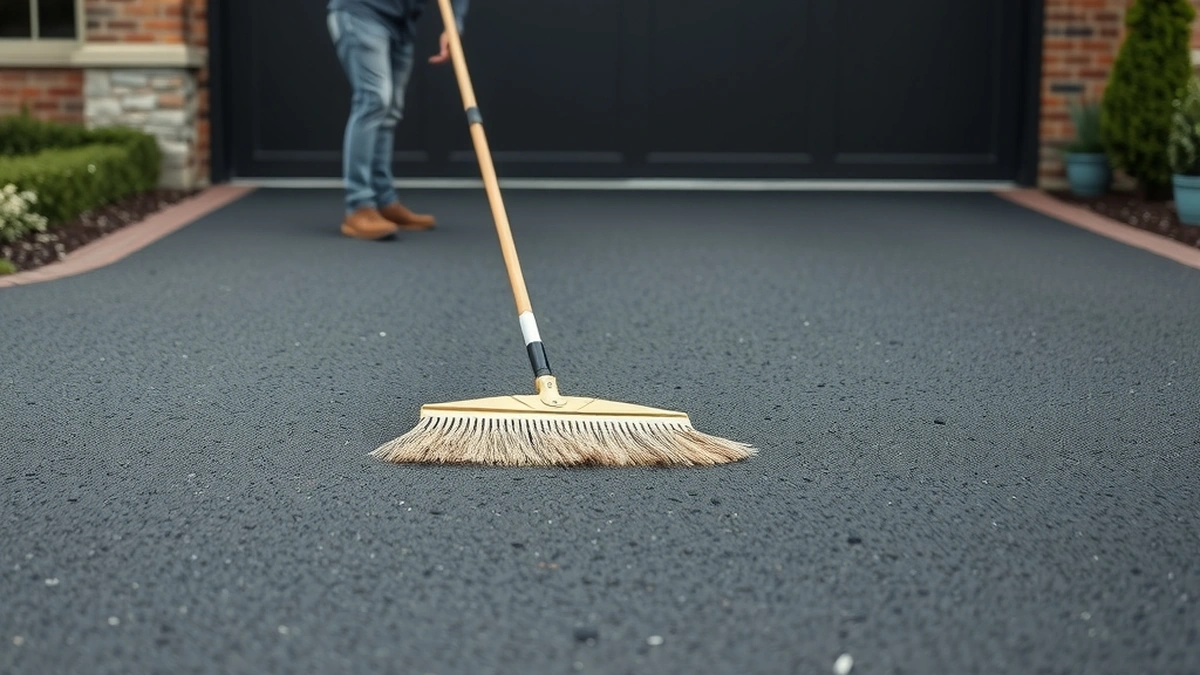
- Blow or sweep the whole surface, including the apron and the joint at the garage slab.
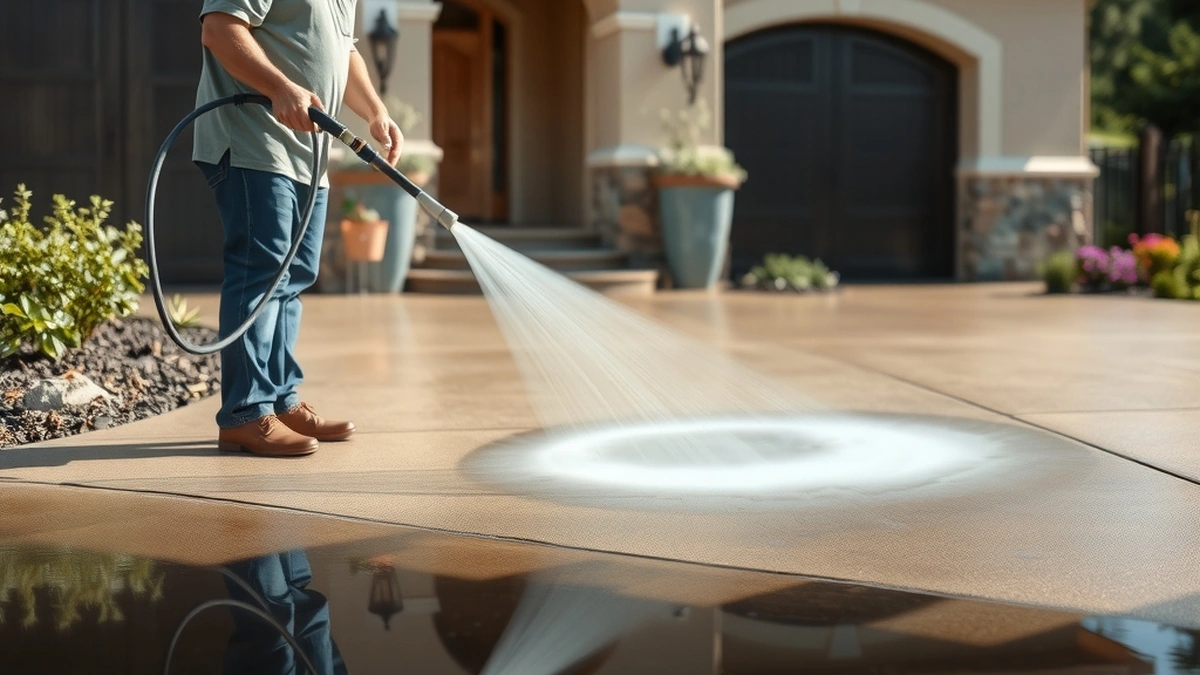
- Wash with a mild detergent and rinse. Do not pressure wash at high settings, which can lift a sound film.
- Treat oil and fuel spots with a degreaser and scrub them out rather than sealing over them.
- Fill every crack over 1/8 inch. Crack filler runs $2 to $5 per linear foot, so eighty feet is $160 to $400 (80 × $2 = $160; 80 × $5 = $400).
- Check the edges where the drive meets soil or grass; that is where water enters first.
- Recoat only if the film has worn through to grey. Two thin coats at the label rate beat one heavy one.
Spills, fuel, and the one real advantage
Coal tar resists gasoline and oil better than emulsion, which is why it was the default for parking areas for decades. That resistance is a time buffer, not immunity. A spill left standing softens the film, and a spill that soaks through takes the protection with it.
Blot fresh spills with absorbent material, wash with detergent, and rinse. If the film has lifted, clean the area, prime it, and spot-coat rather than recoating the whole drive.
The arithmetic of waiting
Deferring maintenance is not free. A 1,000 square foot recoat at $0.15 to $0.30 per square foot is $150 to $300 (1,000 × $0.15 = $150; 1,000 × $0.30 = $300). An asphalt overlay at $3 to $7 per square foot is $3,000 to $7,000 on the same surface, and full replacement at $8 to $15 per square foot is $8,000 to $15,000.
Put differently, ten years of recoating at the middle of the band is about $750 to $1,500 on 1,000 square feet, which is a fraction of one overlay. The maintenance schedule is not cosmetic spending; it is the cheapest way to delay the two numbers above.
Coal tar maintenance vs emulsion maintenance: the routine is the same, but the interval differs. Coal tar holds three to four years; emulsion typically needs attention every two to three. Coal tar also blushes where emulsion fades, so the inspection signals differ even though the tasks do not. Asphalt emulsion sealer maintenance covers the other side.
Where maintenance should stop
If the inspection turns up alligator cracking, depressions, rutting, or crumbling edges, the problem is below the film. Patching potholes at $100 to $400 each is still maintenance; recoating over structural failure is not. Driveway sealing repair covers the boundary, and coal tar sealer problems explains which symptoms belong to the coating and which belong to the base.
Keeping the record
Note the date of each coat, the product, the coat count, the weather, and the linear feet of cracks filled. That log answers the only maintenance question that matters in year three: is the film due, or is something else going on? It also makes a contractor quote more specific, because the history of the surface is on paper instead of in memory.
Two inspections, one wash, and a crack pass each year is the entire routine. How long does driveway sealing last puts the recoat interval in a wider context if you are planning the next five years of the driveway.
Frequently asked questions
How often does coal tar sealer need recoating?
Every three to four years on a residential driveway. Heavy traffic, full sun, and repeated winter freeze-thaw cycles shorten that to three.
Can I recoat coal tar sealer every year to keep it black?
You can, but you should not. Annual coats build a thick, brittle film that eventually peels in sheets, and stripping it costs more than the coats saved.
What is the best way to clean a coal tar sealed driveway?
Sweep or blow it, wash with a mild detergent solution, and rinse. Use a degreaser on oil spots and avoid pressure washing at high settings, which can lift the film.
Do de-icing salts damage coal tar sealer?
Cured coal tar handles salt reasonably well. The greater winter risk is ice expanding in cracks that were not filled before the freeze.
How much does a crack repair add to maintenance?
Crack filler is $2 to $5 per linear foot. Eighty linear feet of cracking costs $160 to $400, which is still well below a single pothole patch.
When should I stop maintaining and start repairing?
When you see alligator cracking, depressions, or edge crumbling. Those indicate base failure, and a surface coat will not hold them for more than a season.
Sources
Some links are affiliate links.If you buy through them we may earn a commission at no extra cost to you. We do not accept payment for rankings. Read the full disclosure.