Acrylic sealer maintenance
How to maintain an acrylic driveway sealer: inspection signals, gentle cleaning, the recoat cycle, and the point where the film needs stripping instead.
Acrylic sealer maintenance means inspecting twice a year, cleaning with mild detergent rather than solvents, filling cracks as they open, and recoating every one to three years before the film thins to grey.
- Recoat interval
- 1-3 years
- Inspections per year
- 2
- DIY material
- $0.05-0.12 per sq ft
- Installed recoat
- $0.15-0.30 per sq ft
Some links on this page are affiliate links.If you buy through them we may earn a commission at no extra cost to you. We do not accept payment for rankings. Read the full disclosure.
Acrylic sealer maintenance is a cleaning routine with a recoat attached, and the recoat comes sooner than most owners expect. The film typically holds one to three years, so the maintenance pass that keeps it alive is also the pass that tells you when the next coat is due. Get the cleaning wrong and you shorten the interval; get it right and you reach the top of the range.
What maintenance covers
Acrylic sealer is a water-based polymer emulsion that cures into a thin, flexible film over asphalt or concrete, blocking ultraviolet light and shedding water.
Caring for that film means three things: keeping it clean without softening it, keeping cracks closed so water cannot work underneath, and recoating before the film wears through to bare pavement. Anything structural belongs to a different trade.
Inspection signals
Walk the surface in spring and autumn. The pass is visual and takes fifteen minutes.
| What you see | What it means | Response |
|---|---|---|
| Water beads and holds | Film intact | Clean only |
| Water darkens the surface quickly | Film thin or porous | Recoat this season |
| Uniform colour, slight sheen | Healthy film | No action |
| Grey or chalky patches | Film worn through | Clean, prime, recoat |
| Milky haze, film bonded | Moisture during cure | Let it weather |
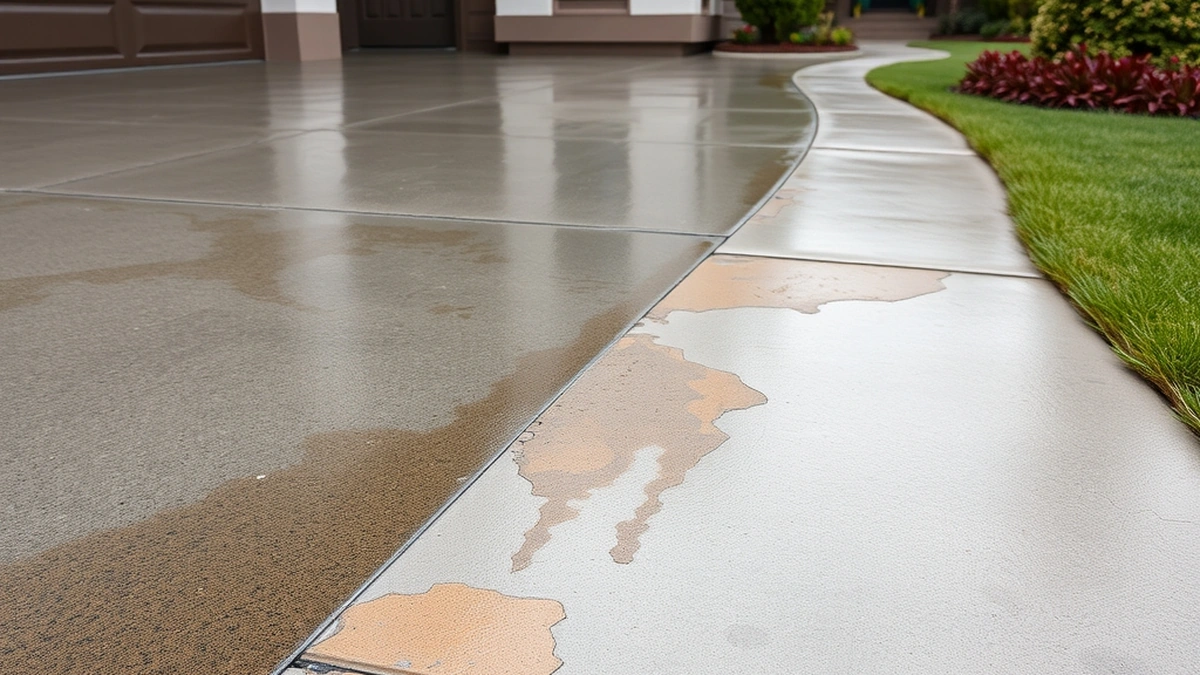
| Milky haze with flaking | Bond failure | Strip the affected area |
| Hairline cracks | Normal movement | Fill before winter |
Cleaning without damaging the film
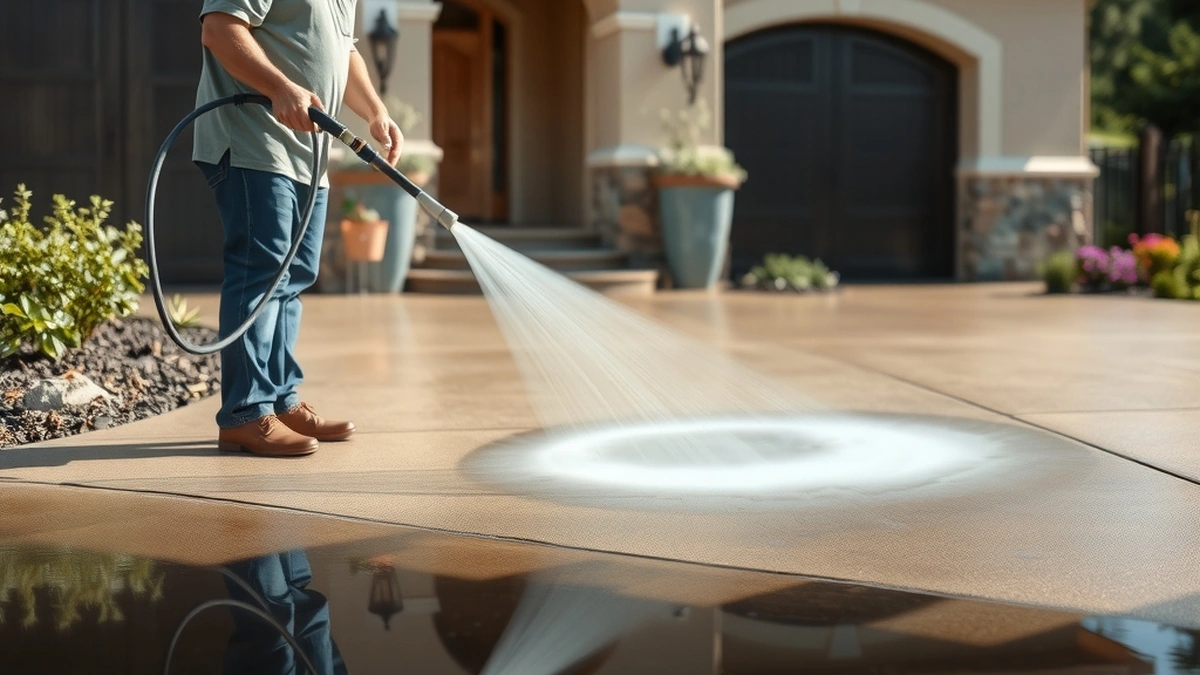
Acrylic is softer than coal tar and responds badly to aggressive cleaning. A pressure washer at close range will lift the film at the edges and leave a feathered scar that collects dirt.
Use a mild detergent solution, a soft broom, and a garden hose. Work in sections, rinse before the solution dries, and treat oil spots with a degreaser applied to the spot rather than the whole drive. Avoid solvent cleaners entirely; they soften the polymer and leave a dull patch that no amount of rinsing restores.
The seasonal pattern
| Season | Task | Reason |
|---|---|---|
| Spring | Wash, inspect, fill winter cracks | Freeze-thaw opens cracks and lifts edges |
| Summer | Recoat if worn | Warm dry weather is the only reliable cure window |
| Autumn | Clear leaves, check drainage | Wet debris holds moisture against the film |
| Winter | Keep ice melt and grit off where possible | Abrasion and ice widen small defects |
The annual pass
- Sweep or blow the surface, including edges and the apron.
- Wash with mild detergent and rinse thoroughly, then let it dry for at least 24 hours.
- Degrease oil spots individually and rinse again.
- Fill cracks over 1/8 inch with crack filler at $2 to $5 per linear foot; forty feet is $80 to $200 (40 × $2 = $80; 40 × $5 = $200).
- Check for ponding at low corners and fix the drainage rather than adding another coat.
- Recoat only when the film has worn thin, at the label rate, in two thin passes.
Recoat, and when to strip instead
Recoating is straightforward when the old film is sound: clean it, let it dry, and apply two coats at the label rate. A 1,000 square foot driveway runs $50 to $120 in DIY material (1,000 × $0.05 = $50; 1,000 × $0.12 = $120) or $150 to $300 installed at $0.15 to $0.30 per square foot.
Stripping becomes the better option when the film is flaking, clouded through, or has accumulated several layers. Each additional coat adds thickness without adding adhesion, and at some point the whole stack lifts as a sheet. Stripping costs labour, but it is cheaper than recoating a surface that will fail again next season.
Recoating also resets the clock on crack filling, because a fresh film keeps water out of the hairline defects the filler could not reach. Budget the annual pass as a fixed cost: a wash and a crack pass on a 1,000 square foot drive is generally well under $200 in material, and it is the cheapest line on the driveway’s maintenance ledger.
Acrylic maintenance vs coal tar maintenance: the tasks are identical, but the clock is not. Acrylic needs a recoat every one to three years against three to four for coal tar, so the annual pass matters more because there are fewer years between them. Coal tar sealer maintenance sets out the longer cycle.
Where maintenance stops paying
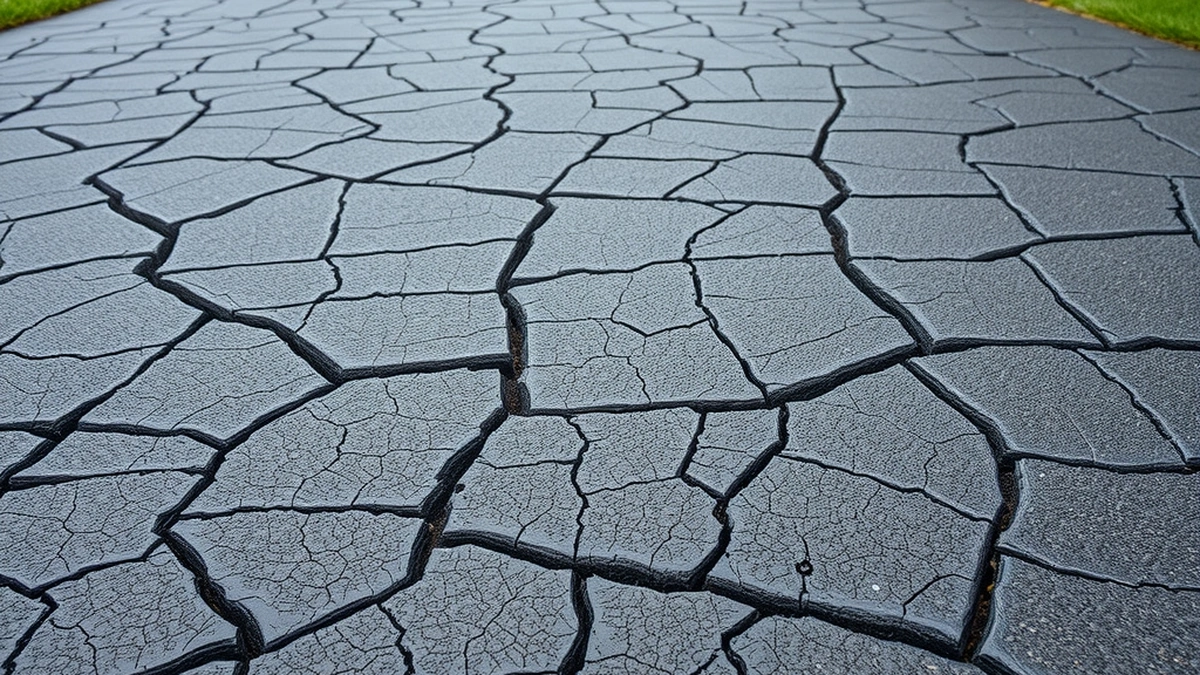
If the inspection turns up alligator cracking, depressions, or crumbling edges, the film is not the problem. Patching potholes at $100 to $400 each is still maintenance; recoating over structural failure is not.
The arithmetic is unforgiving. A recoat on 1,000 square feet is $150 to $300. An overlay at $3 to $7 per square foot is $3,000 to $7,000 on the same surface, and replacement at $8 to $15 per square foot is $8,000 to $15,000. Every year of recoating bought against those numbers is worth having, which is why driveway sealing repair is the point at which maintenance hands over to construction.
If the driveway is concrete rather than asphalt, the routine changes slightly; concrete driveway resurfacing covers the equivalent process. For asphalt, acrylic sealer problems explains what each symptom in the table above is telling you.
Frequently asked questions
How often should acrylic sealer be recoated?
Every one to three years on a residential driveway. Full sun, heavy traffic, and a thin original coat all push it toward the one-year end.
What is safe to clean an acrylic sealed driveway with?
Mild detergent and water. Avoid solvent-based cleaners and high-pressure washing, both of which can soften or lift the film.
Can I recoat acrylic sealer over a dirty surface?
No. Dust and oil stop the new coat bonding, and it will peel in patches within a season. Wash, rinse, and dry completely first.
Why does my acrylic sealer go grey so quickly?
Thin coverage and ultraviolet exposure. A coat applied below the label rate wears through to the asphalt faster, and grey means the film is already thin.
When should the old acrylic coat be stripped instead of recoated?
When it is flaking, clouded through, or has built up several layers. A new coat over failing film lifts with it, so stripping is the cheaper route.
Does acrylic sealer need different care on concrete?
It needs the same routine, but concrete holds moisture longer, so drying time before a recoat is longer and trapped moisture shows up as clouding more often.
Sources
Some links are affiliate links.If you buy through them we may earn a commission at no extra cost to you. We do not accept payment for rankings. Read the full disclosure.