Driveway replacement cost
Full driveway replacement runs $8–$15 per sq ft, against $3–$7 for an overlay. What the price includes, when replacement beats repair, and how to compare bids.
Driveway replacement costs $8–$15 per sq ft for asphalt, or roughly $6,400–$12,000 on an 800 sq ft driveway. An overlay at $3–$7 per sq ft is cheaper when the base is sound, and replacement is the right call when it is not.
- Full replacement
- $8–$15 per sq ft
- Asphalt overlay
- $3–$7 per sq ft
- Sealcoat
- $0.15–$0.30 per sq ft
- Crack filling
- $2–$5 per linear ft
- Pothole repair
- $100–$400 each
Some links on this page are affiliate links.If you buy through them we may earn a commission at no extra cost to you. We do not accept payment for rankings. Read the full disclosure.
Driveway replacement costs $8 to $15 per square foot for asphalt, which puts an 800 square foot two-car driveway at roughly $6,400 to $12,000. That is several times the cost of an overlay at $3 to $7 per square foot, and it is only the right answer when the base under the pavement has failed.
What replacement actually includes
Driveway replacement is the removal of the existing pavement and the construction of a new driveway from the base up. It is not a resurfacing job with a new top layer.
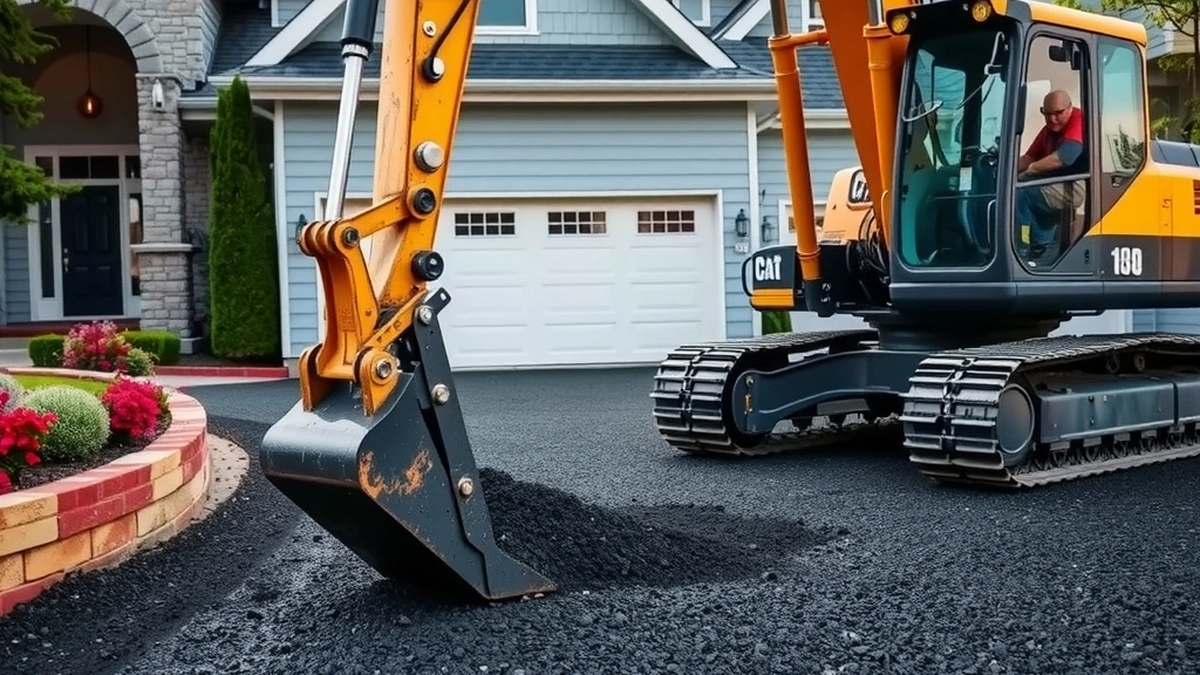
A complete replacement has four stages: demolition and hauling of the old surface, excavation and grading of the subgrade, installation and compaction of a new aggregate base, and paving or pouring the new surface. Skipping or shortening the base stage is the single most common way a cheap replacement becomes an expensive one.
That is why the per-square-foot price sits where it does. You are buying a structure, not a surface.
The numbers by driveway size
Using the $8–$15 per sq ft range for asphalt, estimated 2026 US pricing:
| Driveway size | Square feet | At $8/sq ft | At $15/sq ft |
|---|---|---|---|
| Single car, short | 300 | $2,400 | $4,500 |
| Single car | 400 | $3,200 | $6,000 |
| Two car, tight | 600 | $4,800 | $9,000 |
| Two car, standard | 800 | $6,400 | $12,000 |
| Two car, wide | 1,000 | $8,000 | $15,000 |
| Long two car | 1,200 | $9,600 | $18,000 |
| Large or circular | 2,000 | $16,000 | $30,000 |
The arithmetic on the reference driveway, 20 feet wide by 40 feet long:
800 sq ft × $8 = $6,400 800 sq ft × $15 = $12,000
Concrete replacement lands in a similar band, with its own variables: slab thickness, reinforcement, joint layout, and finish. Concrete driveway cost breaks that side down separately.
What moves the price
Six factors explain most of the spread within a single market.
Demolition and hauling. Breaking out old pavement and trucking it away is a real cost. Thick, reinforced concrete costs more to remove than thin asphalt, and limited truck access adds labor.
Base condition. If the subgrade is soft, wet, or poorly compacted, it has to be excavated and rebuilt. That can add several dollars per square foot on its own.
Drainage. Regrading to move water away from the house or garage sometimes requires a swale, a catch basin, or a new downspout route. Water is the reason most driveways fail in the first place, so fixing it during replacement is usually money well spent.
Access and site constraints. A narrow lot, a fence, a retaining wall, or a steep slope all slow the crew down and raise the per-square-foot number.
Thickness and mix. A standard residential asphalt driveway is typically 2 to 3 inches compacted over a 4 to 6 inch base. Heavier vehicles or a longer span call for more.
Region and season. Labor rates and aggregate prices vary widely by market, and late-season scheduling carries a premium in cold climates.
Replacement vs overlay vs repair
Three options get compared, and they sit at very different price points.
| Option | Cost | What it fixes |
|---|---|---|
| Crack filling and sealing | $0.15–$0.30 per sq ft plus $2–$5 per linear ft | Surface wear only |
| Asphalt overlay | $3–$7 per sq ft | Worn surface over a sound base |
| Full replacement | $8–$15 per sq ft | Failed base, drainage, structure |
On an 800 sq ft driveway:
Sealcoat and crack filling: 800 × $0.15 to $0.30 = $120 to $240 plus 60 lf × $2 to $5 = $120 to $300
Overlay: 800 × $3 = $2,400 800 × $7 = $5,600
Replacement: 800 × $8 = $6,400 800 × $15 = $12,000
The overlay is roughly a third to a half of replacement, which is why it is the default recommendation when the base is intact. The catch is that an overlay inherits whatever is underneath it. Put one on a base that is already moving and you will be back at the replacement decision in a few years, having spent the overlay money first.
Signs the base has failed and replacement is the honest answer: alligator cracking across large areas, sections that sink or rock under a vehicle, potholes that return after patching, and water that ponds for a day after rain. Driveway sealing repair walks through the diagnosis in detail, and asphalt overlay cost covers the middle option.
Cost per year of service
Replacement looks enormous until it is annualized. On the 800 sq ft driveway at the middle of the range:
Replacement at $11 per sq ft: 800 × $11 = $8,800
Spread over a 22-year service life: $8,800 ÷ 22 = $400 per year
Compare sealing and maintenance, which keeps the surface alive but does not reset the clock on the base:
Sealing at $0.22 per sq ft every three years: 800 × $0.22 = $176 $176 ÷ 3 = $59 per year
The honest framing is that surface maintenance costs a fraction of replacement and postpones it, but does not eliminate it. A driveway is a consumable structure. Sealing buys years; it does not buy decades.
Getting a fair quote
- Ask each contractor to state the pavement thickness, base depth, and whether base repair is included.
- Confirm demolition and hauling are in the price, not billed separately later.
- Ask how drainage will be handled and where water will go.
- Check whether a permit is required in your municipality, and who pulls it.
- Get the payment schedule in writing. A large deposit before mobilization is a warning sign.
- Ask for two local references from jobs that are at least two winters old, and look at them.
Compare bids on those six lines rather than on the total. A bid that is 20 percent lower almost always has one of them missing, and base depth is the usual one.
After the new driveway goes in
New asphalt needs about 90 days to cure before it can be sealed. Concrete needs roughly 28 days before a sealer goes on. Both need joints or cracks maintained and both benefit from prompt repair of any crack that opens.
Plan on sealing every two to four years, and budget crack filling at $2 to $5 per linear foot as cracks appear. Driveway sealing cost per square foot has the maintenance numbers, and is driveway sealing worth it works through the payback case.
If the slab or pavement is sound and only the surface is worn, resurfacing may be the cheaper path — concrete driveway resurfacing covers the concrete version, and driveway sealcoating covers routine asphalt protection.
Frequently asked questions
How much does it cost to replace an 800 sq ft driveway?
An estimated $6,400–$12,000 for asphalt at $8–$15 per sq ft. Concrete and asphalt land in a similar band, but the figure moves with demolition, base condition, access, and local labor rates.
Is it cheaper to overlay or replace a driveway?
Overlay is cheaper at $3–$7 per sq ft against $8–$15 for replacement, but only when the base is sound. An overlay on a failed base fails early, and you pay twice.
Does driveway replacement include the base?
A full replacement should include removing the old pavement, grading and compacting the base, and pouring or paving a new surface. Confirm that in writing, because some low bids reuse a failing base.
How long does a new asphalt driveway last?
Typically 20 to 25 years with sealing every two to four years and prompt crack repair. Concrete commonly runs 25 to 30 years or more with proper joint and crack maintenance.
Can I replace just part of a driveway?
Yes. Sectional replacement is common where one apron or one bay has failed. Expect a higher rate per square foot on small sections because setup and mobilization are spread over less area.
Do I need a permit to replace a driveway?
Often yes, particularly if the work touches the sidewalk, curb, or right-of-way, or changes drainage. Requirements vary by municipality, so check with your local building department before signing.
Sources
Some links are affiliate links.If you buy through them we may earn a commission at no extra cost to you. We do not accept payment for rankings. Read the full disclosure.