Asphalt emulsion sealer vs hot-pour crack fill
Sealer coats a surface at $0.15-$0.30 per sq ft; hot-pour fill repairs a crack at $2-$5 per linear ft. Why they are used together, and which comes first.
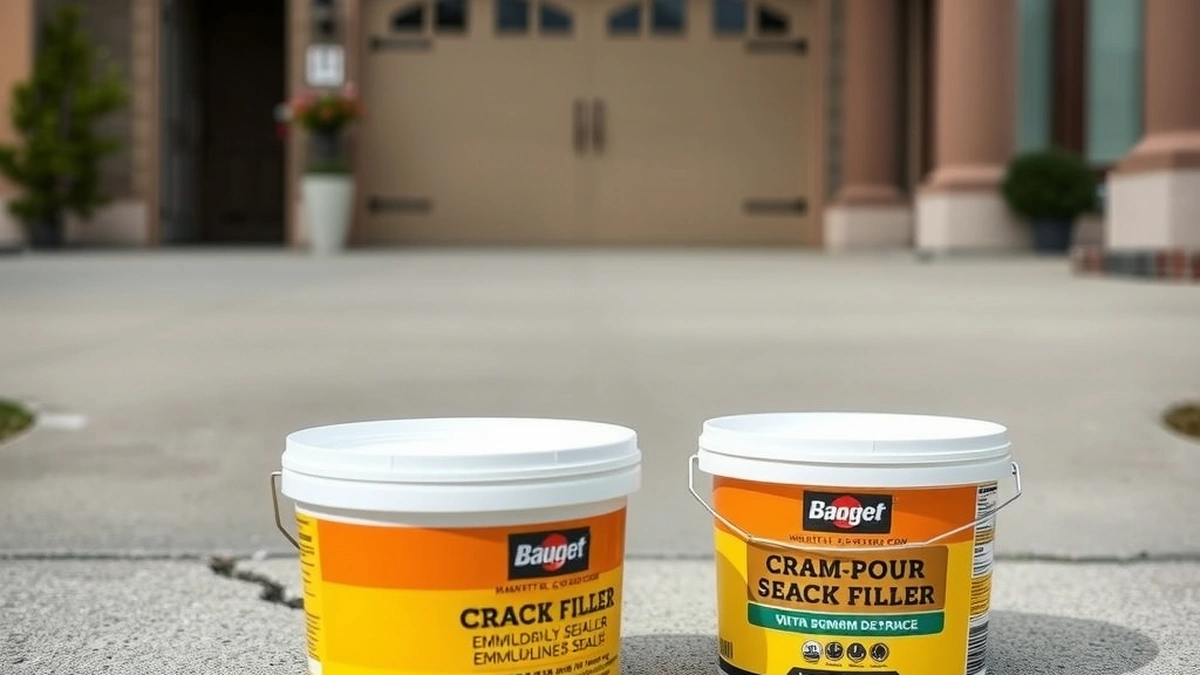
Asphalt emulsion sealer protects a whole surface at $0.15 to $0.30 per square foot; hot-pour crack fill repairs an opening at $2 to $5 per linear foot. They are not alternatives. Crack filling comes first, then sealing, and a driveway with cracks needs both.
- Sealer
- $0.15-$0.30 per sq ft
- Crack fill
- $2-$5 per linear ft
- Sealer life
- 2-3 years
- Crack fill life
- 3-5 years
- Order
- Fill, then seal
Some links on this page are affiliate links.If you buy through them we may earn a commission at no extra cost to you. We do not accept payment for rankings. Read the full disclosure.
Asphalt emulsion sealer and hot-pour crack fill do different jobs, and comparing them as alternatives is the wrong question. Sealer protects a surface at $0.15 to $0.30 per square foot. Crack fill repairs an opening at $2 to $5 per linear foot. A driveway with cracks needs the fill first, then the seal.
What each product does
Asphalt emulsion sealer is a water-based coating spread across the pavement to slow oxidation and reduce surface water entry.
Hot-pour crack fill is a rubberized asphalt material heated to 350 to 400 F and poured into a crack, where it cools into a flexible plug.
One works over an area, the other in a line. Neither substitutes for the other, and neither repairs a base.
Head to head
| Attribute | Emulsion sealer | Hot-pour crack fill |
|---|---|---|
| Purpose | Protect the surface | Seal an opening |
| Unit | Square foot | Linear foot |
| Cost | $0.15-$0.30 per sq ft | $2-$5 per linear ft |
| Application | Cold, squeegee or sprayer | Hot, melter and wand |
| Life | 2-3 years | 3-5 years |
| Covers | Whole pavement | Cracks only |
| Repairs base failure | No | No |
| Order | Second | First |
The units differ because the jobs differ. A 200-foot crack job at $3.50 per foot is $700. Sealing 600 square feet at $0.20 per square foot is $120. Neither figure tells you whether the other is worth buying.
Why the order is fixed
Sealer is a film a few thousandths of an inch thick. It cannot span a moving opening.
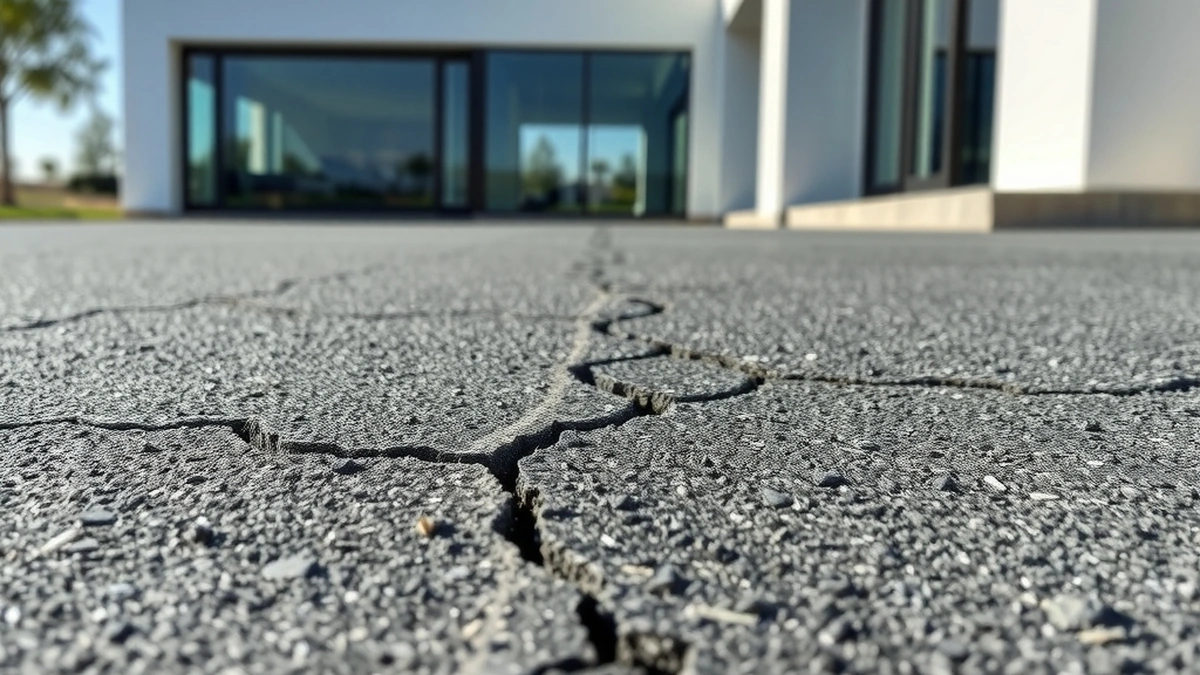
Applied over an open crack, the film cures across the gap, splits along the crack line within a season, and lifts at the split. The result is a driveway with failed film down every crack, which looks worse than before and lets water in at the lifted edges.
Crack filling first gives the sealer a continuous surface to bond to. It also protects the filler edges, which is why the two are normally done in one visit.
Cost of both, worked through
A 600 square foot driveway with 80 linear feet of cracks:
Crack fill at $3.25 per foot: 80 × $3.25 = $260. Sealcoat at $0.20 per square foot: 600 × $0.20 = $120. Total: $380, or $0.63 per square foot.
Over ten years, if the cracks are refilled once and the surface sealed three times: crack fill $520, sealcoat $360, total $880. That is $88 a year for a maintained driveway.
Compare the alternatives. Sealing only, with cracks left open, is $360 over the decade and lets water into the base. Filling only is $520 and lets the surface oxidise. Neither protects the pavement.
Against the bigger repairs
Both products are cheap relative to what they prevent.
An overlay at $3 to $7 per square foot on 600 square feet is $1,800 to $4,200. Replacement at $8 to $15 is $4,800 to $9,000.
Ten years of crack filling and sealing at $88 a year is $880, roughly half the low end of an overlay. That is the case for maintenance, and it holds while the base is sound.
The comparison is even starker against replacement. At $8 to $15 per square foot, a 600 square foot replacement is $4,800 to $9,000. The maintenance budget over the same period buys roughly a decade of protection for a tenth of that, which is why the two products are worth buying even though neither is exciting.
Once the base fails, both products are cosmetic. Our alligator cracking repair guide covers the diagnosis, and asphalt repair cost prices the repair scopes.
When to buy one and not the other, and what each cannot do
Crack fill only: the surface film is sound but a few cracks have opened. Typical on a driveway sealed within the last two years.
Sealer only: the surface is uniformly worn with no cracks wider than a hairline. Rare beyond about five years old.
Both: visible cracks plus a grey, oxidised surface. The common case at the four-to-six-year mark.
Neither: alligator cracking across a quarter of the surface, ponding, or soft spots. Those need an overlay or replacement.
What each cannot do.
Crack filler cannot stop a crack that is being pulled apart by a moving base. If the same crack reopens within a season, the problem is below the surface. Our hot-pour crack fill problems guide covers that.
Sealer cannot add structure, correct drainage, or hide a failing surface for more than a season.
Neither is a substitute for the other, and neither repairs pavement. Both slow water and oxidation, which is what maintenance is.
The sequence on a real driveway
- Clean the driveway and let it dry.
- Fill every crack wider than a quarter inch with hot-pour rubber.
- Blot the filler and let it cool, trimming any overfill.
- Prime oil spots so the sealer can bond.
- Apply sealcoat at the label rate, one or two coats.
- Cure 24 to 48 hours before traffic.
Steps 1 to 3 are the crack-fill job; steps 4 to 6 are the sealing job. On a driveway with no significant cracking, start at step 4.
Getting the price right
Ask for the two scopes as separate lines: linear feet of crack at a per-foot rate, and square footage of sealcoat at a per-square-foot rate.
A single lump sum for “crack repair and seal” hides both, which makes it impossible to compare against another quote or to tell whether the crack filling was priced at $2 or $5 per foot.
Our hot-pour crack fill cost page covers the crack side, and asphalt emulsion sealer cost covers the coating side.
Frequently asked questions
Is crack filler the same as asphalt sealer?
No. Crack filler is a thick rubberized material poured into an opening. Asphalt emulsion sealer is a thin coating spread across the whole surface to slow oxidation and water damage.
Can sealer be used to fill cracks?
No. Sealer is a film and will not bridge an open crack. Applied over one, it splits along the same line within a season and lifts at the edges.
Which should I do first?
Crack filling. The filler must cool and firm up before the sealer goes over it, and sealing a driveway with open cracks wastes the coat.
Do I need crack filling if I seal every year?
Yes. Sealing does not close existing cracks. Annual sealing is also too frequent; the correct interval is two to four years.
How much does both cost on a 600 square foot driveway?
Eighty linear feet of cracks at $3.25 per foot is $260, and sealcoat at $0.20 per square foot is $120. Total $380, or $0.63 per square foot.
Which lasts longer?
Hot-pour crack fill lasts three to five years; emulsion sealer lasts two to three. They are measured differently because one repairs an opening and the other coats a surface.
Sources
Some links are affiliate links.If you buy through them we may earn a commission at no extra cost to you. We do not accept payment for rankings. Read the full disclosure.