Driveway crack repair cost: by crack type
Crack repair runs $2 to $5 per linear foot, or $160 to $400 for a typical driveway. What each crack type costs, and when the base has failed instead.
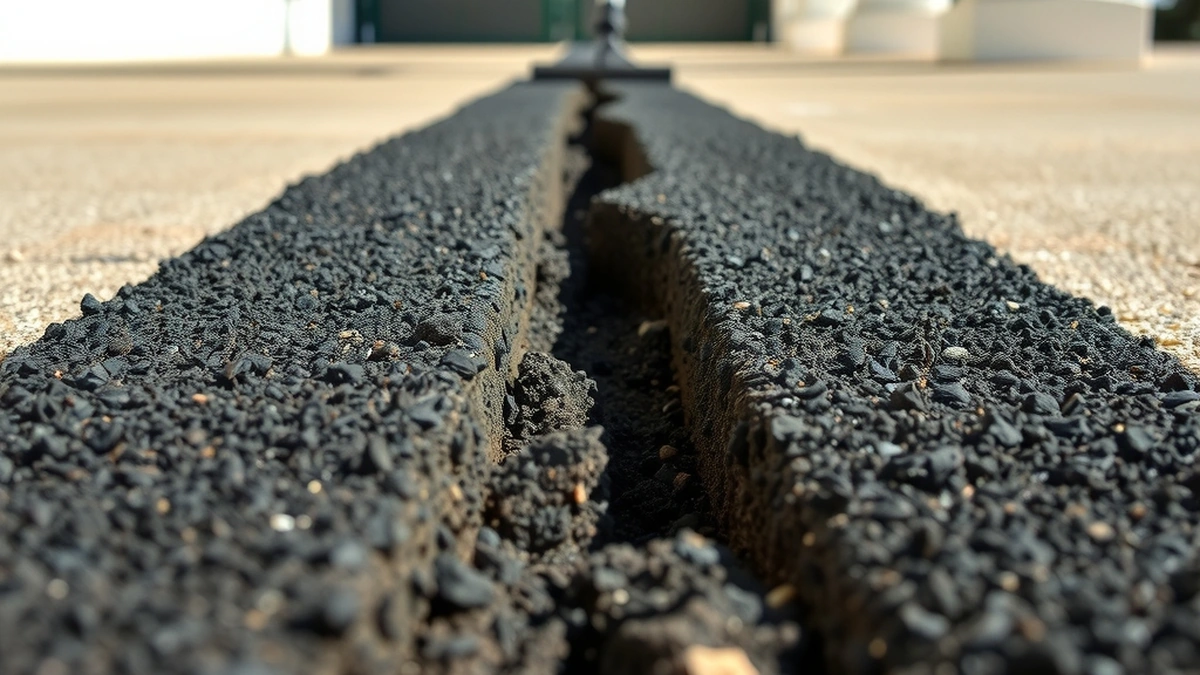
Driveway crack repair costs $2 to $5 per linear foot for hot-pour or cold-pour filler. A driveway with 80 linear feet of cracks runs $160 to $400. Cracks that form a connected alligator pattern are a base failure and need patching, overlay, or replacement instead.
- Crack filling
- $2-$5 per linear ft
- 80 ft of cracks
- $160-$400
- Sealcoat after filling
- $0.15-$0.30 per sq ft
- Overlay, if base failed
- $3-$7 per sq ft
- Replacement
- $8-$15 per sq ft
Some links on this page are affiliate links.If you buy through them we may earn a commission at no extra cost to you. We do not accept payment for rankings. Read the full disclosure.
Driveway crack repair costs $2 to $5 per linear foot. A driveway with 80 linear feet of cracks runs $160 to $400, and that is before the sealcoat at $0.15 to $0.30 per square foot that should follow. The price per foot is simple; deciding which cracks are worth filling is the part that saves real money.
What crack repair covers
Crack repair is the cleaning and filling of a break in the asphalt surface so water cannot reach the base. It is a surface and water-control measure, not a structural one.
The scope includes blowing or routing the crack clean, installing a flexible filler, and trimming it flush. It does not include correcting the movement that opened the crack. If the pavement is moving because the base is soft, the filler will open again.
Cost by crack type
| Crack type | Appearance | Cause | Repair | Cost |
|---|---|---|---|---|
| Hairline | Under 1/4 inch | Surface drying, minor movement | Cold or hot pour | $2-$3 per ft |
| Working crack | 1/4 to 1/2 inch, straight | Thermal expansion | Hot-pour rubber | $3-$4 per ft |
| Edge crack | Along driveway edge | Missing support, settling | Fill plus edge support | $3-$5 per ft |
| Block crack | Rectangular pattern | Aged, brittle asphalt | Fill, then seal | $3-$5 per ft |
| Alligator | Connected, skin-like | Base failure or lost binder | Patch, overlay, or replace | $3-$7 per sq ft |
The last row is the one that changes the budget. Alligator cracking is not repaired per linear foot because the cracks are not separate; the whole area has failed. Pricing moves to square feet.
Doing the arithmetic on a real driveway
A 600 square foot two-car driveway with 80 linear feet of working cracks and no alligator pattern:
Crack filling at $3.25 per foot: 80 × $3.25 = $260. Sealcoat at $0.20 per square foot: 600 × $0.20 = $120. Total: $380, or $0.63 per square foot.
The same driveway with 200 linear feet of cracks and two alligator patches covering 60 square feet:
Crack filling: 140 × $3.25 = $455 for the linear cracks. Alligator patch repair at $5 per square foot: 60 × $5 = $300. Sealcoat: $120. Total: $875, or $1.46 per square foot.
Compare that with an overlay at $3 to $7 per square foot on the same 600 square feet, which is $1,800 to $4,200. Repair is still cheaper while the base is sound. Once more than a quarter of the surface is alligator cracked, the overlay starts to win on cost per year.
The diagnostic that decides the budget
Three questions separate a $300 job from a $4,000 one.
Do the cracks connect? Isolated cracks are movement or drying. A connected pattern that looks like reptile skin is fatigue failure, and it means the asphalt has lost its ability to flex.
Has anything settled? Put a straightedge across the crack. A lip of a quarter inch or more, or a section that has dropped, points to base movement rather than thermal expansion.
Does water stand? Pour a bucket on the surface. If it runs into the crack and disappears, the base is being fed. If it ponds beside the crack, drainage is already wrong.
Two yes answers mean the surface repair is cosmetic and the money belongs lower down. Our alligator cracking repair article covers the options in that case.
Doing it yourself versus hiring
Cold-pour filler from a bottle or jug costs a few dollars per linear foot and needs no equipment. It works on isolated hairline and working cracks, and it lasts one to three seasons.
Hot-pour rubber needs a melter, a pour pot, and temperature control around 350 to 400 F. It bonds better, flexes further, and lasts three to five years, but the equipment cost only makes sense across a large driveway or several properties.
Contractors price at $2 to $5 per linear foot because the work is mostly preparation: cleaning the crack, removing loose material, and sometimes routing it to a uniform width so the filler can key in. A cheap per-foot bid that skips cleaning is a filler sitting on dust.
For a driveway with more than about 100 linear feet of cracks, the equipment and time usually favour hiring. For a handful of isolated cracks, DIY is reasonable. Our driveway crack repair guide covers the materials and sequence.
Filling cracks before sealing, not after
Order matters. Sealer is a surface film and will not bridge an open crack. Applied over one, it cracks along the same line within a season and takes the surrounding coat with it.
The correct sequence:
- Clean the driveway and let it dry.
- Fill and trim every crack wider than a quarter inch.
- Prime oil spots so the sealer can bond.
- Apply sealcoat over the whole surface.
- Keep traffic off for 24 to 48 hours.
Bundling the work is also cheaper than two visits. A crew already on site for sealing adds crack filling at the per-foot rate without a second mobilization charge.
Preventing the next round of cracks
Cracks open where water gets in and where the pavement moves. Three habits reduce both.
Keep the edges supported. Crumbling edges let water under the pavement, and that water works inward. Our edge crumbling repair guide covers the fix.
Keep water moving away. A driveway that ponds is a driveway that will crack at the low point. Grading and drainage corrections cost money, but less than repeated patching.
Seal on schedule. A sound film at $0.15 to $0.30 per square foot slows the oxidation that makes asphalt brittle, and brittle asphalt cracks. The interval logic is in how often to seal a driveway.
None of those habits repairs a base that was built wrong. If cracks keep returning in the same lines after filling, the movement is below the surface, and the next honest conversation is about an overlay or replacement rather than another tube of filler.
Frequently asked questions
How much does driveway crack repair cost?
Between $2 and $5 per linear foot for filling and sealing. A driveway with 80 linear feet of cracks costs $160 to $400, before sealcoat at $0.15 to $0.30 per square foot.
Should I fill cracks before sealing a driveway?
Yes. Sealer does not bridge an open crack and will re-crack along the same line within months. Fill the cracks first, let the filler set, then seal the whole surface.
Can I repair driveway cracks myself?
Yes for isolated cracks. Cold-pour filler in a bottle costs a few dollars per foot and lasts one to three seasons. Hot-pour rubber lasts longer but needs a melter and careful temperature control.
When is a crack a sign of base failure?
When cracks connect into an alligator pattern, when they run in a straight line across the full width, or when one side of the crack has settled. Filling those is cosmetic; the base needs repair.
How wide does a crack need to be before it is filled?
About a quarter inch. Anything a coin will sit in on edge is wide enough to take water and should be filled before the next freeze.
How long does crack filler last?
Hot-pour rubber commonly lasts three to five years. Cold-pour bottle filler lasts one to three seasons on a driveway that moves with temperature, and less where traffic crosses the crack.
Sources
Some links are affiliate links.If you buy through them we may earn a commission at no extra cost to you. We do not accept payment for rankings. Read the full disclosure.