How often to seal a driveway: the real interval
Most asphalt driveways need sealing every two to four years, judged by wear rather than the calendar. Climate, traffic, and sealer type move that window.
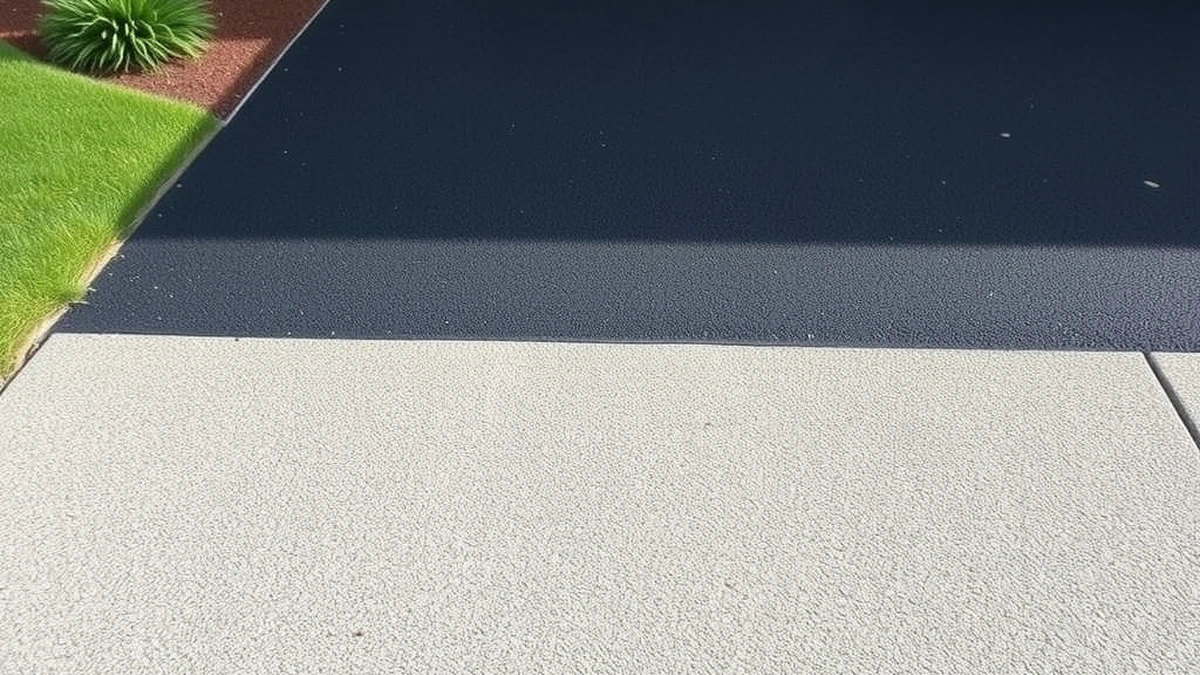
Seal an asphalt driveway every two to four years. Judge by the surface, not the calendar: if water no longer beads, the colour has gone uniformly grey, or sealer has worn through in the tire tracks, the coat is spent and the driveway is due.
- Typical interval
- 2-4 years
- Hot, sunny climate
- 2-3 years
- Mild, shaded site
- 3-4 years
- Too frequent
- Under 2 years
- Cost per cycle
- $0.15-$0.30 per sq ft
Some links on this page are affiliate links.If you buy through them we may earn a commission at no extra cost to you. We do not accept payment for rankings. Read the full disclosure.
Seal an asphalt driveway every two to four years. That is the range for most US residential driveways, and within it the right answer is set by sun, traffic, and how the surface behaves after rain rather than by a date on the calendar. Sealing more often than every two years costs money without adding life.
What sealing actually does to the interval
Sealcoat is a sacrificial film. It takes the ultraviolet exposure and the water that would otherwise attack the bitumen binder in the asphalt.
Once that film wears through, oxidation resumes at the surface. The pavement does not fail immediately; it turns grey, feels gritty, and starts to ravel at the edges. The two-to-four-year window is the period in which a new coat still bonds to a surface worth protecting.
Seal too late and the surface has already lost binder, so the new coat sits on dead asphalt and wears faster. Seal too early and you build film on film, which cracks and peels from its own thickness.
What moves the window
| Condition | Effect on interval | Practical interval |
|---|---|---|
| Full sun, no shade | Faster oxidation | 2-3 years |
| Heavy traffic, turning wheels | Faster wear in tracks | 2-3 years |
| Partial shade, mild summers | Slower oxidation | 3-4 years |
| Light use, stored vehicle | Minimal wear | 3-4 years |
| Coastal salt air | Faster surface breakdown | 2-3 years |
| Freeze-thaw winters | Water damage between coats | 2-3 years, sealed before frost |
The dominant variable is sun. A south-facing driveway with no tree cover bakes through a coat faster than a shaded north-facing one, even when both see the same traffic. The second is turning motion: power-steering scrubs at the apron wear sealer quickly.
Reading the surface instead of the calendar
Four checks tell you more than the date of the last coat.
Water beading. Spray a section with a hose. If water still beads and runs off, the film is intact. If it soaks in and darkens the surface, the film is gone.
Colour. Fresh sealcoat is near-black. Uniform grey means the film has oxidized away. Patchy grey with black tire tracks means the sealer has worn unevenly and is close to done.
Texture. Run a hand over the surface. Gritty, sandy feel means aggregate is exposed. Smooth and slightly waxy means sealer remains.
Edge wear. The edges and the apron usually fail first because they take the most water and the most turning force. Compare an edge with the centre of a bay.
Two of those four pointing the same way is enough to book a job. One alone usually is not.
The cost of getting the interval wrong
Take a 700 square foot driveway at $0.20 per square foot, which is $140 per coat.
Sealing every three years: over 15 years that is five coats, or $700.
Sealing every year: fifteen coats, or $2,100. The extra $1,400 buys no additional pavement life and adds film thickness that can fail on its own.
Sealing never: the surface oxidises, ravels, and eventually needs an overlay at $3 to $7 per square foot, which on 700 square feet is $2,100 to $4,900.
The correct interval is the cheapest of the three by a wide margin. This is one of the few maintenance decisions where the middle path is also the least expensive. Our driveway sealing cost page covers rates, and seal driveway cost covers minimums and add-ons.
Timing within the year
Sealer is water-based and needs warmth and dry air. Air and surface temperatures above 50 F are the working floor, and 70 F with low humidity is ideal.
Spring works because the surface is clean after winter and the curing window is long. Early autumn works in cold climates because the coat cures before the first freeze and protects the pavement through the freeze-thaw season.
Avoid midsummer afternoons on hot pavement. The sealer skins over before it flows into the texture, and the finish streaks. Early morning is easier to control.
Avoid sealing within 24 to 48 hours of forecast rain. A coat that gets wet before it sets can blush white or wash away, and the fix is another full coat.
How to schedule the job
- Check the surface with a hose and note where water soaks in rather than beads.
- Count the years since the last coat, then adjust for sun and traffic using the table above.
- Inspect for cracks and potholes; repairs come before sealer, not after.
- Book in spring or early autumn, with a 48-hour dry forecast.
- Record the date and the product used, so the next decision is based on fact.
That last step is the one most homeowners skip, and it is the reason so many driveways get sealed on a contractor’s schedule rather than the pavement’s.
When the answer is not sealer at all
Sealing is maintenance for sound asphalt. If the surface shows alligator cracking across more than a quarter of its area, if water ponds for a day after rain, or if sections feel soft underfoot, the base has failed.
No interval fixes that. A new coat over a failed base looks uniform for a season and then re-cracks along the same lines. The options at that point are an overlay at $3 to $7 per square foot or replacement at $8 to $15 per square foot.
Distinguishing the two cases is the whole skill. Our guide to driveway sealing repair walks through the diagnosis, and how long does driveway sealing last explains what a coat can reasonably be expected to deliver in each climate.
Frequently asked questions
How often should you seal a driveway?
Every two to four years for most residential asphalt. Hot, sun-exposed driveways with heavy traffic sit at two to three years, while shaded, mild-climate driveways with light use can go three to four.
Is it bad to seal a driveway every year?
Yes. Annual sealing adds cost without extending pavement life, and repeated coats build a thick film that can crack under its own rigidity. Two years is the practical minimum.
How do I know when my driveway needs sealing?
Water stops beading, the surface turns uniformly grey and feels gritty, and the sealer has worn through in the tire tracks while surviving at the edges. Any of those means the coat is spent.
How long should I wait to seal a new asphalt driveway?
Six to twelve months, ideally through one full curing season. Sealing too early traps the light oils in the mix and can soften the surface instead of protecting it.
Does sealing more often make a driveway last longer?
Only up to the two-to-four-year interval. Beyond that, additional coats do not reach the pavement and add a layer that fails on its own. The base, not the sealer, sets the upper limit on driveway life.
Should a driveway be sealed before winter?
Early autumn is a good window in cold climates, because the coat cures before freezes and protects against freeze-thaw water. Leave at least a month before the first expected frost.
Sources
Some links are affiliate links.If you buy through them we may earn a commission at no extra cost to you. We do not accept payment for rankings. Read the full disclosure.