Driveway crack repair
Driveway crack repair: practical numbers, costs, and trade-offs, written independently.
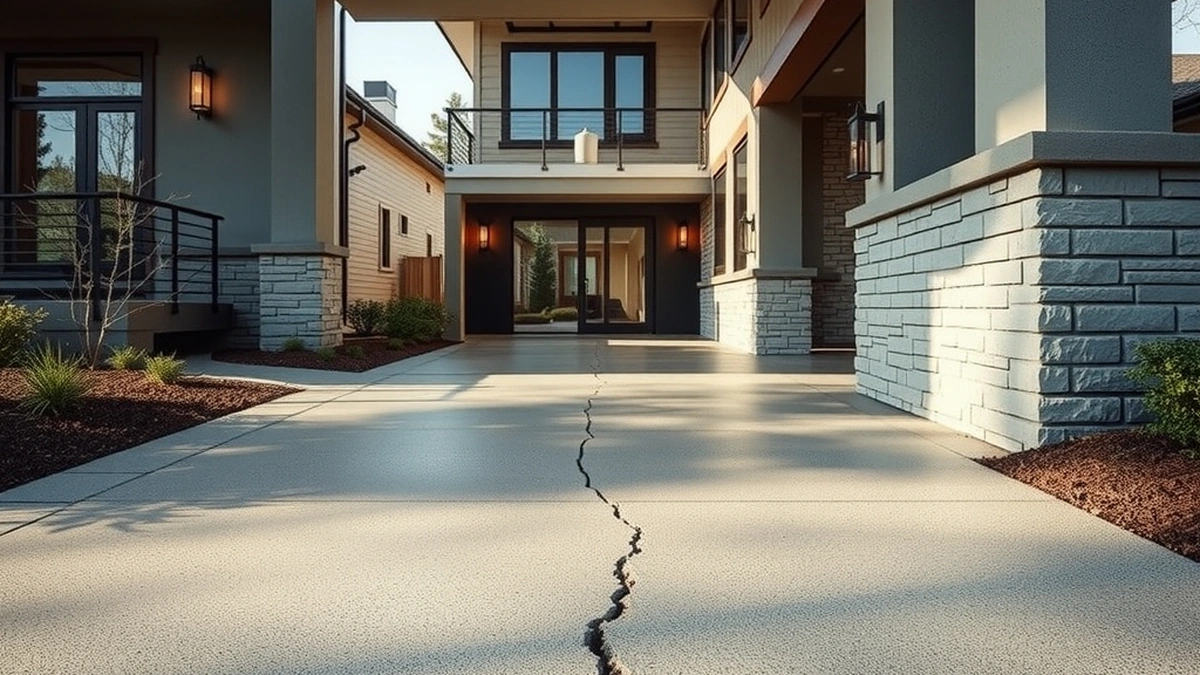
Driveway crack repair: practical numbers, costs, and trade-offs, written independently. The guide below shows the numbers and the trade-offs.
- Typical range
- Varies by system and site
- First step
- Measure the space and confirm the load
- Professional help
- Recommended for structural or electrical work
Some links on this page are affiliate links.If you buy through them we may earn a commission at no extra cost to you. We do not accept payment for rankings. Read the full disclosure.
Driveway crack repair costs $2 to $5 per linear foot in the US, so 60 feet of cracks runs $120 to $300 and 120 feet runs $240 to $600. The price depends on how the crack is prepared and filled, not just on its length. A hairline crack that gets a bead of sealer is a different job from a working crack that must be routed, cleaned, and filled with a rubberized compound, and the two should never be priced the same.
What the price covers
Crack repair is the process of cleaning a crack, preparing its edges, and filling it with a flexible material that keeps water out and moves with the pavement. The goal is water management, not cosmetics: a filled crack that looks tidy but has lost its bond is worse than an open one you can see.
At $2 per linear foot you are usually buying a simple clean-and-pour on cracks up to about half an inch wide. At $5 per linear foot you are buying routing or saw-cutting, compressed-air cleaning, and a hot-poured rubberized filler with a finished seal over the top.
The numbers
- Crack filling: $2 to $5 per linear foot
- Pothole repair: $100 to $400 per hole
- Professional sealcoating: $0.15 to $0.30 per square foot
- Asphalt overlay: $3 to $7 per square foot
- Full replacement: $8 to $15 per square foot
These are estimates. A driveway with 200 feet of cracking, tight access, or cracks that need saw-cutting will price at the top of the range or above it.
Crack width decides the method
| Crack type | Width | Typical treatment | Cost per linear ft |
|---|---|---|---|
| Hairline | Under 1/8 inch | Emulsion sealer worked into the surface | At or below $2 |
| Minor | 1/8 to 1/4 inch | Clean and pour flexible filler | $2–$3 |
| Working | 1/4 to 1/2 inch | Rout, clean, fill with rubberized compound | $3–$5 |
| Wide or edge | Over 1/2 inch | Saw-cut, clean, fill in lifts, possibly patch | $5 and up |
| Alligatored area | Network of cracks | Not a crack repair; patch or overlay | Priced per sq ft |
Width is the first thing to measure, because it tells you whether filling will work. A crack narrower than an eighth of an inch has nowhere for filler to sit, and forcing material into it makes a mess that peels. A crack wider than half an inch usually needs to be filled in two passes, because a single pour shrinks away from the sides as it cures.
Working out the cost on your driveway
Measure the total length of the cracks, not the area of the driveway. Walk the driveway with a tape and add up the running feet. A typical two-car apron might carry 40 feet of cracking at the expansion joints and another 30 feet across the surface, for 70 feet total.
At $2 per foot: 70 × $2 = $140. At $5 per foot: 70 × $5 = $350. That is the crack work on its own.
Add sealcoating if the surface is otherwise sound. A 400-square-foot driveway at $0.15 to $0.30 per square foot is $60 to $120. Together, the crack repair and the sealcoat land between $200 and $470 for a driveway of that size.
Now compare the alternatives. An overlay over 400 square feet at $3 to $7 per square foot is $1,200 to $2,800. Full replacement at $8 to $15 per square foot is $3,200 to $6,000. Crack repair is cheap by comparison, which is exactly why it should be done early rather than deferred until the surface needs replacing.
What a proper repair involves
- Measure and mark every crack, including the ones that look cosmetic.
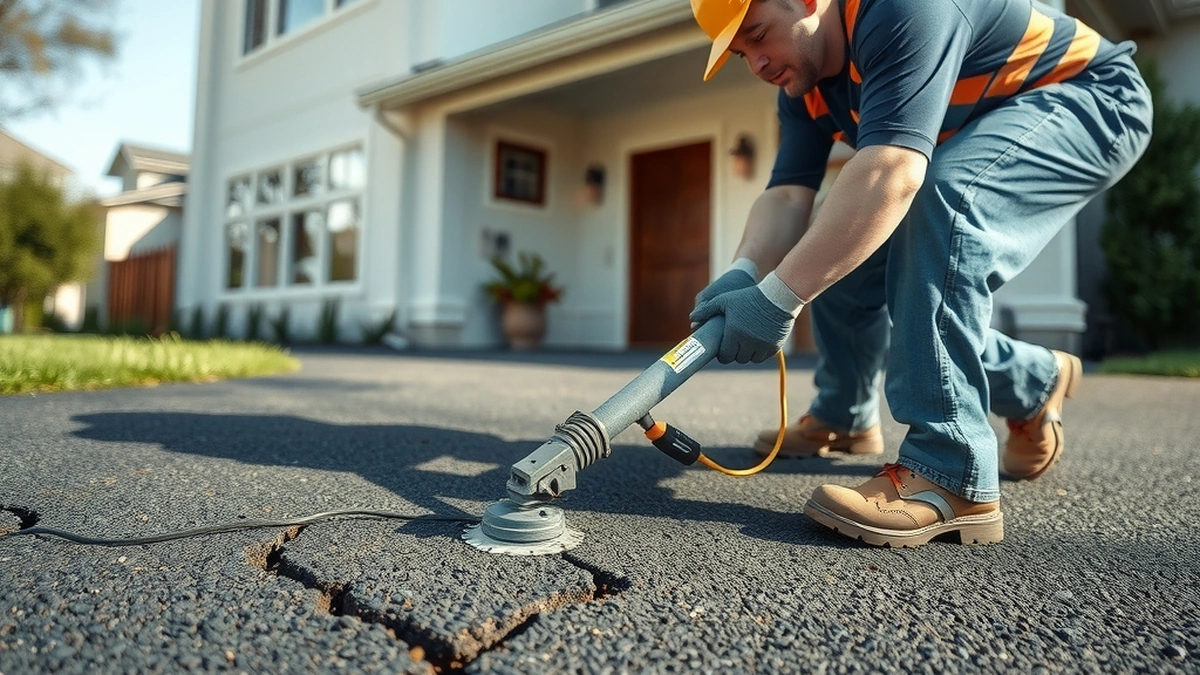
- Cut or rout the crack edges to a clean vertical face so the filler has a shoulder to bond to.
- Blow out dust and debris with compressed air, and confirm the crack is dry.
- Fill with a flexible, rubberized crack filler, working it into the crack rather than laying it on top.
- Shape the fill slightly below the surrounding surface so tires do not catch it.
- Seal the surface after the filler cures, so the repair and the pavement around it are protected together.
The step homeowners most often skip is drying. Filler poured into a damp crack traps moisture, and the first freeze pushes the repair out. If rain is due within 24 hours, reschedule.
When a crack is not a crack problem
Some cracks are symptoms. If a crack runs along the edge of the driveway and the edge is crumbling, the pavement has lost its lateral support. If a network of cracks covers a panel like a spiderweb, the base under that panel has failed. If a crack is wider at one end and a puddle forms nearby, water is moving underneath.
In each of those cases, filling the crack is a stopgap. The repair is a patch, an overlay, or replacement of the failed section. Filling a structural crack and sealing over it hides the problem for a season and lets it grow. This is the same distinction that matters in driveway sealing repair: sealer protects a sound surface, it does not restore a broken one.
Crack repair versus replacement
Crack repair wins whenever the pavement around the crack is still sound and the base is dry. It loses when the crack is one of many in a failed panel, or when the same crack reopens within a year because the two sides are still moving.
A practical rule: if the cracks are isolated and the surface between them is flat and tight, repair and seal. If the cracks connect into a web, or if a straightedge laid across the area rocks, the surface has lost its support and an overlay is the more honest spend. For the full comparison, see driveway repair cost and asphalt overlay cost.
Getting a fair quote
Ask for the linear footage in the quote, not just a lump sum. A quote that says “crack repair” with no footage cannot be compared with another. Ask what filler is used, whether the cracks will be routed, and whether the price includes cleaning and a follow-up sealcoat.
For a small number of cracks, DIY is realistic: filler is sold by the tube or the jug, and the work is mostly cleaning and patience. For more than about 100 feet, or for cracks wide enough to need routing, the equipment and the time favour a contractor.
If the cracks come back every year in the same places, stop paying for filler and read cold patch maintenance for the base-failure checklist. When the surface is sound and the cracks are filled, driveway sealcoating is the coat that keeps water out of them.
Frequently asked questions
What is the most important measurement?
Start with the ceiling or clearance number; it decides which systems can fit.
What does a typical project cost?
Costs vary by system and site access; the guide shows the line items and a planning range.
Can I install this myself?
Some tasks are DIY-friendly, but structural, electrical, and load-bearing work should be done by a licensed professional.
How long does installation take?
A simple setup is a weekend; a full build with electrical or structural work can take several weeks.
What should I check before buying?
Confirm dimensions, load ratings, and the manufacturer's installation requirements for your exact model.
Where can I find local help?
Ask a licensed contractor or installer who has worked with the same system and can inspect your site.
Sources
Some links are affiliate links.If you buy through them we may earn a commission at no extra cost to you. We do not accept payment for rankings. Read the full disclosure.