Coal tar sealer vs acrylic sealer: which to buy
Coal tar is opaque, fuel-resistant, and lasts 3-4 years; acrylic is clear, UV stable, and lasts 1-3. Both cost $0.15-$0.30 per sq ft, so purpose decides.
Coal tar sealer is an opaque black film lasting three to four years with high fuel resistance, and it is restricted in some areas. Acrylic is clear or tinted, lasts one to three years, and suits concrete and decorative surfaces. Both cost $0.15 to $0.30 per square foot.
- Coal tar life
- 3-4 years
- Acrylic life
- 1-3 years
- Installed cost, both
- $0.15-$0.30 per sq ft
- Coal tar status
- Restricted in some areas
- Acrylic finish
- Clear or tinted
Some links on this page are affiliate links.If you buy through them we may earn a commission at no extra cost to you. We do not accept payment for rankings. Read the full disclosure.
Coal tar and acrylic sealer are opposites in almost every respect except price. Coal tar is an opaque black film lasting three to four years with strong fuel resistance. Acrylic is a clear or tinted film lasting one to three. Both cost $0.15 to $0.30 per square foot, so the decision is about purpose rather than budget.
What each product is
Coal tar sealer is a water-based emulsion of refined coal tar, clay filler, and additives that cures into a dense, dark, fuel-resistant film.
Acrylic sealer is a water-based polymer coating that cures clear or tinted, protecting a surface without covering its colour.
One hides, the other reveals. That single difference predicts most of the comparison below.
Head to head
| Attribute | Coal tar | Acrylic |
|---|---|---|
| Appearance | Opaque, deep black | Clear or tinted |
| Service life | 3-4 years | 1-3 years |
| Fuel resistance | High | Low |
| UV stability | Good colour hold, still greys | High, resists yellowing |
| Best surface | Plain asphalt | Concrete, decorative asphalt |
| Cure sensitivity | High, blushes in cool weather | Moderate |
| Odour | Strong | Low |
| Regulatory status | Restricted in some areas | Widely permitted |
| Installed cost | $0.15-$0.30 per sq ft | $0.15-$0.30 per sq ft |
| Material cost | $0.05-$0.12 per sq ft | $0.05-$0.12 per sq ft |
Ten-year cost, worked through
A 1,000 square foot driveway at $0.22 per square foot installed is $220 per coat.
Coal tar at a four-year interval: 2.5 coats, $550. Acrylic at a two-year interval: five coats, $1,100.
The gap is $550 over a decade, or $55 a year. In materials at $0.08 per square foot, it is $200 against $400.
Add the preparation: each cycle carries cleaning and crack filling at $2 to $5 per linear foot. Acrylic’s extra cycles mean extra labor, so the real gap is wider than the sealer price.
Where each one wins
Fuel exposure. A driveway used by a diesel truck, a tractor, or a leaking vehicle benefits from coal tar’s resistance. Gasoline and oil soften acrylic and emulsion far faster.
Appearance. Coal tar’s deep black holds longer than any other product in the category, which matters on a visible front driveway.
Interval. On large driveways, each avoided recoat is real money. On 2,000 square feet at $0.22, one avoided coat is $440.
Those three are genuine advantages. The cost is odour, cure sensitivity, and the regulatory question.
Fuel resistance deserves a caveat. Coal tar handles occasional drips and a leaking engine far better than acrylic, but it is not a fuel tank liner. Repeated spills in the same spot will eventually soften any sealcoat, and the fix there is to stop the leak, not to buy a tougher product.
Where acrylic wins.
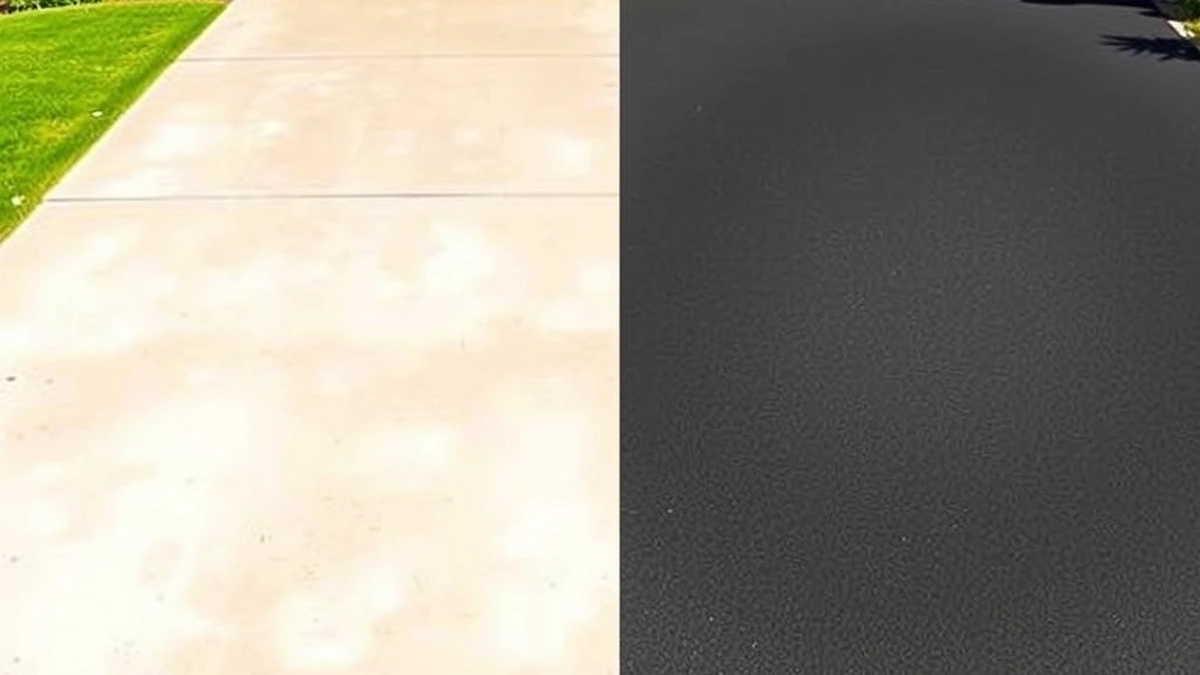
Concrete. Coal tar is an asphalt product and looks wrong on concrete. Clear acrylic protects the surface and keeps its colour.
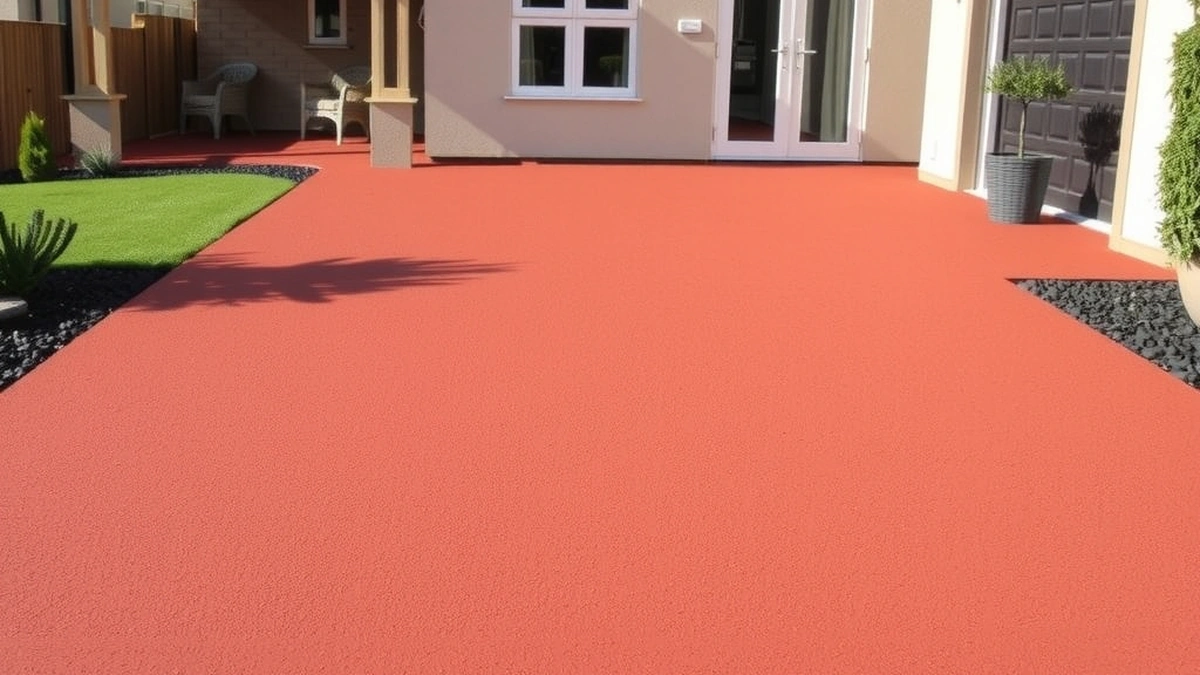
Decorative asphalt. Stamped or coloured asphalt needs a clear film; a black coat erases the pattern.
UV stability. Acrylic resists yellowing better than some alternatives and holds tinted colour reasonably well.
Low odour. Acrylic is far easier to apply near open windows, garages, and shared entries.
In those cases the shorter interval is the price of preserving something the coal tar would destroy.
The regulatory question
Coal tar contains high levels of polycyclic aromatic hydrocarbons, and runoff from sealed pavement is a water-quality concern. Several states and municipalities restrict or ban sales.
Three questions settle it locally: is the product legal to sell here, does the contractor carry it and know the rule, and does runoff from the driveway reach a storm drain or watercourse?
Where coal tar is restricted, acrylic or asphalt emulsion is the compliant choice, and the performance difference is one year of service life.
Switching between them
Neither bonds reliably over a sound film of the other. Acrylic over coal tar typically peels within a season, and coal tar over acrylic behaves the same way.
If the coating history is unknown, test a 2 square foot hidden patch. Apply the new product, cure it, then try to lift an edge with a putty knife. If it releases, the surface needs stripping or the same product family.
Stripping is not free. On 600 square feet it adds a day of work and disposal before any new sealer goes down.
Choosing in four steps
- Identify the surface: concrete, plain asphalt, or decorative.
- Check local rules on coal tar.
- Assess fuel exposure and appearance priorities.
- Price ten years using the intervals above.
A concrete or decorative surface gets acrylic. A plain asphalt driveway with oil exposure and a legal supply gets coal tar. A driveway with neither gets whichever is locally available and cheapest per year, which is usually asphalt emulsion.
That last case covers most residential driveways, and it is worth saying plainly: if the driveway is black asphalt, nothing leaks on it, and coal tar is restricted or hard to buy, the choice between these two is not close. Emulsion or a locally stocked acrylic will do the job for less per year than a product that has to be ordered in.
The shared limit
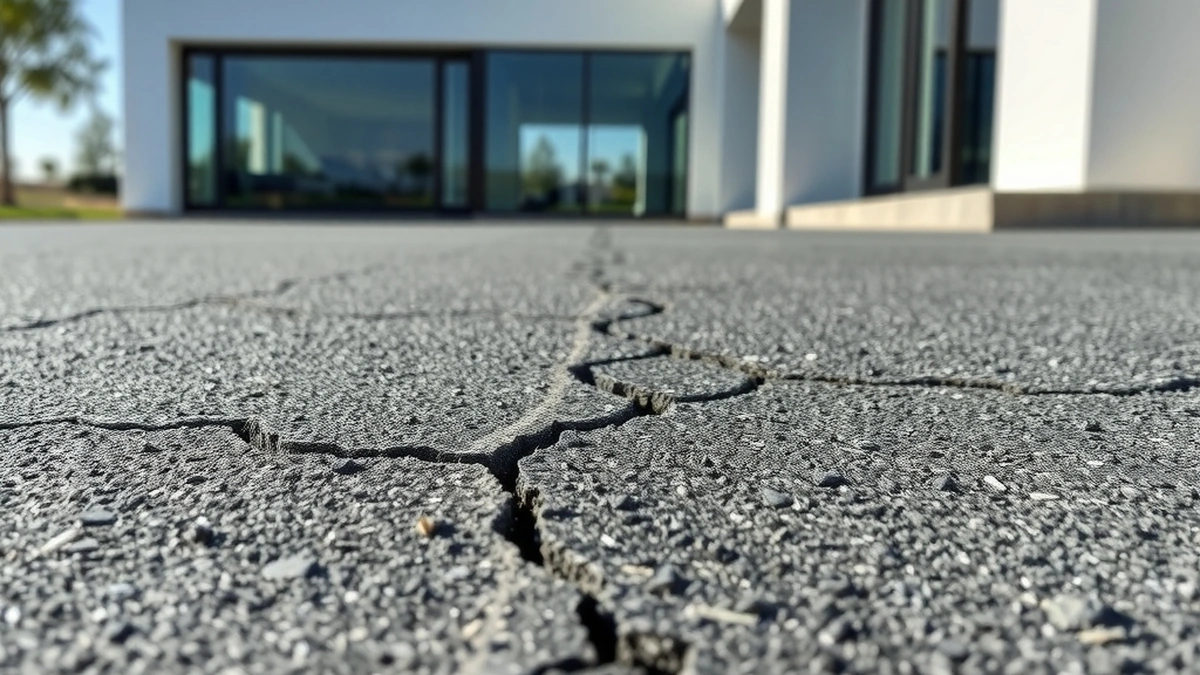
Both are surface coatings. Neither repairs a base, fills a rut, or holds together alligator cracking.
A driveway with alligator cracking across a quarter of the surface, ponding water, or soft spots needs an overlay at $3 to $7 per square foot or replacement at $8 to $15.
A coat over that damage looks uniform for one season and then re-cracks along the same lines. Our alligator cracking repair guide covers the diagnosis, and driveway sealing repair explains how to tell surface wear from base failure. For pricing, see coal tar sealer cost and acrylic sealer cost.
Frequently asked questions
Which lasts longer, coal tar or acrylic?
Coal tar, at three to four years against one to three for acrylic. That longer interval is the main financial argument for coal tar on a plain asphalt driveway.
Is coal tar sealer legal everywhere?
No. Several states and municipalities restrict or ban coal tar sales because of polycyclic aromatic hydrocarbon runoff. Check local rules before buying or hiring.
Can acrylic sealer go over coal tar?
Not reliably. Acrylic bonds poorly to a sound coal tar film and usually peels within a season. Stay with one product family or strip the old coat.
Which is better for concrete?
Acrylic. Coal tar is an asphalt product and looks wrong on concrete. Clear acrylic protects concrete without changing its colour.
Does coal tar fade?
It holds its black longer than emulsion or acrylic, but it still greys over three to four years. The fade is slower, not absent.
Is coal tar worth the odour and restrictions?
On a driveway with fuel exposure, a visible frontage, or a long interval between coats, often yes. On a plain residential drive where acrylic or emulsion is legal and adequate, the advantage is one year.
Sources
Some links are affiliate links.If you buy through them we may earn a commission at no extra cost to you. We do not accept payment for rankings. Read the full disclosure.