Asphalt emulsion sealer maintenance
How to maintain an asphalt emulsion sealer coat: inspection signals, cleaning, crack control, and the recoat interval that keeps water out of the base.
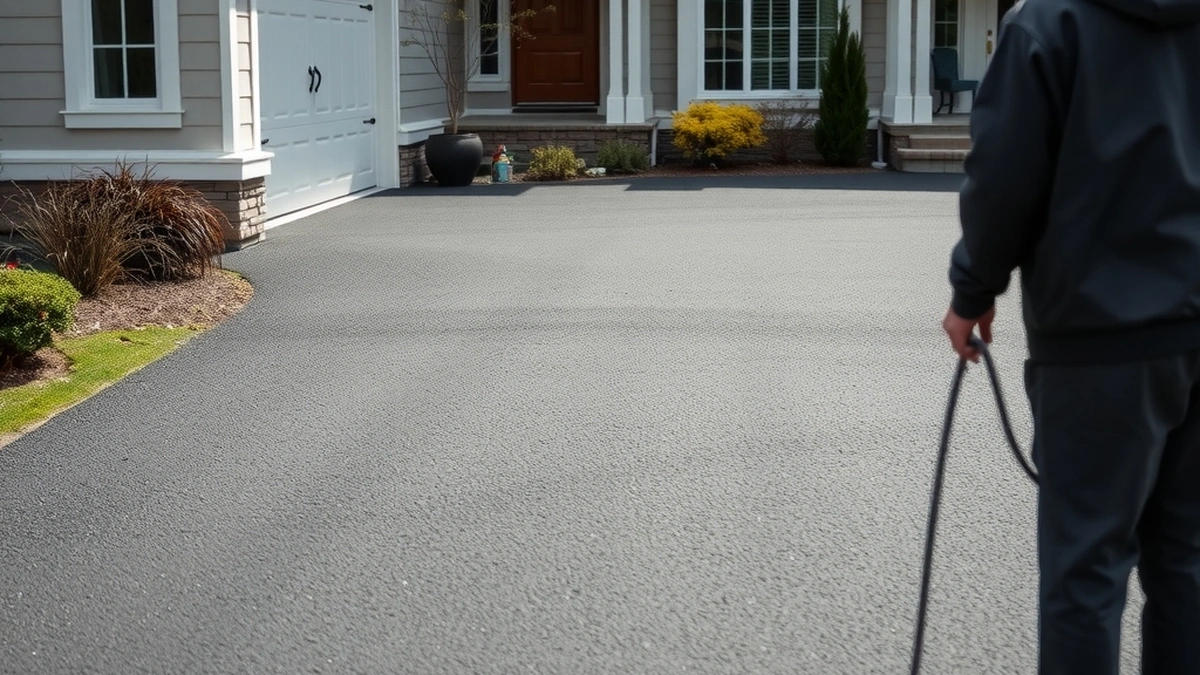
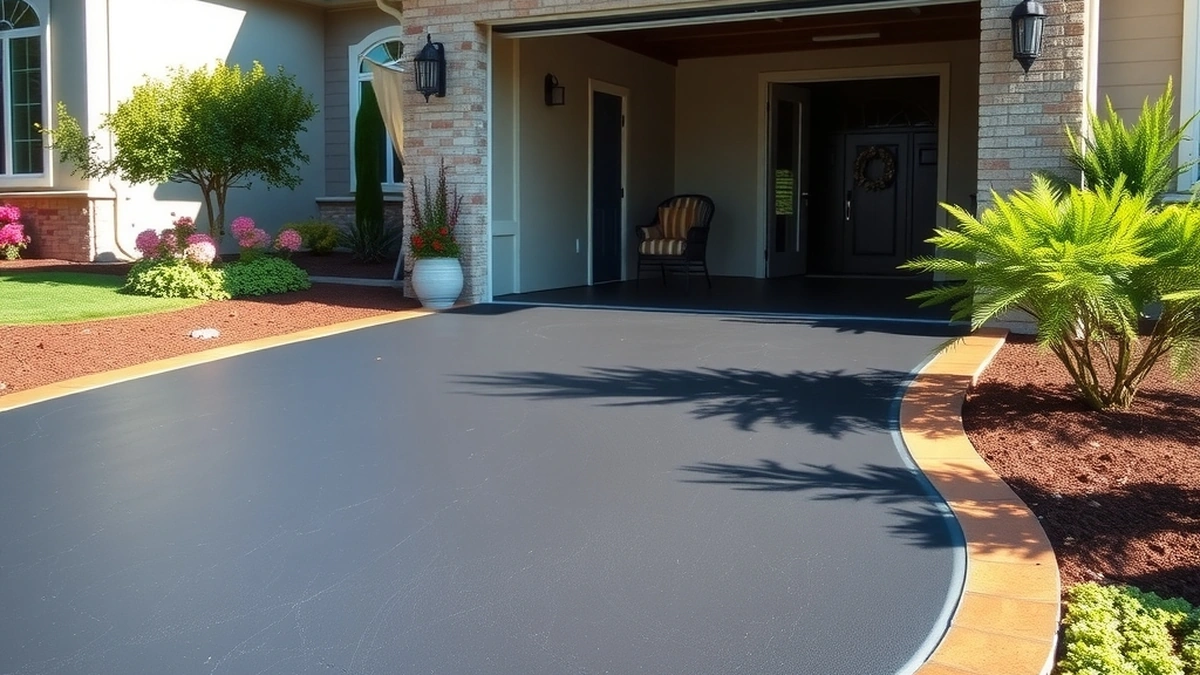
Asphalt emulsion sealer maintenance means inspecting the film twice a year, cleaning oil and debris before they soften it, filling cracks as they open, and recoating every two to three years before the surface turns grey and porous.
- Recoat interval
- 2-3 years
- Inspections per year
- 2
- DIY material cost
- $0.05-0.12 per sq ft
- Contractor cost
- $0.15-0.30 per sq ft
Some links on this page are affiliate links.If you buy through them we may earn a commission at no extra cost to you. We do not accept payment for rankings. Read the full disclosure.
Asphalt emulsion sealer maintenance comes down to inspection and timing: the coat either still sheds water or it has worn through, and every task in between exists to keep that one property intact. On a residential driveway an emulsion film usually holds for two to three years before sun, traffic, and water take it down. The maintenance itself costs cents per square foot; the repairs that follow a neglected coat run into thousands.
What asphalt emulsion sealer maintenance actually covers
Asphalt emulsion sealer is a water-based suspension of asphalt particles, water, and usually a polymer or latex additive that cures into a thin protective film bonded to the pavement surface.
Maintenance of that film is three jobs, not one:
- Cleaning — removing dirt, oil, and organic debris before they soften or stain the film.
- Crack control — filling gaps as they open so water cannot get under the coat.
- Recoating — reapplying before the film thins to the point where aggregate shows through.
What maintenance is not is structural repair. Emulsion sealer sits on top of asphalt. It cannot restore a failed base, bridge a rut, or hold together alligator cracking. If the pavement is moving, the fix is underneath it, and sealing over the symptom wastes a coat.
Twice-a-year inspection, and what each signal means
Walk the driveway in spring after the last freeze and again in early autumn. Both passes take fifteen minutes and tell you whether the next item on the list is a wash or a recoat.
| What you see | What it means | What to do |
|---|---|---|
| Water beads and sits for several minutes | Film is intact | Clean only |
| Water beads briefly, then soaks in | Film is thinning | Plan a recoat this season |
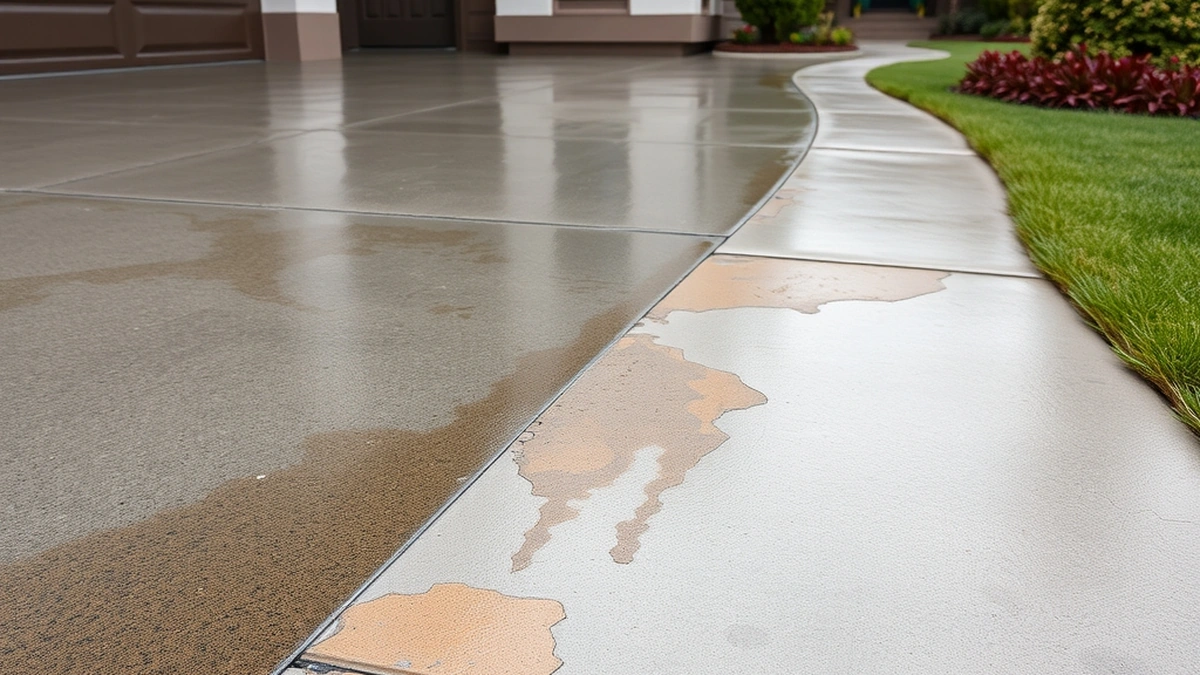
| Surface reads grey and dry, aggregate visible | Film is gone in that area | Clean, prime, recoat |
| Hairline cracks under 1/8 inch | Normal shrinkage | Fill with crack filler |
| Cracks over 1/4 inch, or cracks that reopen yearly | Water is reaching the base | Fill, then watch for base movement |
| Alligator cracking or depressions | Base failure | Stop sealing; get an assessment |
The arithmetic on a recoat is small. A 1,000 square foot driveway at the DIY material band of $0.05 to $0.12 per square foot runs $50 to $120 (1,000 × $0.05 = $50; 1,000 × $0.12 = $120). A contractor at $0.15 to $0.30 per square foot charges $150 to $300 for the same area (1,000 × $0.15 = $150; 1,000 × $0.30 = $300). An asphalt overlay at $3 to $7 per square foot is $3,000 to $7,000 on that same 1,000 square feet, and full replacement at $8 to $15 per square foot is $8,000 to $15,000.
Why the recoat interval is a range and not a number
Two to three years is the working range for emulsion on a residential drive, but several variables move it in both directions.
Sun exposure is the largest factor. A driveway with no shade and a southern aspect oxidises faster than one under trees. Traffic comes next: a household that parks in the garage puts far less wear on the film than four vehicles parked on the surface, turning their tyres in place. Climate supplies the rest, because a freeze-thaw cycle that opens and closes cracks repeatedly shortens the effective life of any film.
Asphalt emulsion vs coal tar seal: the emulsion cures to a thinner, less fuel-resistant film and typically needs recoating every two to three years. Coal tar lays down a heavier, darker film that resists oil and gasoline spills better and holds three to four years. On maintenance cost per recoat, emulsion wins; on interval length, coal tar wins.
If you want the longer cycle, coal tar sealer maintenance follows a three to four year rhythm and a slightly different inspection routine.
The annual maintenance pass
- Sweep and blow the surface. Clear grit, leaves, and sand from the edges and from the joint where the drive meets the garage slab.
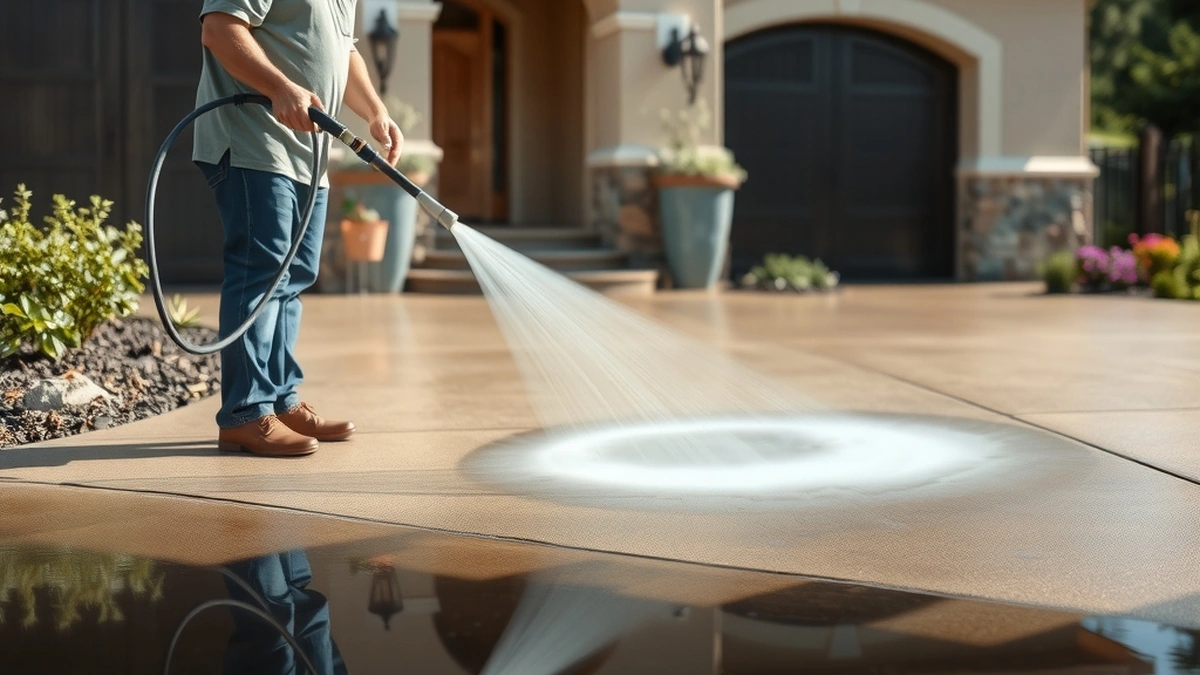
- Wash with a detergent solution and rinse. Treat oil spots separately with a degreaser and scrub them out. A spot left in place softens the new coat from underneath.
- Let it dry completely. Give it twenty-four hours of dry weather minimum, longer in humid conditions.
- Walk the perimeter and mark cracks with chalk as you go.
- Fill every crack over 1/8 inch. Crack filler runs $2 to $5 per linear foot, so forty linear feet costs $80 to $200 (40 × $2 = $80; 40 × $5 = $200). Crack repair technique matters more than the filler brand.
- Recoat only if the film is worn. Two thin coats beat one heavy coat, because a thick single pass traps solvent and cures unevenly.
Skip the recoat when the film is still doing its job. Sealing a healthy coat every spring builds up a brittle layer that eventually peels in sheets, and stripping it back costs more than the coats saved.
Where the schedule pays for itself
The point of the routine is to keep water out of the base. Once water is in, the failure sequence is predictable: the base softens, the surface deflects under load, the deflection opens cracks, and the cracks admit more water.
Potholes in that sequence cost $100 to $400 each to patch. Three potholes on a 1,000 square foot drive is $300 to $1,200, which already exceeds a decade of DIY recoat material at the low end of the band. If the surface has gone beyond patching, driveway sealing repair covers the transition between maintenance and construction work.
Emulsion also has a practical ceiling on how much saving it can deliver. If the base is failing, the asphalt overlay cost is the relevant number, not the price of another pail. You can check the wider cost picture in driveway sealing cost per square foot before committing to a scope.
Keeping a record
Write down the date of each coat, the product name and batch if the label carries one, the number of coats, the weather during application, and any cracks filled. Three years later, when the surface starts to grey, that log tells you whether you are due for a recoat or whether something else is going on. It also tells a contractor you interview that you know the history of the surface, which tends to produce a more specific quote.
Two maintenance passes a year, one recoat every two to three years, and a five-line log is the whole system. How often to seal an asphalt driveway sets the outer boundary on the interval; everything inside that boundary is inspection and small repairs.
Frequently asked questions
How often should an asphalt emulsion sealer be recoated?
Every two to three years on a typical residential driveway. Shade, sun exposure, traffic volume, and freeze-thaw cycles move that range in both directions.
Can I apply a second coat a year after the first?
Only if the film is worn thin. Recoating a healthy coat every year builds a brittle layer that peels in sheets, and stripping it back costs more than the coats saved.
What does it mean when water no longer beads on the driveway?
It means the film has thinned to the point where water can reach the asphalt. That is the signal to clean the surface and plan a recoat this season.
How much does crack filling add to a maintenance pass?
Crack filler runs $2 to $5 per linear foot, so forty linear feet costs $80 to $200. That is usually less than a single pothole patch at $100 to $400.
Should I seal over alligator cracking?
No. Alligator cracking indicates the base has failed, and a surface coat will not hold it together. Sealant over that pattern hides the symptom for one season at most.
Does emulsion sealer last as long as coal tar?
Usually not. The cured emulsion film is thinner and less fuel-resistant, so it typically needs recoating every two to three years against three to four for coal tar.
Sources
Some links are affiliate links.If you buy through them we may earn a commission at no extra cost to you. We do not accept payment for rankings. Read the full disclosure.