Asphalt emulsion sealer vs asphalt emulsion sealer
Two pails labelled asphalt emulsion sealer can be very different products. Here is what separates them, what the price gap buys, and how to read the label.
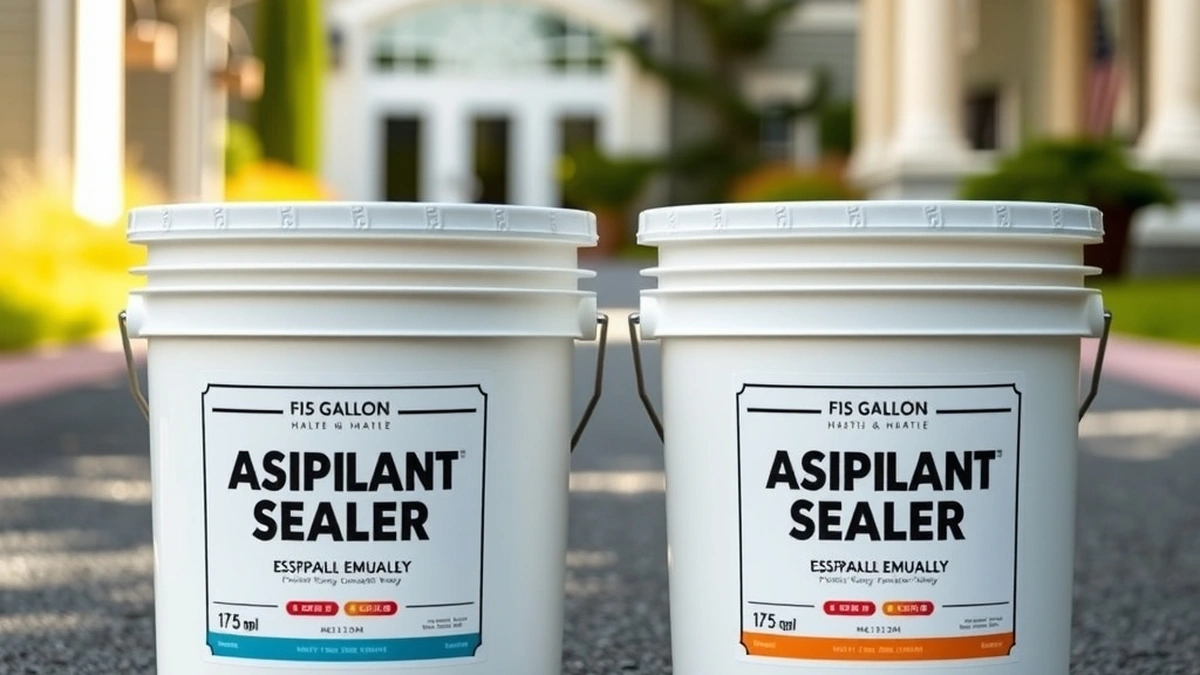
Comparing two asphalt emulsion sealers means comparing what the category name hides: coverage per coat, solids content, polymer loading, filler, and cure window. Same chemistry family, different label numbers.
- Price band, DIY
- $0.05-0.12 per sq ft
- Price band, applied
- $0.15-0.30 per sq ft
- Coats to compare
- 2
- Service life
- 2-3 years
Some links on this page are affiliate links.If you buy through them we may earn a commission at no extra cost to you. We do not accept payment for rankings. Read the full disclosure.
An asphalt emulsion sealer compared with another asphalt emulsion sealer is not a meaningless exercise once you are standing in front of a shelf where every pail carries the same category name. The category tells you the chemistry family and nothing else. Solids content, polymer loading, filler, coverage rate, and cure window are what decide how long the coat lasts, and those live in the small print.
Why one name covers several products
Asphalt emulsion sealer is a water-based suspension of asphalt particles, water, and additives that cures into a film on the pavement surface.
Because the definition is that broad, a manufacturer can meet it with a thin ready-to-use blend or with a concentrated, polymer-modified, filled product. Both are legitimately asphalt emulsion sealer. Only one of them will cover your driveway in two coats at the rate printed on its own label.
The axes that actually differ
Four variables separate products in the same category, and each one changes either the quantity you buy or the interval between recoats.
| Axis | Option A | Option B | Effect on the job |
|---|---|---|---|
| Concentration | Ready-to-use | Concentrate, diluted on site | Concentrate changes pail count and mixing risk |
| Additives | Unmodified asphalt emulsion | Polymer or latex modified | Modified films flex and bond better in freeze-thaw |
| Filler | Unfilled, smooth finish | Sand or aggregate filled | Filled adds texture and skid resistance |
| Coverage rate | Higher sq ft per gallon | Lower sq ft per gallon | Determines gallons and total material cost |
Colour is the fifth variable and the least important. A darker pail of sealer looks better on the day of application and tells you nothing about the film thickness that will remain in year two.
What the price gap actually buys
The DIY material band for sealcoat is $0.05 to $0.12 per square foot, and the applied band is $0.15 to $0.30 per square foot. On a 1,000 square foot driveway in two coats, that is $50 to $120 in material (1,000 × $0.05 = $50; 1,000 × $0.12 = $120), or $150 to $300 for a contractor job (1,000 × $0.15 = $150; 1,000 × $0.30 = $300).
The entire spread between the cheapest qualifying product and the best one in that band is $70 on a 1,000 square foot driveway. Put against the alternatives, that is small change: one pothole patch runs $100 to $400, and an asphalt overlay at $3 to $7 per square foot is $3,000 to $7,000 on the same surface. Buying the better pail inside the band is the cheapest decision in the whole project.
Where the price gap stops being worth it is past the top of the band. A product priced above $0.12 per square foot for DIY material is competing with a contractor application at $0.15 per square foot including labour, and at that point the comparison is no longer product against product.
Reading two labels side by side
- Divide your square footage by the coverage rate per coat. A 1,000 square foot drive at 200 square feet per gallon needs 5 gallons per coat, or 10 for two coats (1,000 ÷ 200 = 5; 5 × 2 = 10).
- Multiply by the pail price to get a real cost per square foot for a finished two-coat job.
- Check for polymer or latex on the label. Modified products are the ones to compare against each other; unmodified products are a different tier.
- Check whether the product is filled. Filled sealer needs more material per square foot and behaves differently on a slope.
- Check the cure and traffic window against the forecast, because a slow-curing product applied in cool weather will not be ready inside a weekend.
Two labels run through those five steps will usually separate themselves before you reach the checkout. If they do not, the products are close enough that either will perform the same on a sound surface.
Where the comparison stops mattering
Prep outweighs product. A cleaned, crack-filled, dry driveway holds a mid-band emulsion for its full two to three years. A dusty or damp one sheds the best product in the catalogue inside a season, which is why DIY driveway sealing spends most of its length on washing and crack filling rather than on shopping.
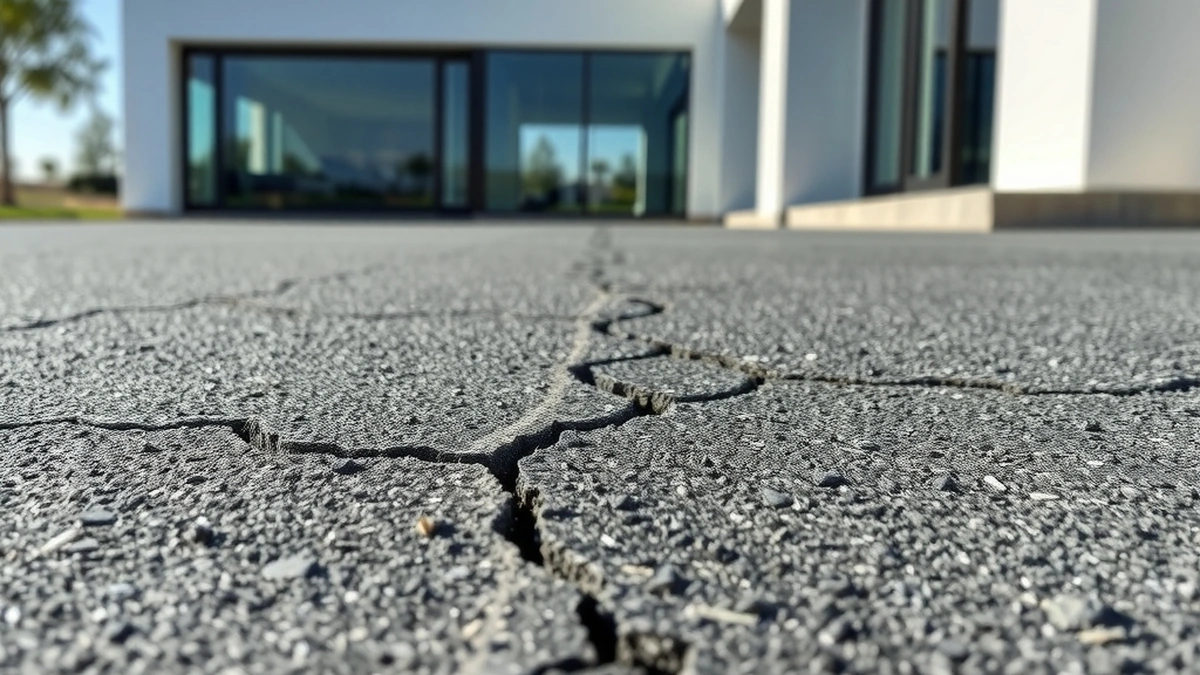
Sealer A vs sealer B on a failing base: both lose. Emulsion sits on top of asphalt and cannot restore a base that has softened or a surface that has alligatored. If the pavement is moving, the money belongs in driveway sealing repair, not in a premium pail.
What to do with the two pails
Pick the product with the better coverage rate and a polymer designation, buy ten percent over the calculated quantity, and apply two thin coats at the label rate. Then keep the label and the receipt. When the surface greys out in two or three years, the record tells you whether to repeat the purchase or move up a tier, and asphalt emulsion sealer maintenance tells you what the film needed in between.
That is the whole comparison. The category name is a starting point, the label arithmetic is the decision, and the surface condition decides whether either product was the right purchase at all.
Frequently asked questions
Are all asphalt emulsion sealers the same product?
No. They share a chemistry family, but solids content, polymer loading, filler, and coverage rate vary enough that two pails can need different coat counts for the same driveway.
What is the most important number on the label?
Coverage rate per gallon per coat. It determines how many pails you actually need, which is the largest single swing in the material budget.
Does a higher price always mean a better emulsion sealer?
Not always. A high price with a thin coverage rate can cost more per square foot than a mid-priced product applied at two coats. Compare cost per square foot, not cost per pail.
What does polymer-modified mean on an emulsion sealer?
It means latex or another polymer has been added to the emulsion to improve flexibility and adhesion. Modified products generally resist cracking and wear better than unmodified ones.
Should I buy filled or unfilled emulsion sealer?
Filled sealer carries sand or aggregate for texture and skid resistance. Unfilled sealer gives a smoother, darker finish. The choice depends on slope and appearance, not durability alone.
How much extra sealer should I buy?
Buy about ten percent more than the calculated quantity. Edges, the apron, and porous patches absorb more than the flat field, and running short mid-coat leaves a visible seam.
Sources
Some links are affiliate links.If you buy through them we may earn a commission at no extra cost to you. We do not accept payment for rankings. Read the full disclosure.