Puddling: repair options for standing water
Standing water on a driveway means the surface is out of plane or the base has settled. Repair options: crack filling, local patching, resloping, and overlay.
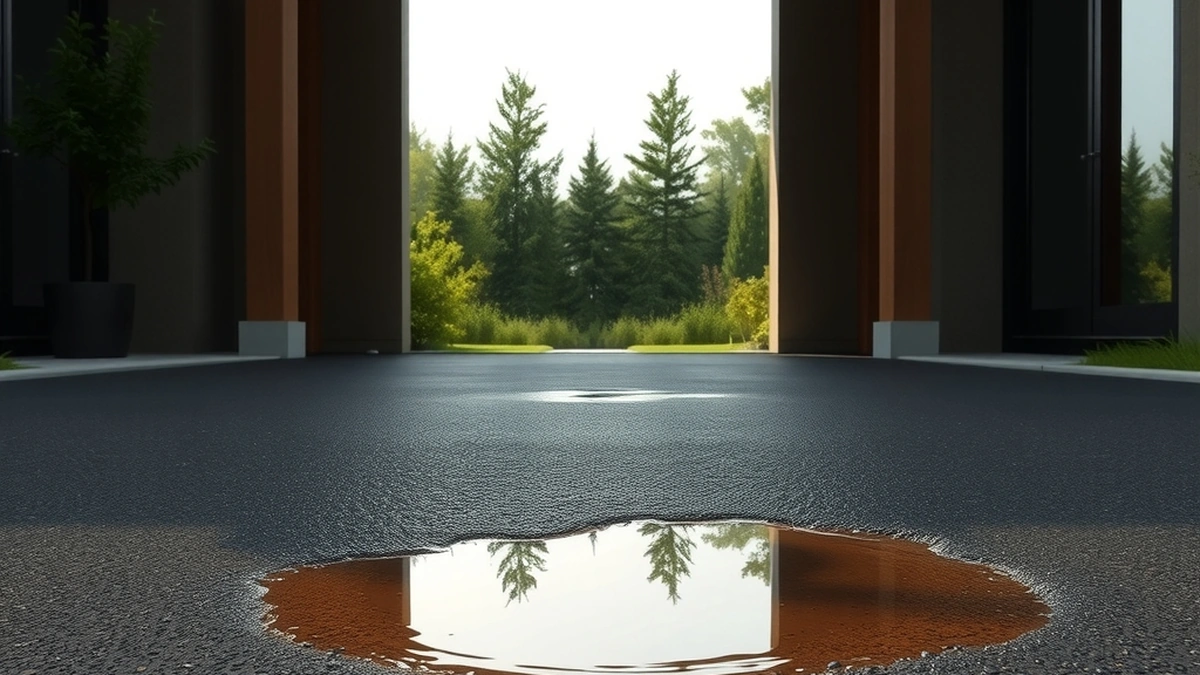
Puddling is repaired by correcting the surface plane: fill and seal cracks that admit water, patch settled low spots, reslope the area so it drains, or overlay the driveway when ponding covers a large area. Sealer over a low spot traps water instead of shedding it.
- Crack filling
- $2-$5 per linear ft
- Low-spot patch
- $100-$400 per area
- Overlay
- $3-$7 per sq ft
- Replacement
- $8-$15 per sq ft
- Drainage target
- Dry within 24 hours
Some links on this page are affiliate links.If you buy through them we may earn a commission at no extra cost to you. We do not accept payment for rankings. Read the full disclosure.
Puddling is a drainage problem, and the repair is to correct the surface plane rather than to coat it. That can mean patching a settled low spot, resloping an area, adding a drain, or overlaying the driveway when the ponding is widespread. Sealer over a puddle makes it worse, because the film holds water against the pavement.
Why water stands
A driveway sheds water by slope. Typical residential pavement falls about 2 percent, which is a quarter inch per foot, away from the garage and toward the street or a drain.
Water stands when that fall is interrupted. Three things interrupt it.
Settlement. A section of base compresses or washes out, and the pavement above it drops into a shallow bowl.
Original grade. The driveway was built too flat, or with a dip, and has always held water in the same place.
Off-site water. A lawn, a neighbour’s drive, or a downspout delivers water onto the pavement faster than it can drain.
Repair options compared
| Option | What it fixes | Cost | Best for |
|---|---|---|---|
| Crack filling | Water entering the surface | $2-$5 per linear ft | Cracks feeding the base |
| Low-spot patch | A localised depression | $100-$400 per area | One settled spot |
| Reslope | The surface plane | Quoted per job | A section draining wrong |
| Channel drain | Water crossing the drive | Quoted per job | Water from off-site |
| Overlay | The whole surface plane | $3-$7 per sq ft | Widespread ponding |
| Replacement | Base and plane | $8-$15 per sq ft | Base failed under the low spot |
The first row does not fix ponding. It stops water entering through cracks, which is a related but separate problem.
Patching a low spot, resloping, and drains
A shallow depression can sometimes be corrected by patching, but only if the base under it is sound.
The repair cuts out the low area, adds material to bring it up to plane, and compacts. Done properly it restores the fall across that section.
Done as a cold patch skimmed into the dip, it fails. Cold patch in a thin layer over a depression does not bond well and is displaced by tires, and the puddle returns within weeks.
The cost lands in the $100 to $400 range per area, which reflects the cutting, base check, and compaction rather than material.
Resloping and drainage structures.
Where the surface plane is wrong across a section, resloping is the repair. That means removing and replacing the asphalt in the affected area at the correct fall, or overlaying it to build the plane up.
Where water arrives from off-site, a channel drain across the driveway intercepts it before it reaches the low point. That is a separate trade from paving, and it is quoted per job.
Both are more expensive than a patch and cheaper than an overlay across the whole driveway. The right choice depends on how much of the surface drains wrong.
Overlay when ponding is widespread
When water stands in several places, or when the low area covers a large share of the driveway, an overlay is the economical repair.
An overlay at $3 to $7 per square foot on 600 square feet is $1,800 to $4,200. It replaces the surface plane across the whole driveway, which fixes multiple low spots at once and resets the surface for the next decade.
It only works if the base is corrected where it has settled. An overlay over an uncompacted low spot reproduces the dip, and the puddle returns.
Why sealing is the wrong response
Sealcoat is a film that follows the surface. On a slope it sheds water; in a depression it holds it.
Applied over a puddle, the sealer cures in the low spot and water sits on top of it. The film softens, the water works at the edges, and the pavement beneath stays wet for longer than it would if it were unsealed.
Sealing is worth doing after drainage is corrected, not before. Our driveway sealing repair guide covers where sealing fits in the sequence.
Diagnosing the cause
- Watch the driveway during rain and mark where water flows and where it stands.
- Check the same spots 24 hours later; anything still wet is a drainage failure.
- Look uphill for the source: lawn grade, downspouts, neighbouring pavement.
- Probe the low spot for softness, which indicates base settlement.
- Measure the area affected as a share of the driveway.
Step 3 is the one most owners skip, and it is the one that decides whether a patch will hold. If water is being delivered to the spot from somewhere else, the patch is downstream of the cause.
When it is a base problem
A puddle over a soft spot is a base failure, not a surface one.
Test by probing the depression with a screwdriver. If it sinks, the material beneath the pavement has lost support. Patching the surface will not fix it, and neither will an overlay applied without base correction.
The options in that case are localised base repair, or replacement at $8 to $15 per square foot if the failure is widespread. Our puddling signs guide covers how to tell the difference before you spend.
Prevention after the repair
Keep the fall clear. Do not add soil or gravel that dams the edge.
Extend downspouts so they discharge away from the pavement.
Fill cracks at $2 to $5 per linear foot so water does not get into the base and restart the settlement.
Those three keep a repaired plane draining, and they cost a fraction of the repair. Our puddling prevention guide covers the routine, and puddling cost prices each option.
Frequently asked questions
How do you fix puddling on a driveway?
Correct the surface plane. That can mean patching a settled low spot, resloping the area, adding a channel drain, or overlaying the driveway if the ponding covers a large area.
Does sealing fix puddling?
No. Sealer follows the surface it is applied to. On a low spot it holds water against the pavement instead of shedding it, which accelerates the damage.
Why does water stand on my driveway?
Either the surface has settled out of plane, the original slope was too shallow, or the surrounding grade directs water onto the pavement. All three are drainage problems, not coating problems.
How much does it cost to fix driveway drainage?
A localised patch is priced like a pothole repair at $100 to $400. An overlay at $3 to $7 per square foot is $1,800 to $4,200 on 600 square feet. Drainage structures are quoted per job.
Is a small puddle a problem?
Yes, if it lasts more than a day. Standing water softens the base beneath the low spot, and that is how potholes and settlement start.
Can I just fill the low spot with cold patch?
It is a temporary fix at best. Cold patch in a shallow depression rarely bonds well and is often displaced by traffic. A proper repair corrects the plane.
Sources
Some links are affiliate links.If you buy through them we may earn a commission at no extra cost to you. We do not accept payment for rankings. Read the full disclosure.