Puddling: how to prevent standing water
Prevent driveway puddling by keeping the fall, clearing the joints, and stopping off-site water. Three checks after rain, and the fixes that cost least.
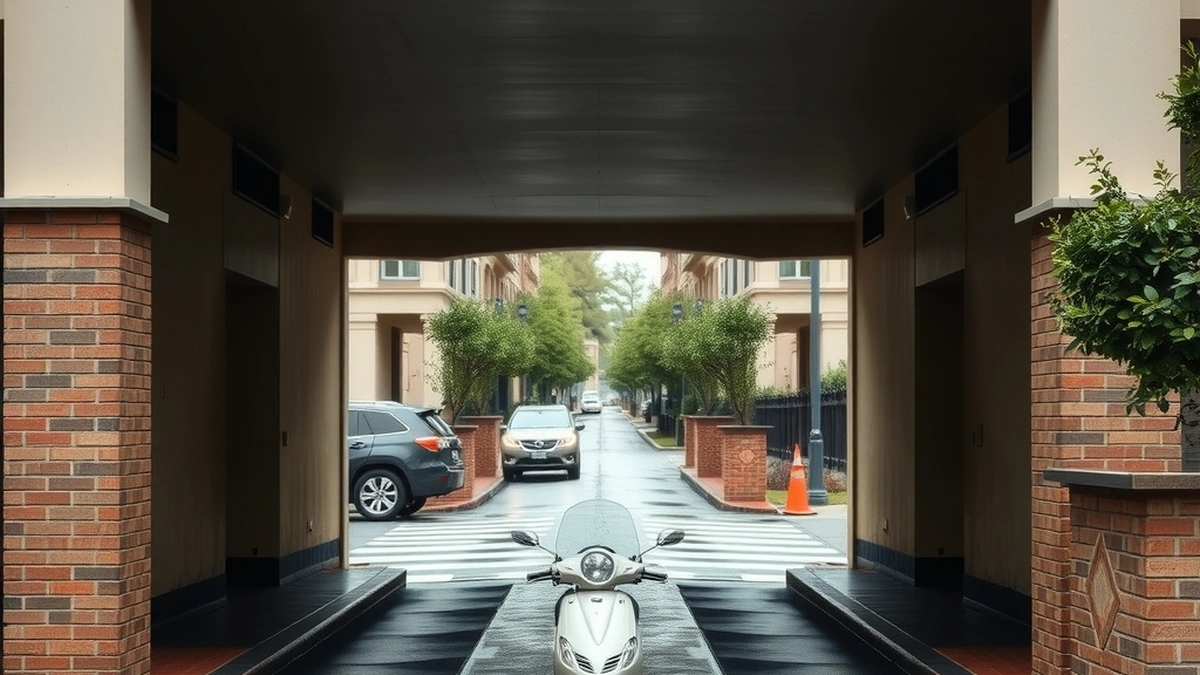
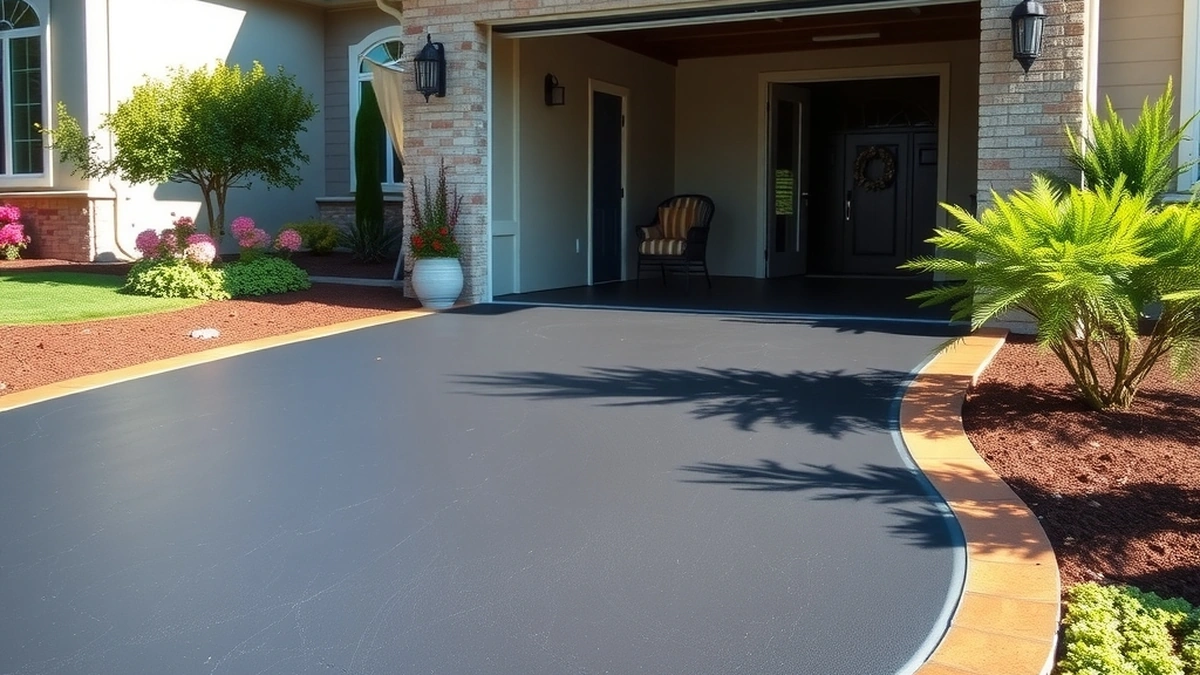
Prevent driveway puddling by keeping the surface fall intact, filling cracks so water cannot enter the base, and stopping off-site water at the source. Water should be gone within 24 hours of rain; anything that stays longer is a drainage fault worth fixing early.
- Surface fall
- About 2% away from the building
- Dry target
- Within 24 hours
- Crack filling
- $2-$5 per linear ft
- Sealcoat cycle
- 2-4 years
- Repair if it forms
- $100-$400 per low spot
Some links on this page are affiliate links.If you buy through them we may earn a commission at no extra cost to you. We do not accept payment for rankings. Read the full disclosure.
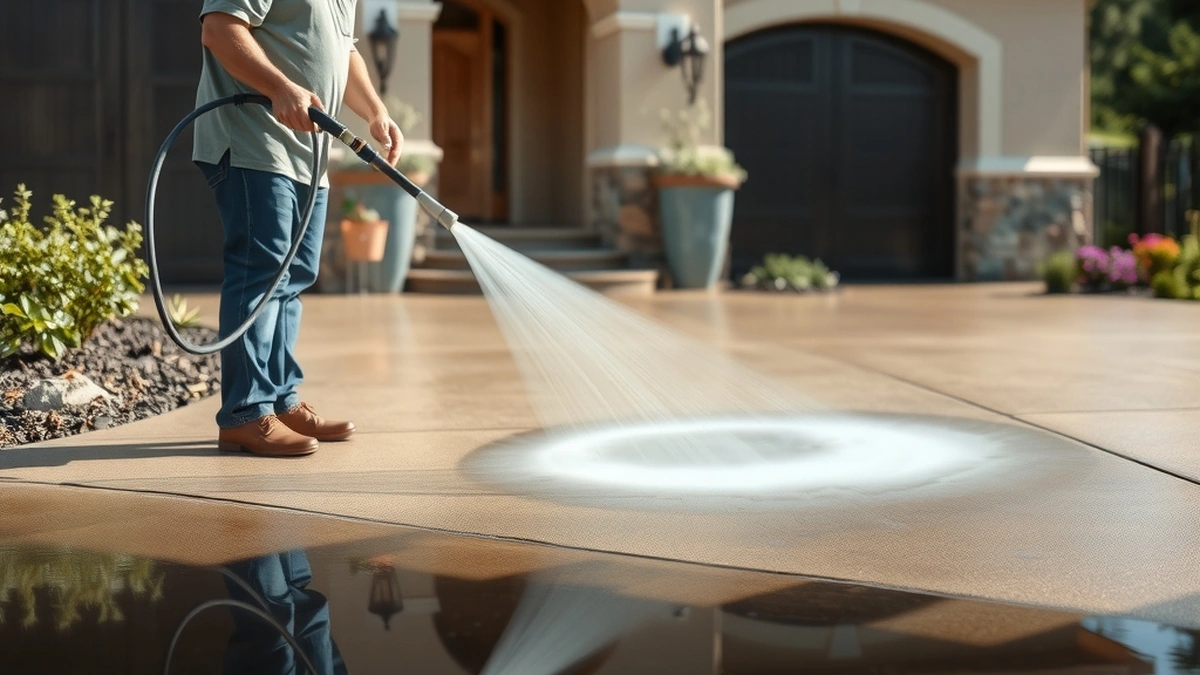
Puddling is prevented by keeping the surface falling, keeping water out of the base, and stopping water that arrives from somewhere else. A driveway at roughly 2 percent fall, with sound joints and clear outlets, dries within hours of rain. Water that stays for a day is a fault, even when it looks minor.
How a driveway is supposed to drain
Pavement sheds water by slope. A residential driveway typically falls about 2 percent, a quarter inch per foot, away from the garage and toward the street, a swale, or a drain.
Water that cannot leave the surface either evaporates or infiltrates. Evaporation is slow and only works in dry weather; infiltration is worse, because it puts water into the base.
The goal is simple: get water off the pavement before it can soak in.
The three ways drainage fails
| Failure | What happens | Early sign |
|---|---|---|
| Surface fall lost | Base settles, creating a bowl | Water stands in one spot |
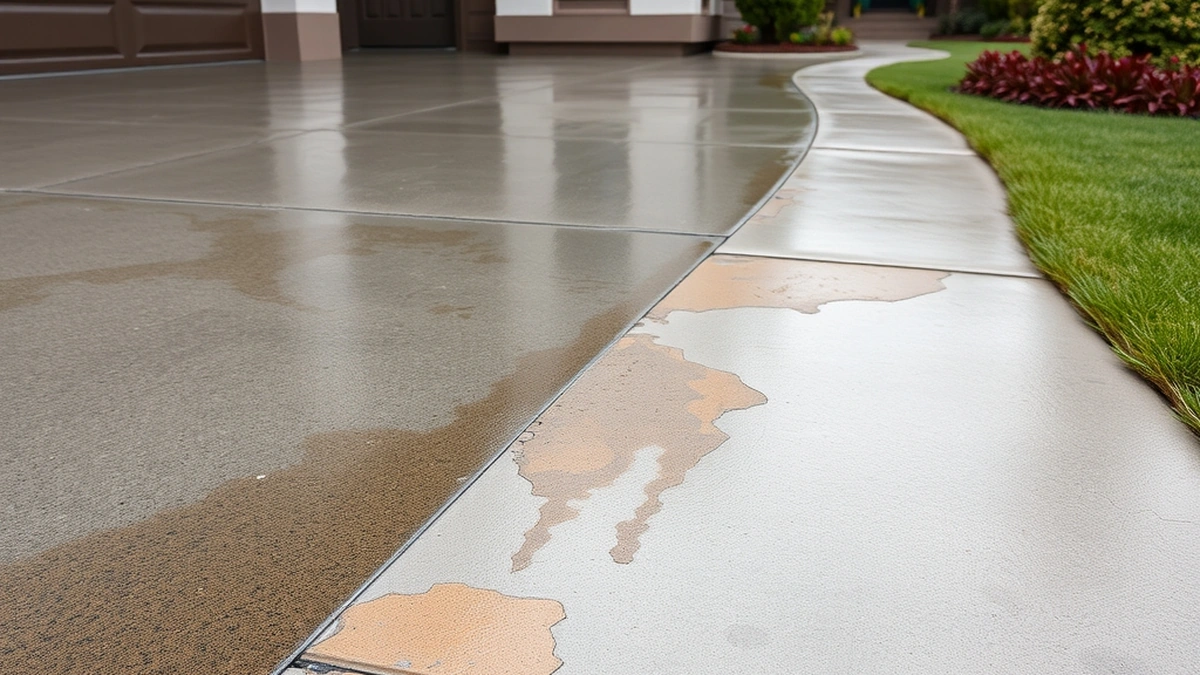
| Cracks open | Water enters the base | Dark damp lines after rain |
| Off-site water | Downspout or lawn delivers water | Puddle at the edge or apron |
| Outlet blocked | Street gutter or drain is full | Water backs up at the end |
| Edge unsupported | Water runs along the joint | Crumbling edge beside a puddle |
Each has a different fix, and diagnosing which one you have is most of the work.
Keeping the fall and sealing the surface
The fall is set when the driveway is built. It is lost when the base settles or is washed out under a section.
You cannot restore fall with a coating. The repair is to build the low area back up: cut out the depression, correct the base, and replace the asphalt to the right plane.
That is a $100 to $400 repair for a local low spot, which is cheap compared with letting the water sit. A puddle that persists softens the base beneath it, and the depression deepens each season.
Two habits matter.
Fill cracks at $2 to $5 per linear foot before they widen. A crack is a direct route to the base, and the water that enters it is what causes settlement in the first place.
Seal every two to four years at $0.15 to $0.30 per square foot. The film slows surface oxidation and reduces the amount of water that soaks into the pavement itself.
Neither fixes a puddle that already exists. Both reduce the chance of a new one forming.
Stopping off-site water
This is the cheapest and most overlooked fix.
A downspout discharging beside a driveway delivers a concentrated stream that no residential slope can handle. Extending it onto a splash block and away down the garden removes that load for very little cost.
A lawn that slopes toward the driveway does the same thing across its whole width. Regrading a strip of turf, or adding a shallow swale, diverts it.
A neighbouring drive or a shared apron can also deliver water. In that case a channel drain across the driveway intercepts it, which is a quoted-per-job item but a permanent fix.
The after-rain check
- Walk the driveway during or just after heavy rain and note where water flows.
- Mark any spot where water stands.
- Check the same spots 24 hours later.
- Trace each remaining puddle uphill to its source.
- Fix the source before patching the puddle.
Step 4 is the one that prevents repeat repairs. A puddle fed by a downspout will return after any patch that does not move the water.
What not to do
Four common “fixes” make puddling worse.
Drilling weep holes in the low spot. This sends water into the base and accelerates the settlement that created the dip.
Skimming cold patch into the depression. It does not bond in a thin layer and is displaced by tires within weeks.
Sealing over the puddle. The film follows the surface, so the water stays, and sitting water softens the new coat.
Adding soil or gravel at the edge to “build it up”. This dams water on the pavement instead of letting it run off.
Each of those costs money and leaves the drainage fault in place.
When prevention becomes repair
Prevention protects a driveway whose plane is sound. Once water is standing regularly, the plane is not sound, and the job is a repair.
A local low spot: patch and correct the base, $100 to $400.
Widespread ponding across several areas: an overlay at $3 to $7 per square foot, which resets the plane across the whole surface. On 600 square feet, $1,800 to $4,200.
A low spot over a failed base: base repair, or replacement at $8 to $15 per square foot if the failure is broad.
Our puddling repair guide covers how to choose, and puddling cost prices each option.
A yearly routine that keeps water moving
Spring: check the fall after the thaw, clear the street gutter or drain outlet, and top up any shoulder that has washed out.
Summer: fill cracks at $2 to $5 per linear foot, and check downspouts.
Autumn: clear leaves from the pavement and the drain, and seal if the cycle is due.
Winter: keep plow piles off the pavement edge, where meltwater collects.
That routine takes an hour across the year and addresses every failure mode in the table above. The cost is a fraction of one patched low spot, and it is the difference between a driveway that dries and one that holds water until the base gives up. See puddling signs for what to look for between checks.
Frequently asked questions
How do I stop water pooling on my driveway?
Keep the surface fall intact, fill cracks so water cannot enter the base, and redirect off-site water such as downspouts and lawn runoff. Water that stands for more than 24 hours needs a drainage fix.
What slope should a driveway have?
About 2 percent, which is a quarter inch per foot, falling away from the building toward the street or a drain. Flatter pavement drains poorly; steeper pavement can be awkward to walk and drive on.
Why does water pool in the same spot every year?
The base under that spot has usually settled or been washed out, creating a shallow bowl. Until the plane is corrected and the base is stabilised, water will keep collecting there.
Do downspouts cause driveway puddling?
They can. A downspout discharging onto or beside pavement delivers concentrated water that overwhelms the surface fall. Extending it well clear is one of the cheapest fixes available.
Does sealing prevent puddling?
No. Sealer follows the surface plane, so a low spot stays low. Sealing protects the surface from water damage but does not change where water goes.
How often should I check for puddling?
After every heavy rain, and formally twice a year in spring and autumn. A puddle that lasts a day is a fault even if it looks minor.
Sources
Some links are affiliate links.If you buy through them we may earn a commission at no extra cost to you. We do not accept payment for rankings. Read the full disclosure.