Cold patch vs asphalt emulsion sealer
Cold patch fills a hole at a few dollars a bag; emulsion sealer coats a surface at $0.15-$0.30 per sq ft. Why they are not alternatives, and the right order.
Cold patch and asphalt emulsion sealer are different repairs, not alternatives. Cold patch fills a pothole at a few dollars per bag; emulsion sealer protects the whole surface at $0.15 to $0.30 per square foot. Patch first, then seal, and diagnose the base before doing either.
- Cold patch
- A few dollars per bag
- Sealer
- $0.15-$0.30 per sq ft
- Cold patch life
- One season to a few years
- Sealer life
- 2-3 years
- Correct order
- Patch, then seal
Some links on this page are affiliate links.If you buy through them we may earn a commission at no extra cost to you. We do not accept payment for rankings. Read the full disclosure.
Cold patch and asphalt emulsion sealer are not competing products. One fills a hole; the other coats a surface. Comparing them is like comparing a filling with a coat of paint, and the only real question is which one your driveway needs first — usually the patch, then the sealer, and sometimes neither.
Two products, two failure modes
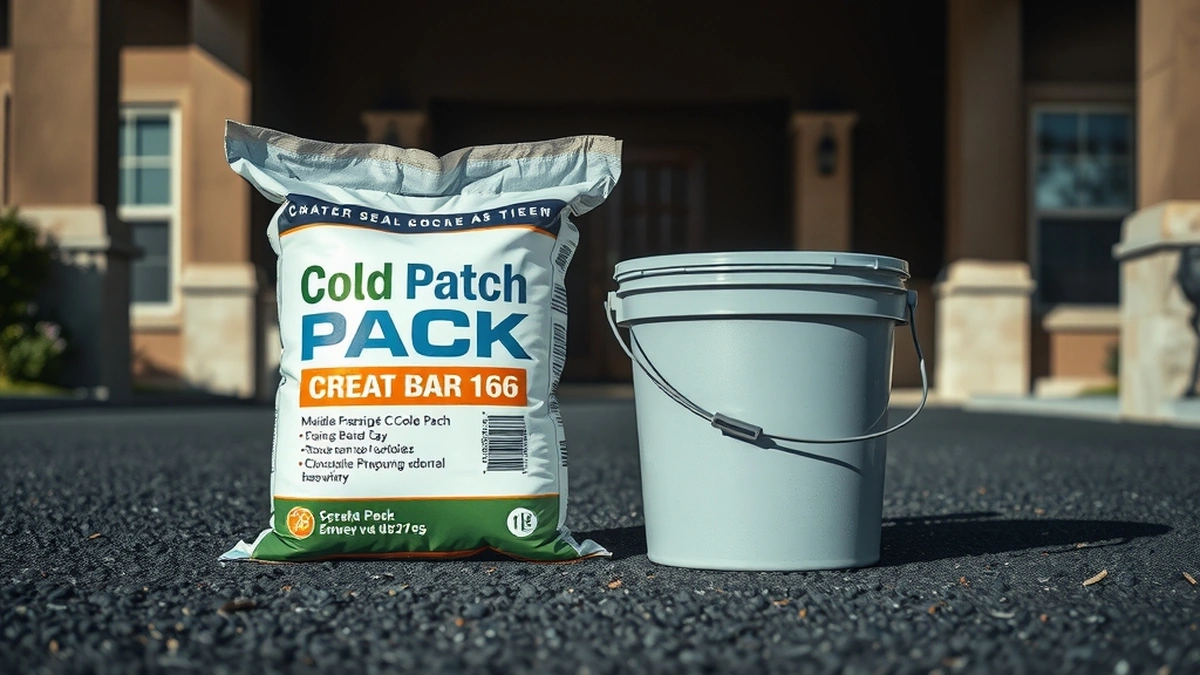
Cold patch is a bagged asphalt mix placed without heat to fill a pothole or a broken section.
Asphalt emulsion sealer is a water-based coating of asphalt particles and filler, spread over the whole driveway to slow oxidation and water entry.
Cold patch addresses a loss of material. Sealer addresses a loss of surface protection. Most driveways eventually need both, in that order.
Head to head
| Attribute | Cold patch | Asphalt emulsion sealer |
|---|---|---|
| Purpose | Fill a hole | Protect a surface |
| Unit | Bag, or square foot of hole | Square foot of driveway |
| Cost | A few dollars per 50 lb bag | $0.15-$0.30 per sq ft installed |
| Coverage | About 2 sq ft per bag at 2 in | 250-400 sq ft per 5 gal pail |
| Life | One season to a few years | 2-3 years |
| Repairs base failure | No | No |
| Applied hot | No | No |
| Order | First | Second |
The last row is the practical answer to the comparison. Cold patch goes down before sealer because a coat over an open hole is a coat with a hole in it.
Why sealing over an unfilled pothole fails
Sealer is a thin film. It cannot bridge a depression, and it cannot support traffic over a void.
Applied across a pothole, the film sags into the hole, cures, and breaks up under the first tire. The surrounding coat then lifts at the break, and the failure spreads outward.
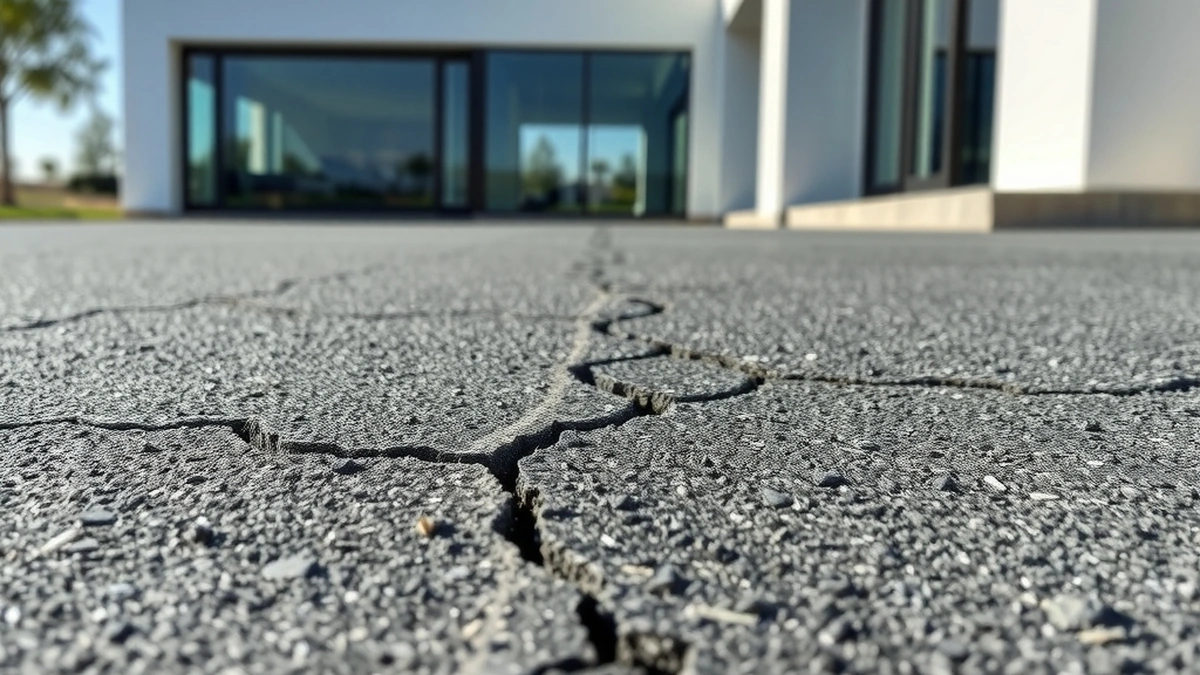
The same logic applies to cracks: sealer applied over an open crack splits along the crack line within a season. The repair has to happen first.
Cost of doing both, worked through
A 600 square foot driveway with one 4 square foot pothole and a worn surface:
Cold patch: two bags, under $20, lasting one season. Or a hot-mix patch: $100 to $400, lasting several years. Sealcoat: 600 × $0.20 per square foot = $120.
Total with a hot-mix patch and seal: $220 to $520, or $0.37 to $0.87 per square foot.
Now price the alternatives over five years. Cold patch replaced annually for five years is five bags and five afternoons, plus a sealcoat every three years at $120. Hot-mix patch once plus two sealcoats is $340 to $640.
The hot-mix route costs more in year one and less by year three. The cold patch route is justified mainly when the hole appears in winter and a permanent repair has to wait.
What each product actually cannot do
This is where most of the confusion sits.
Cold patch cannot repair a base. It fills a cavity, and if the cavity is being reopened from underneath by a soft subgrade or poor drainage, the patch will fail regardless of how well it was installed.
Sealer cannot repair a surface. It slows oxidation, but it does not restore binder that has already oxidised away, and it does not hold raveled aggregate together.
Neither product addresses alligator cracking, ponding, or settlement. Those are structural failures, and the honest options are an overlay at $3 to $7 per square foot or replacement at $8 to $15. Our alligator cracking repair guide covers the diagnosis.
The order that works
- Diagnose the surface: is the problem a hole, a worn surface, or a failing base?
- If the base has failed, stop and price an overlay or replacement.
- If the problem is a hole, patch it properly, squared and compacted.
- Let the patch settle for a few weeks if the weather allows.
- Fill any cracks at $2 to $5 per linear foot.
- Seal the whole surface at $0.15 to $0.30 per square foot.
Skipping step 1 is how people end up sealing a driveway that needed replacing, or patching a hole that keeps returning because the base is soft.
When each product is the right buy
Winter emergencies, when hot mix is unavailable and the hole is a hazard.
Temporary access, on a property scheduled for replacement or a driveway awaiting a contractor.
A stopgap before a permanent patch, where the hole needs to be safe in the meantime.
Those are real use cases, and the low bag price makes them cheap to serve. They are not the same as a repair.
When sealer is the right buy.
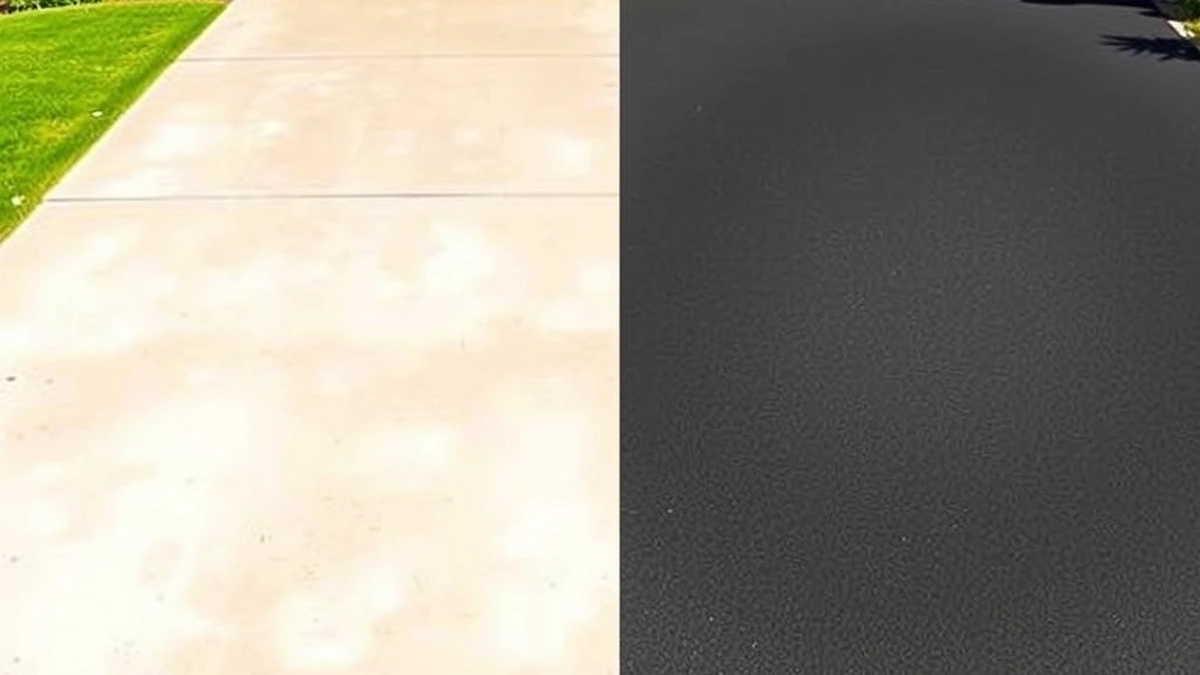
A sound surface that has gone grey, with no cracks wider than a hairline and no potholes.
A driveway sealed two to four years ago that is due for its next coat.
A concrete or asphalt surface where appearance and water shedding matter and the base is stable.
In those cases sealer at $0.15 to $0.30 per square foot is the cheapest maintenance available, and it is doing exactly what it should.
Reading the driveway instead of the product
The useful question is not which product is better, but which failure you have.
Stand on the driveway after rain. Water standing in a depression means the surface is out of plane. Cracks in a connected pattern mean the pavement has lost flexibility. A hole with loose edges means material is being lost, which is cold patch territory.
If two or more of those are present across a large area, maintenance products are the wrong category entirely. Our driveway sealing repair guide sets out the diagnosis, and potholes repair covers the hole-specific options.
Frequently asked questions
Is cold patch the same as asphalt sealer?
No. Cold patch is a bagged asphalt mix used to fill a hole or pothole. Asphalt emulsion sealer is a thin coating spread over the whole surface to slow oxidation and water damage.
Can I seal over cold patch?
Yes, once the patch has been compacted and has had time to settle. Sealer will not hide a sunken patch, so finish the patch slightly proud and compact it before coating.
Will sealer stop potholes forming?
It slows surface oxidation and water entry, which reduces the conditions that lead to potholes. It does not repair a base that has already failed, and potholes are usually a base problem.
Which is cheaper, cold patch or sealer?
They are priced differently. Cold patch is a few dollars per bag for a small hole; sealer is $0.15 to $0.30 per square foot for the whole driveway. A 600 square foot seal is $90 to $180.
Can cold patch fix a pothole permanently?
Rarely. It is a temporary repair. A permanent fix uses hot mix at $100 to $400 per pothole, or an overlay if the surrounding surface has failed.
What if the pothole keeps coming back?
That points to a failed base rather than a failed patch. The options are base repair, an overlay at $3 to $7 per square foot, or replacement at $8 to $15.
Sources
Some links are affiliate links.If you buy through them we may earn a commission at no extra cost to you. We do not accept payment for rankings. Read the full disclosure.