Blacktop sealing: how the job is done right
Blacktop sealing is a four-step job: clean, repair, prime, and coat. What each step does, how long it takes, and why skipping prep wastes the sealer.
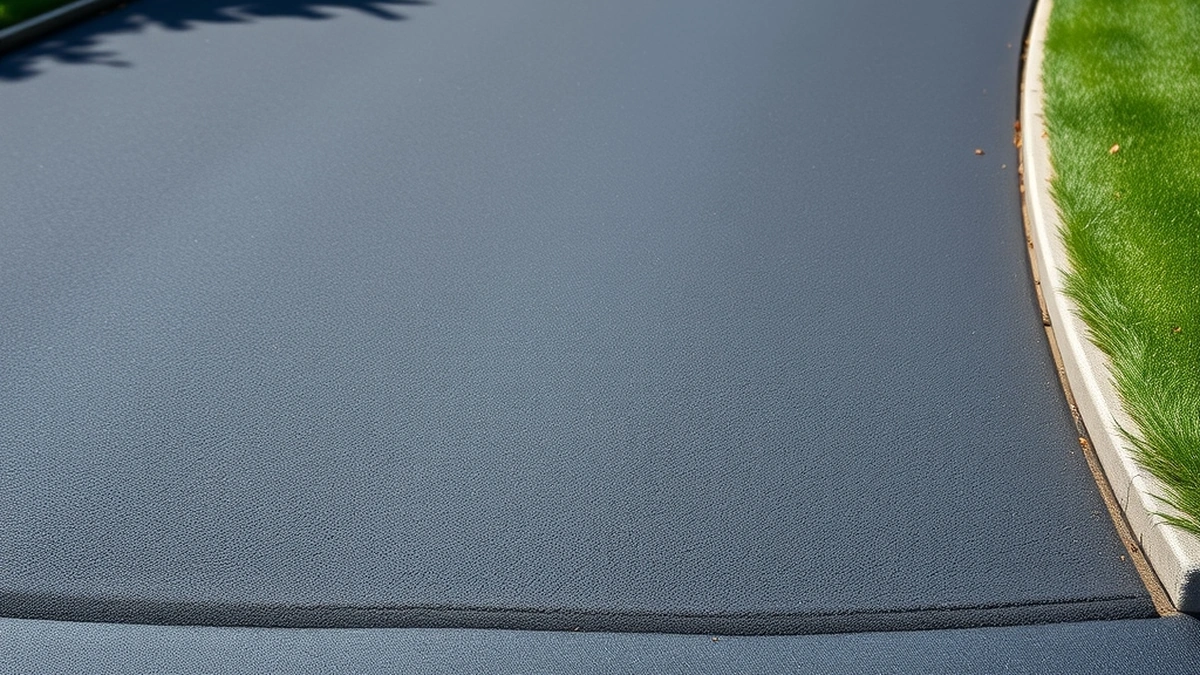
Blacktop sealing is a protective coating applied over cleaned, repaired asphalt to slow oxidation and water damage. A proper job is four steps: clean, fill cracks and patches, prime oil spots, then coat and cure for 24 to 48 hours.
- Contractor cost
- $0.15-$0.30 per sq ft
- DIY materials
- $0.05-$0.12 per sq ft
- Cure before driving
- 24-48 hours
- Recoat interval
- 2-4 years
- Best season
- Late spring to early fall
Some links on this page are affiliate links.If you buy through them we may earn a commission at no extra cost to you. We do not accept payment for rankings. Read the full disclosure.
Blacktop sealing is the application of a protective coating over cleaned, repaired asphalt to slow oxidation, water intrusion, and sun damage. Done properly it is four steps, not one: clean, repair, prime, and coat. The coating is the visible part; the three steps before it decide whether the job lasts two years or four.
What blacktop sealing means
Blacktop is the common US term for asphalt pavement, a mix of aggregate and bitumen binder. Blacktop sealing is the practice of coating that surface with an asphalt emulsion, coal tar emulsion, or acrylic sealer to replace some of the binder the sun has baked out.
The coating sits on the surface in a film measured in fractions of an inch. It is a wear layer. It does not add load capacity, correct drainage, or hold a moving base together. Anyone who tells you sealer fixes structural damage is selling a coat that will fail with the pavement under it.
Why blacktop needs sealing at all
Asphalt is a mixture of stone and bitumen. Ultraviolet light oxidises the bitumen at the surface, and the grey, dry look of old blacktop is that oxidation made visible. Once the binder at the surface is spent, aggregate ravels loose and the pavement starts to erode from the top down.
Water does the rest. It enters hairline cracks, sits against the base, and softens the subgrade. Freeze-thaw cycles widen every opening it reaches.
Sealing slows both processes by putting a sacrificial layer between the weather and the binder. It buys time, and on a driveway that is the whole point.
The four steps of a proper job
- Clean the surface completely. Blow off loose material, then remove oil, moss, and embedded dirt. A pressure washer helps, but the surface must dry fully before sealer goes on.
- Repair before coating. Fill cracks at $2 to $5 per linear foot, patch potholes at $100 to $400 each, and prime oil-soaked spots so the sealer can bond.
- Apply the coat at the manufacturer’s spread rate. One coat on sound, uniform asphalt is often enough; porous or badly faded surfaces need two.
- Cure undisturbed. Keep traffic off for 24 to 48 hours and avoid sharp steering turns for the first week.
Skipping step one is the most common failure. Sealer applied over dust and grit bonds to the dust, not the pavement, and peels in sheets within a season.
Equipment and materials compared
| Method | Typical use | Material cost | Notes |
|---|---|---|---|
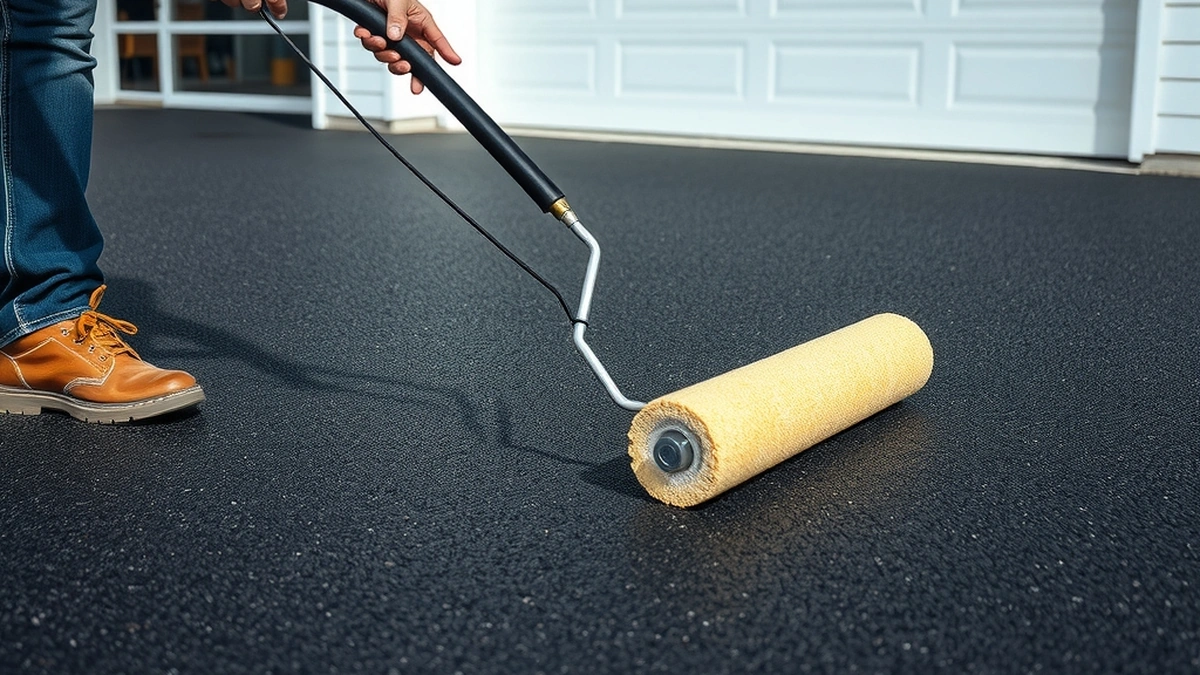
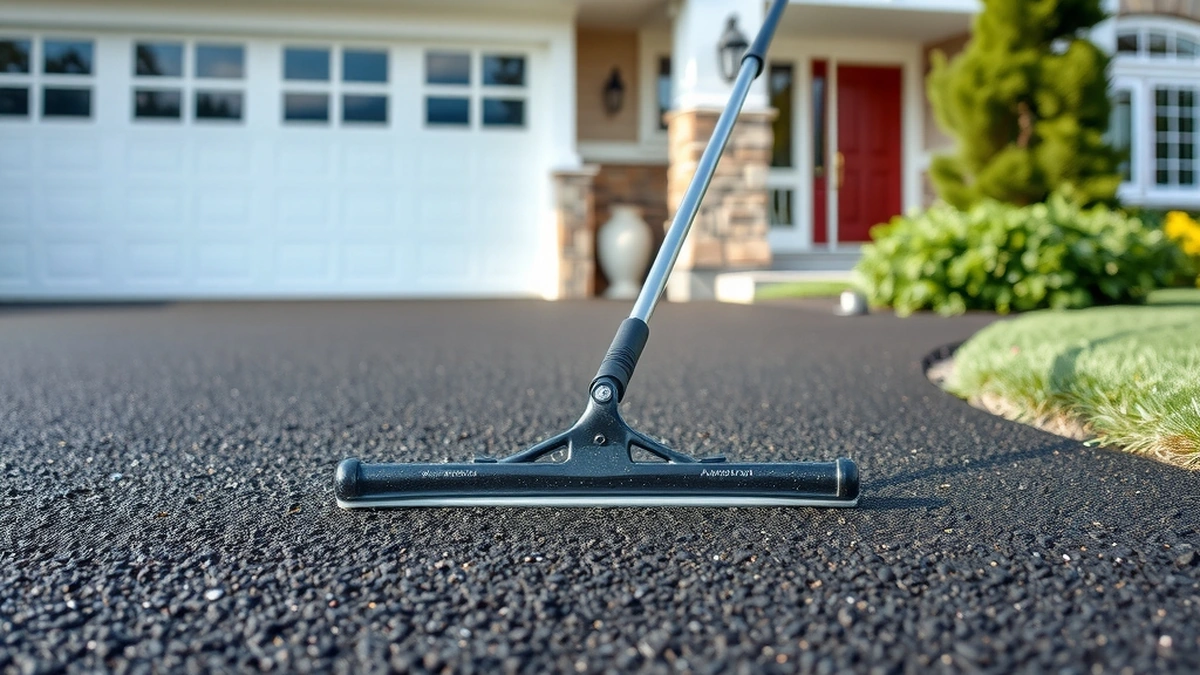
| Squeegee | Small driveways, brush finish | $0.05-$0.12 per sq ft | Best control on edges, slower |
| Spray wand | Large areas, contractors | $0.05-$0.12 per sq ft | Fast, needs masking and calm weather |
| Brush | Touch-ups, tight corners | $0.05-$0.12 per sq ft | Good for texture matching |
| Contractor spray rig | Full driveways, lots | Billed at $0.15-$0.30 per sq ft | Includes material, labor, prep |
The material cost is the same across methods because it is the same product. What changes is labor, coverage speed, and finish. A squeegee pushes sealer into the pores; a sprayer lays it on top. Both work when the surface is clean and the rate is right.
Weather, timing, and cure
Sealer is water-based, so it needs warmth and dry air to cure. Air and surface temperatures above 50 F are the practical floor, and 70 F with low humidity is ideal.
Rain inside the cure window is the main risk. A coat that gets wet before it sets can blush white, streak, or wash entirely, and the fix is another full coat. Schedule around a 48-hour dry forecast, not a 24-hour one.
Time of day matters for a different reason. Applying in direct afternoon sun on hot pavement can cause the sealer to skin over before it flows into the texture. Early morning application is easier to control.
Repair before sealer, every time
Three defects must be handled before any coating goes down.
Cracks: anything wider than a hairline gets filled. Hot-pour rubber at $2 to $5 per linear foot flexes with the pavement; cold patch poured into a crack does not.
Potholes: these are base failures showing through. Patching at $100 to $400 each restores the surface, and if potholes keep reappearing in the same spot, the base underneath needs more than a patch.
Alligator cracking: the interconnected pattern that looks like reptile skin means the asphalt has lost its flexibility or the base is moving. Sealing over it is cosmetic. Our alligator cracking repair guide explains the options.
How often to reseal
Two to four years is the working interval for a residential driveway. Judge by the surface, not the calendar.
If water still beads on the surface after a rain, the coat is working. If the blacktop has turned uniformly grey and feels gritty underfoot, the film is spent. If the sealer has worn through in the tire tracks but survives at the edges, you are due.
Sealing more often than every two years is usually wasted money, and it can build a thick film that cracks under its own rigidity. The interval logic is set out in how often to seal a driveway.
What it costs and what it saves
Contractor sealing runs $0.15 to $0.30 per square foot. On 800 square feet that is $120 to $240 per cycle. Over 20 years at three-year intervals that is roughly seven cycles, or $840 to $1,680.
An overlay at $3 to $7 per square foot on the same 800 square feet is $2,400 to $5,600, and full replacement at $8 to $15 is $6,400 to $12,000. Sealing is not the reason a driveway lasts, but it is the cheapest way to delay the two bigger invoices.
That only holds while the base is sound. If the pavement is already broken into loose plates, the money spent on sealer is money spent hiding a failure. For the full pricing picture, see asphalt sealing cost and driveway sealing cost.
Frequently asked questions
What is blacktop sealing?
Blacktop sealing is the application of an asphalt emulsion or coal tar coating over asphalt pavement to protect it from sun, water, and vehicle fluids. It is a surface treatment, not a structural repair.
How long does blacktop sealing last?
Two to four years on a residential driveway, depending on traffic, sun exposure, and how well the surface was prepared. A two-coat job on sound asphalt sits at the long end.
Can I seal blacktop myself?
Yes, on a small, sound, clean driveway. Materials run $0.05 to $0.12 per square foot, and the work needs dry weather, a clean surface, and 24 to 48 hours of cure time before traffic.
How long before I can drive on freshly sealed blacktop?
Usually 24 to 48 hours. Cool, humid weather extends that window. Keep vehicle tires off the surface until it is firm underfoot and no longer tacky to the touch.
Does blacktop sealing fix cracks?
No. Sealer bridges hairline checking at best. Cracks wider than a hairline need filling at $2 to $5 per linear foot before the coat goes down, or the sealer reopens along the same line.
What temperature is too cold for blacktop sealing?
Below about 50 F, most water-based sealers cure too slowly and can blush or fail to bond. Surface temperature matters more than air temperature, so check both before scheduling.
Sources
Some links are affiliate links.If you buy through them we may earn a commission at no extra cost to you. We do not accept payment for rankings. Read the full disclosure.