Asphalt emulsion sealer problems and their causes
Blushing, peeling, tracking, and early wear are the four common asphalt emulsion sealer problems. What causes each, how to tell them apart, and what fixes them.
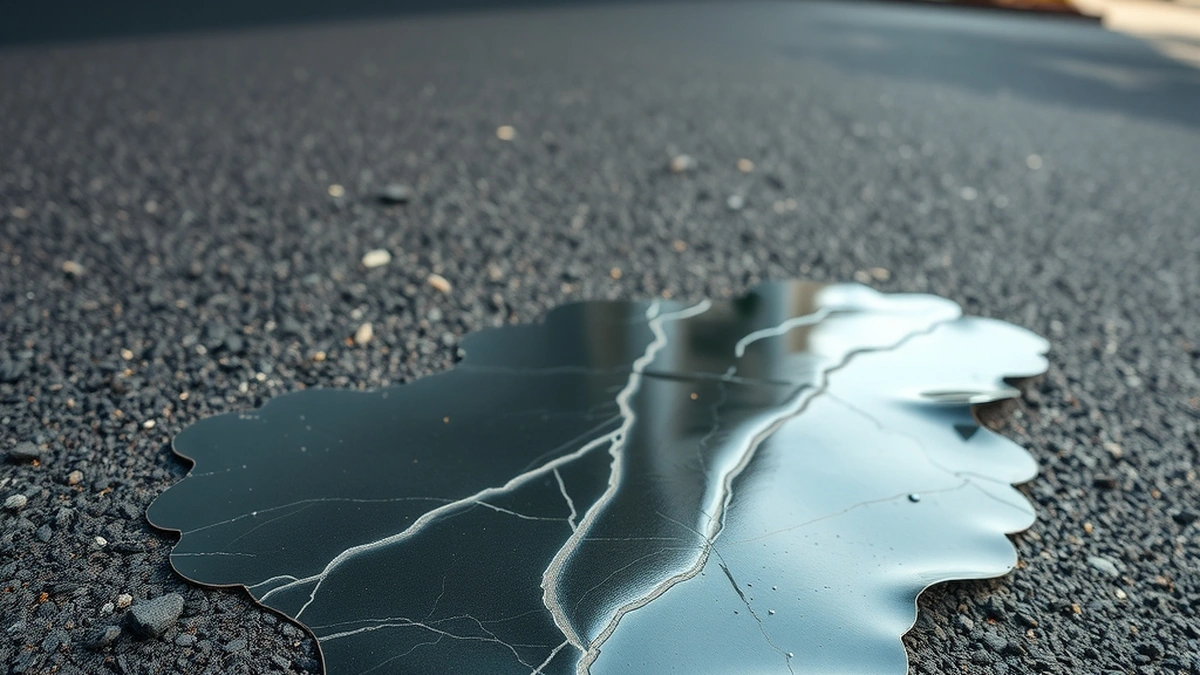
The common asphalt emulsion sealer problems are peeling, white blushing, tracking in heat, and wear within one season. Each traces to application rather than the product: a dirty surface, cool or humid curing, over-application, or a mix diluted below the label rate.
- Peeling cause
- Surface not cleaned
- Blushing cause
- Moisture during cure
- Tracking cause
- Coat applied too thick
- Early wear cause
- Diluted mix
- Repair cost
- $0.15-$0.30 per sq ft
Some links on this page are affiliate links.If you buy through them we may earn a commission at no extra cost to you. We do not accept payment for rankings. Read the full disclosure.
Asphalt emulsion sealer problems are mostly application problems. Peeling, white blushing, tracking, and wear within a season each have a specific cause, and none of them is usually a defective pail. Knowing which failure you are looking at tells you whether the fix is a recoat, a repair, or a different conversation about the base.
The four failures worth knowing
Asphalt emulsion sealer is a water-based coating that cures into a protective film. When it fails, it fails in one of four recognizable ways.
Peeling is an adhesion failure between sealer and pavement. Blushing is a moisture failure inside the film. Tracking is a thickness and temperature failure. Early wear is a coverage failure.
Each looks different on the surface, and each has a different remedy. Misreading them is how homeowners end up buying a second pail that fails the same way as the first.
Symptom, cause, and fix
| Symptom | Likely cause | Fix | Prevention |
|---|---|---|---|
| Sheets lifting at edges | Dirty or damp surface | Remove loose film, clean, recoat | Blow and wash before sealing |
| Milky white patches | Moisture trapped during cure | Recoat affected areas after drying | Seal above 50 F, 48-hour dry window |
| Sticky, tracking surface | Coat applied too thick | Allow longer cure, thin next time | Apply at label rate |
| Worn through in tracks | Diluted mix or thin coat | Recoat at full rate | Never dilute beyond label |
| Cracks reappear along lines | Cracks not filled first | Fill and reseal | Repair before coating |
| Blotchy, uneven colour | Porous surface drank the coat | Second coat | Two coats on weathered asphalt |
The last two sit slightly outside the product-failure list, but they are the two most often reported as “bad sealer”. Both are sequencing errors.
Peeling: the preparation failure
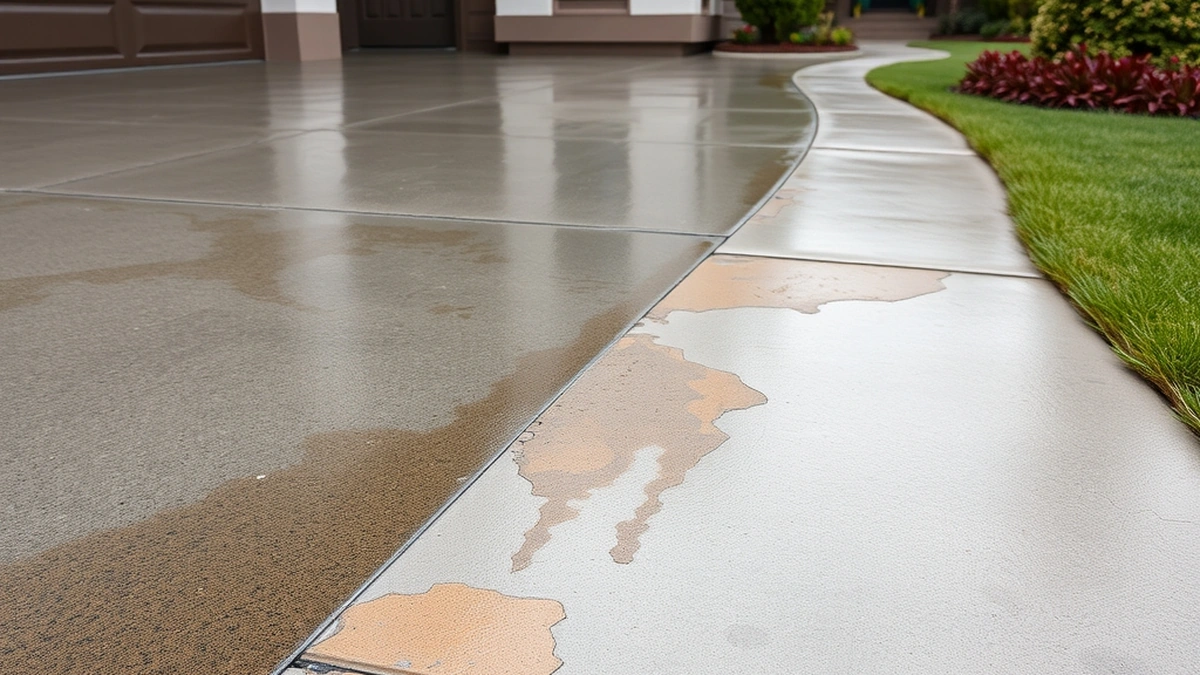
Peeling shows as sheets or flakes lifting from the pavement, usually starting at an edge or a low spot where water collects.
The cause is that the film bonded to something other than asphalt: dust, sand, leaf litter, or an oil film. Emulsion cannot adhere through contamination, and once water gets under a lifted edge, the peel propagates across the driveway.
The fix is mechanical. Remove all loose film with a scraper or grinder, clean the exposed pavement, let it dry, and recoat. A second coat over the top of peeling sealer simply lifts with the old film.
Prevention is the same work done first: blow the surface, wash it, let it dry, and prime oil spots. Our asphalt emulsion sealer installation guide covers the cleaning standard.
Blushing: the moisture failure
Blushing is a white or milky haze across the cured film. It is not a colour problem; it is moisture trapped under or inside the coat.
Two conditions produce it. Applying in cool, humid weather slows the cure so water cannot escape before the film sets. Rain inside the cure window does the same thing faster and usually leaves streaks as well.
Emulsion is less prone to blushing than coal tar, but neither is immune. The practical rule is a 48-hour dry forecast with air and surface temperatures above 50 F, and 70 F is much safer.
The fix depends on severity. A light haze often fades with a dry week. A heavy white film needs recoating once the surface is dry, because the appearance will not correct itself.
Tracking: the thickness failure
Tracking shows as tyre marks, a tacky surface, and sealer transferring onto shoes and driveways.
Two causes, often together. The coat was applied heavier than the label rate, so the top skins over while the material underneath stays soft. Or it was applied in direct afternoon sun on hot pavement, which accelerates skinning.
The fix is patience and, if it persists, a corrective recoat once the film hardens. Do not walk on it to test it repeatedly; each pass presses material into a new pattern.
Prevention: apply at the stated spread rate, work in the morning, and keep vehicles off for the full 24 to 48 hours.
Early wear: the coverage failure
Wear within one season shows as grey tire tracks against black edges. The film is intact where nobody drives and gone where everybody does.
The common cause is dilution. Adding water to stretch coverage reduces the solids that remain after curing, and a thin film wears through quickly under tyre scrub. The second cause is a single coat on a surface porous enough to need two.
The fix is a recoat at the full label rate, with a second pass in the tracks if the surface is rough. Prevention is measuring the pail’s coverage instead of estimating it.
When the problem is the pavement, not the sealer
Some failures cannot be fixed by any coating.
Alligator cracking across more than a quarter of the surface means the asphalt has lost flexibility or the base is moving. A new coat cracks along the same lines within a season. Our alligator cracking repair guide covers the options.
Ponding water that survives a day after rain means the surface is out of plane. Sealing holds water at the low spot and accelerates failure there.
Soft, spongy areas mean a saturated subgrade. Nothing applied to the surface changes that.
If any of those are present, the money belongs on an overlay at $3 to $7 per square foot or replacement at $8 to $15, not on another pail at $0.05 to $0.12 per square foot.
Repairing a failed coat without wasting money
- Identify the failure from the table above before buying anything.
- Remove all loose or blistered film back to sound pavement.
- Clean and dry the exposed area completely.
- Prime any oil-contaminated spots.
- Recoat at the full label rate and cure for 48 hours.
If the failure covers most of the driveway, a full recoat at $0.15 to $0.30 per square foot installed may be cheaper than patch repairs, especially if the original problem was preparation and a different crew does the work.
If the same failure returns after a correct recoat, stop recoating. Repeated failure in the same place is a sign that water is getting under the pavement or the base is moving, and neither is a sealer problem. Our driveway sealing repair article sets out the diagnosis, and driveway sealer reviews explains why product reviews rarely predict this outcome.
Frequently asked questions
Why is my asphalt sealer peeling?
Almost always because the surface was not clean or dry when the coat went down. Sealer bonds to pavement, not to dust, sand, or oil, and it lifts in sheets where adhesion failed.
What causes white patches on a sealed driveway?
Blushing, caused by moisture trapped in or under the film. Cool, humid application and rain inside the cure window are the usual triggers, and coal tar is more prone to it than emulsion.
Why does my sealed driveway stay sticky?
The coat was applied too thick, or it was applied in direct sun on hot pavement so it skinned before curing through. Thin coats and early-morning application prevent it.
How long should asphalt sealer last?
Two to three years for emulsion on a residential driveway. Wear within a single season points to a diluted mix, a thin coat, or a surface that was too porous for one pass.
Can I seal over a failed coat?
Only after removing the loose material. A new coat over peeling sealer lifts with the old film. Scrape or grind back to sound pavement, clean, and recoat the bare area.
Does sealer fail because of a bad batch?
Rarely. Product defects exist but are uncommon. The recurring causes are preparation, temperature, film thickness, and dilution, all of which are under the applicator's control.
Sources
Some links are affiliate links.If you buy through them we may earn a commission at no extra cost to you. We do not accept payment for rankings. Read the full disclosure.