Fading colour: repair options for grey asphalt
Faded asphalt is oxidised binder, not dirt. Repair options: sealcoat at $0.15-$0.30 per sq ft, tinted coatings, and overlay when the surface has raveled.
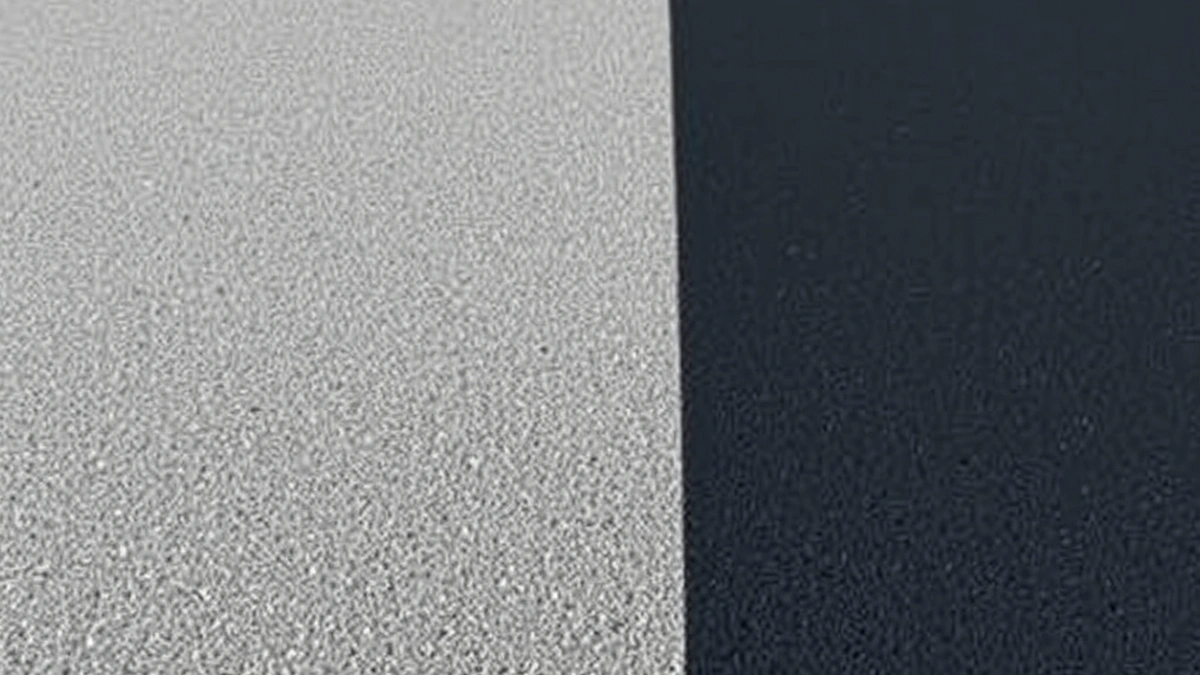
Faded driveway colour is repaired by cleaning the surface and sealcoating at $0.15 to $0.30 per square foot, or using a tinted product where colour matters. If the asphalt has raveled and lost aggregate, an overlay at $3 to $7 per square foot is the only lasting fix.
- Sealcoat
- $0.15-$0.30 per sq ft
- DIY material
- $0.05-$0.12 per sq ft
- Tinted acrylic
- $0.15-$0.30 per sq ft installed
- Overlay
- $3-$7 per sq ft
- Fade cycle
- 2-4 years
Some links on this page are affiliate links.If you buy through them we may earn a commission at no extra cost to you. We do not accept payment for rankings. Read the full disclosure.
Faded driveway colour is oxidised asphalt binder, and the repair depends on whether the surface is still intact. Uniform grey with sound texture is cosmetic: clean it and sealcoat at $0.15 to $0.30 per square foot. Grey with loose aggregate, raveling, and cracks is surface failure, and only an overlay at $3 to $7 per square foot restores it.
What fading actually is
Asphalt is aggregate bound with bitumen. The black colour comes from the bitumen film coating the stones.
Ultraviolet light and oxygen oxidise that film. The bitumen turns from black to brown to grey, and as it wears away the lighter aggregate shows through.
So the grey is not dirt on top of the pavement. It is the pavement’s binder breaking down, which is why washing does not fix it.
Repair options compared
| Option | What it does | Cost | Lasts | Best for |
|---|---|---|---|---|
| Cleaning only | Removes dirt, not oxidation | Low | Weeks | Assessment before repair |
| Sealcoat | New black film over sound asphalt | $0.15-$0.30 per sq ft | 2-4 years | Uniform grey, sound surface |
| Tinted sealer | Film with a colour shift | $0.15-$0.30 per sq ft | 2-4 years | Colour matching or changing |
| Acrylic coating | Clear or tinted protective film | $0.15-$0.30 per sq ft | 1-3 years | Concrete and decorative asphalt |
| Overlay | New asphalt surface | $3-$7 per sq ft | 10-15 years | Raveling, loss of aggregate |
The first four are coatings. The fifth is a new surface. Choosing between them is a question of how much material has been lost, not how grey the driveway looks.
How to tell cosmetic fade from surface failure
Three tests separate them.
Texture. Run a hand across the surface. Smooth with fine texture is cosmetic fade. Gritty and loose is raveling.
Aggregate. If stones are sitting loose on the surface, or if the surface feels like coarse sandpaper that sheds, the binder has gone.
Edges. Faded edges that crumble when pressed indicate loss of binder and support. Faded but firm edges are cosmetic.
If two of the three point to material loss, a coating will not restore the surface. Sealcoat bonds to binder; where there is no binder left, it has nothing to hold.
The sealcoat route, worked through
A 600 square foot driveway with uniform grey colour and sound texture:
Sealcoat at $0.20 per square foot: 600 × $0.20 = $120. Optional crack filling at $3 per linear foot for 40 feet: $120. Total: $240.
That restores a uniform black finish and slows further oxidation for two to four years. Repeat cycles over a decade cost roughly $360 to $480 in sealer, plus crack filling as needed.
Compare that with an overlay at $3 to $7 per square foot: $1,800 to $4,200. The overlay is the right answer only if the surface has failed, not if it has merely faded.
Tinted and acrylic options
Some homeowners want a colour other than black, or want to preserve a decorative finish.
Tinted sealers add pigment to an emulsion base and lay down a coloured film. They sit in the same $0.15 to $0.30 per square foot installed band but tend to fade faster than black, because pigment particles are exposed to the same ultraviolet that faded the asphalt.
Acrylic coatings are clear or tinted and are the usual choice on concrete and stamped asphalt. They preserve the surface appearance rather than covering it, and they last one to three years.
Neither is a permanent colour change. Both are coatings that will need recoating on the same cycle as a black sealer.
Where fading is a symptom of something else
Fading in a pattern — lighter in the wheel paths, darker at the edges — is normal wear. Fading with these features is not:
Fading plus alligator cracking. The surface has lost flexibility and the base may be moving. A coat will re-crack within a season. Our alligator cracking repair guide covers the options.
Fading plus ponding. Water standing after rain means the surface is out of plane. Sealing holds water at the low spot.
Fading plus a chalky, powdery feel. The binder has oxidised through, and the surface may need an overlay rather than a coat.
In those cases, sealing is cosmetic at best. The honest spend is a repair.
The repair sequence
- Clean the driveway and let it dry completely.
- Test the texture by hand and note any loose aggregate.
- Fill cracks wider than a quarter inch at $2 to $5 per linear foot.
- Prime oil spots so the coating can bond.
- Apply the sealer at the label rate, one or two coats.
- Cure 24 to 48 hours before traffic.
If step 2 reveals widespread raveling, stop. The surface needs an overlay, and the sealer money is better saved toward it.
How long the fix lasts
A resealed driveway fades again in two to four years because the new film meets the same ultraviolet that degraded the old surface. That is normal, and it is why the schedule is a cycle rather than a single job. The only way out of the cycle is a different surface, which is a replacement decision at $8 to $15 per square foot, not a coating decision.
A sealcoat restores colour for two to four years. Sun-exposed driveways fade faster; shaded ones hold longer.
The fade is not a failure of the product. It is the same oxidation process that faded the asphalt in the first place, now working on the new film.
Planning for a recoat every two to four years is the honest expectation. Our fading colour cost page prices the cycles, and fading colour prevention covers how to slow the fade between coats. For the wider maintenance picture, see driveway sealing cost.
Frequently asked questions
Why does asphalt turn grey?
Ultraviolet light oxidises the bitumen binder at the surface. The grey colour is the oxidised binder and exposed aggregate, not dirt, and washing will not bring the black back.
Can faded asphalt be restored?
Yes, if the surface is sound. Cleaning and sealcoating at $0.15 to $0.30 per square foot restores a uniform dark finish and slows further oxidation.
Does sealcoat fade again?
It does, over two to four years depending on sun and traffic. That is the normal cycle, and recoating is the maintenance rather than a sign of a bad product.
Can I change the colour of my driveway?
Tinted sealers and acrylic coatings can shift the colour, usually within a range of blacks, browns, and greys. On asphalt, a tinted product is a coating, not a permanent colour change.
Is grey asphalt a sign of failure?
Not on its own. Uniform grey with sound texture is cosmetic fading. Grey with raveled aggregate, loose stones, and cracks is surface failure.
When is an overlay better than resealing?
When the surface has raveled, when aggregate is loose across large areas, or when the fade comes with widespread cracking. Sealcoat cannot rebuild a lost surface.
Sources
Some links are affiliate links.If you buy through them we may earn a commission at no extra cost to you. We do not accept payment for rankings. Read the full disclosure.