Cold patch problems: why patches fail
Cold patch ravels, sinks, and lifts out. Why temporary asphalt fails, which problems are installation errors, and when the pothole means a failed base.
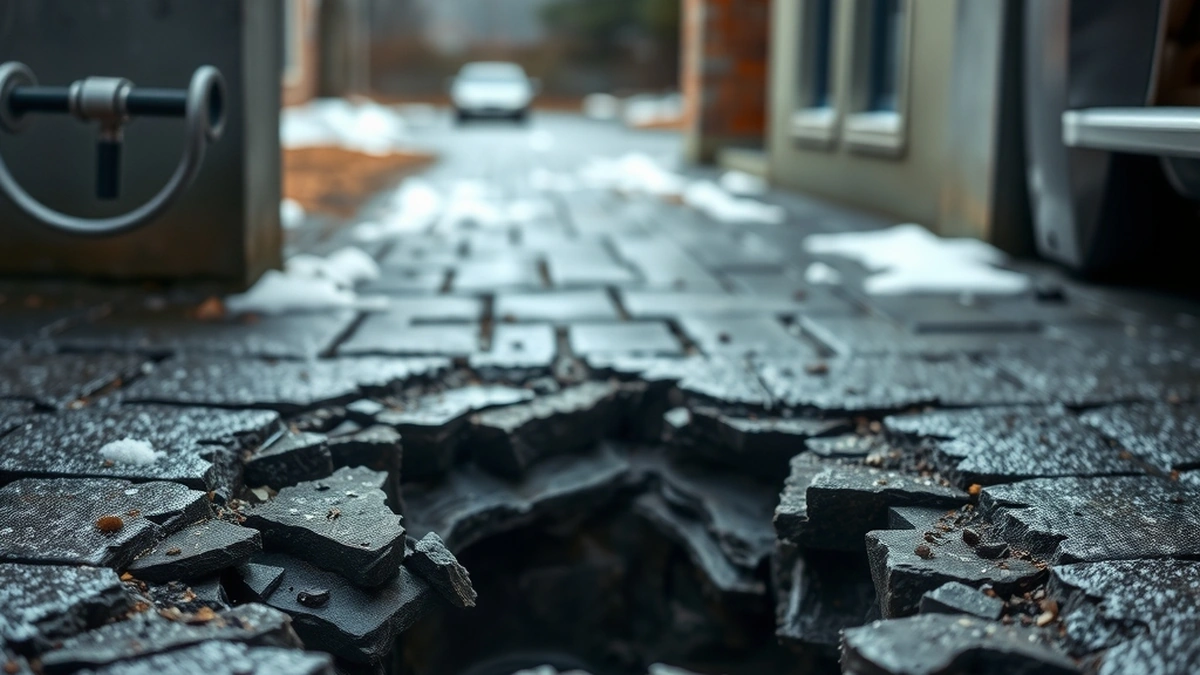
Cold patch problems are raveling edges, sinking, and material lifting out. They trace to an unsquared hole, a wet or dirty cavity, one thick lift instead of two-inch layers, or no compaction. A patch that keeps failing in the same spot signals base failure.
- Main failure
- Raveling at the edges
- Main cause
- Uncut, uncleaned hole
- Lift thickness
- About 2 inches
- Expected life
- One season to a few years
- Permanent repair
- $100-$400 per pothole
Some links on this page are affiliate links.If you buy through them we may earn a commission at no extra cost to you. We do not accept payment for rankings. Read the full disclosure.
Cold patch problems are predictable. The material ravels at the edges, sinks into the hole, or lifts out in pieces, and nearly every case traces to the same four causes: an unsquared hole, a dirty or wet cavity, a single thick lift, or no compaction. The one failure that is not about installation is a patch that keeps reopening in the same spot, which points at the base.
What cold patch is up against
Cold patch is a bagged asphalt mix with a solvent-cut binder, placed without heat and densified by traffic.
It is a temporary material by design. It does not cure into a monolithic repair the way hot mix does, and it stays more permeable and weaker throughout its life.
Judged against hot mix, it will always look like a failure. Judged against an open hole in February, it is doing exactly what it was bought to do.
Symptom, cause, and fix
| Symptom | Cause | Fix | Prevention |
|---|---|---|---|
| Edges crumbling | Hole not squared | Cut back and repatch | Square the edges first |
| Patch sinking | One thick lift | Remove, refill in 2-inch lifts | Compact each lift |
| Material lifting out | Water or dirt underneath | Clean and dry, repatch | Remove all loose material |
| Patch soft and loose | No compaction | Recompact or replace | Tamper or plate compactor |
| Reopening each spring | Base failure | Assess base | Do not patch again |
| Raised ridge catching tires | Overfilled | Trim and recompact | Finish a quarter inch proud |
The second-to-last row is the one that changes the budget. Everything above it is technique.
Raveling and sinking: the prep failures
Raveling shows as the patch edges crumbling away, leaving a ring of loose aggregate around a shrinking plug.
The cause is a hole with tapered or ragged edges. Cold patch has nothing to key against, so traffic works it loose from the perimeter inward.
The fix is to cut the hole back to sound pavement with vertical edges, clean it, and repatch. The prevention is doing that the first time. A pothole that is filled without cutting is a pothole that will be filled again.
Sinking: the lift-thickness failure.
A patch that sinks after a few weeks forms a bowl that holds water, which then accelerates the next failure.
Two causes. The material was placed in one thick lift, so compaction only reached the top few inches and the bottom stayed loose. Or the base beneath the hole is soft and cannot carry load.
Test which one you have by probing the bottom before repatching. A firm base plus a sunk patch means lift thickness. A soft base means the repair has to go deeper.
The fix for lift thickness is removal and refilling in 2-inch layers with compaction between each. Our cold patch installation guide sets out the sequence.
Water and dirt: the bond failure
Cold patch bonds mechanically, by interlocking with the walls and base of the hole. Dirt, gravel, and water all prevent that interlock.
Standing water is the worst case. It gets trapped under the patch, and under traffic it pumps through the material and washes the fines out. The patch then breaks up from below.
The fix is to remove the patch, clean the hole, remove standing water, and repatch. The prevention is a blower and a rag before any material goes in.
Cold patch can be placed in damp conditions, which is why it is used in winter. Damp is not the same as a puddle.
Compaction: the density failure
A patch that stays soft and loose was never compacted. Cold patch does not harden on its own; it densifies when something presses it.
A hand tamper, a plate compactor, or several passes with a vehicle tire will do the job. Letting traffic compact it over weeks is not the same, because the material moves before it densifies and the edges ravel in the meantime.
The fix is to recompact or replace. The prevention is ten minutes with a tamper.
The failure that is not the patch’s fault
A pothole that reopens in the same place every year is not a cold patch problem.
It means the base under the pavement has failed, or water is being directed into the hole from a low spot or a cracked edge. No surface material holds in that condition, hot or cold.
Three signs confirm it: the hole reappears within months, the pavement around it cracks in an alligator pattern, and water stands in the depression after rain.
At that point the options are a proper base repair, an overlay at $3 to $7 per square foot, or replacement at $8 to $15. On 600 square feet, an overlay is $1,800 to $4,200 — more than patching, and cheaper than patching the same hole every year for a decade. Our potholes repair guide covers the diagnosis.
Comparing the repair options
| Repair | Cost | Life | When to use |
|---|---|---|---|
| Cold patch | A few dollars per bag | One season to a few years | Winter stopgap |
| Hot-mix patch | $100-$400 per pothole | Several years | Permanent local repair |
| Overlay | $3-$7 per sq ft | 10-15 years | Widespread surface failure |
| Replacement | $8-$15 per sq ft | 20+ years | Base failure |
The decision is not which is cheapest. It is how long the repair needs to last and what is failing underneath.
Repairing a failed cold patch
- Remove the loose material completely, back to sound pavement.
- Cut the edges square with a chisel or saw.
- Clean out dust, gravel, and water.
- Probe the base; add and compact aggregate if it is soft.
- Refill in 2-inch lifts, tamping each one.
- Finish a quarter inch proud and compact the surface.
If the same patch fails again after that sequence, stop patching. The money is better spent on a base assessment. Our cold patch cost page compares the annual cost of repeated patching with a permanent repair, and cold patch reviews covers what the material can reasonably be expected to deliver.
Frequently asked questions
Why is my cold patch falling apart?
Raveling usually means the hole was not squared or cleaned, or the material was not compacted. Cold patch needs vertical edges to key against and densification to hold together.
Why does cold patch sink after a few weeks?
Either it was placed in one thick lift so the bottom never compacted, or the base beneath the hole is soft. A sinking patch in a sound base is nearly always a lift-thickness problem.
Can cold patch be applied in the rain?
In damp conditions, yes, but not with standing water in the hole. Water trapped under the patch pumps out under traffic and destroys the bond.
Why does cold patch come loose in winter?
Freeze-thaw cycles move the pavement around a patch that is not keyed in. Plow blades also catch raised edges. A squared, compacted patch resists both better.
Will cold patch ever harden completely?
It densifies and stiffens over time but never cures like hot mix. It remains more permeable and weaker, which is why it is classed as a temporary repair.
When should I stop patching and replace the surface?
When the same pothole reopens twice in a year, when patches cover a large share of the surface, or when the area around the hole is cracked into an alligator pattern.
Sources
Some links are affiliate links.If you buy through them we may earn a commission at no extra cost to you. We do not accept payment for rankings. Read the full disclosure.